Anne Parkson is a Chicago attorney's wife living at the edge of her own dissatisfaction. Her husband Ted, a decent and distracted lawyer, gives her little of his attention, leaving her susceptible to the orbit of Tony Arnelo, a nightclub operator with syndicate connections and a talent for making neglected women feel seen. When Anne begins accepting Arnelo's company, she crosses a line that will prove difficult to uncross.
A woman connected to Arnelo is found murdered, and Anne – who cannot account for her whereabouts that night – becomes the central figure in a police investigation led by the methodical Detective Sam Leonard. Her memory of the evening is compromised, possibly by drink, possibly by something more deliberate. Ted, forced to confront both his wife's infidelity and her possible guilt, must decide whether to defend her or distance himself. The film turns on this ambiguity, with Arnelo's smooth menace working against whatever truth Anne is trying to recover.
The Arnelo Affair operates in the domestic register of noir, where the danger comes not from back alleys but from drawing rooms and nightclubs, and where a woman's moment of weakness becomes the pivot on which a murder case swings. It belongs to a cycle of postwar films that examined the fragility of middle-class marriage under pressure, using the machinery of the crime plot to ask harder questions about complicity, desire, and who bears the cost when things go wrong.
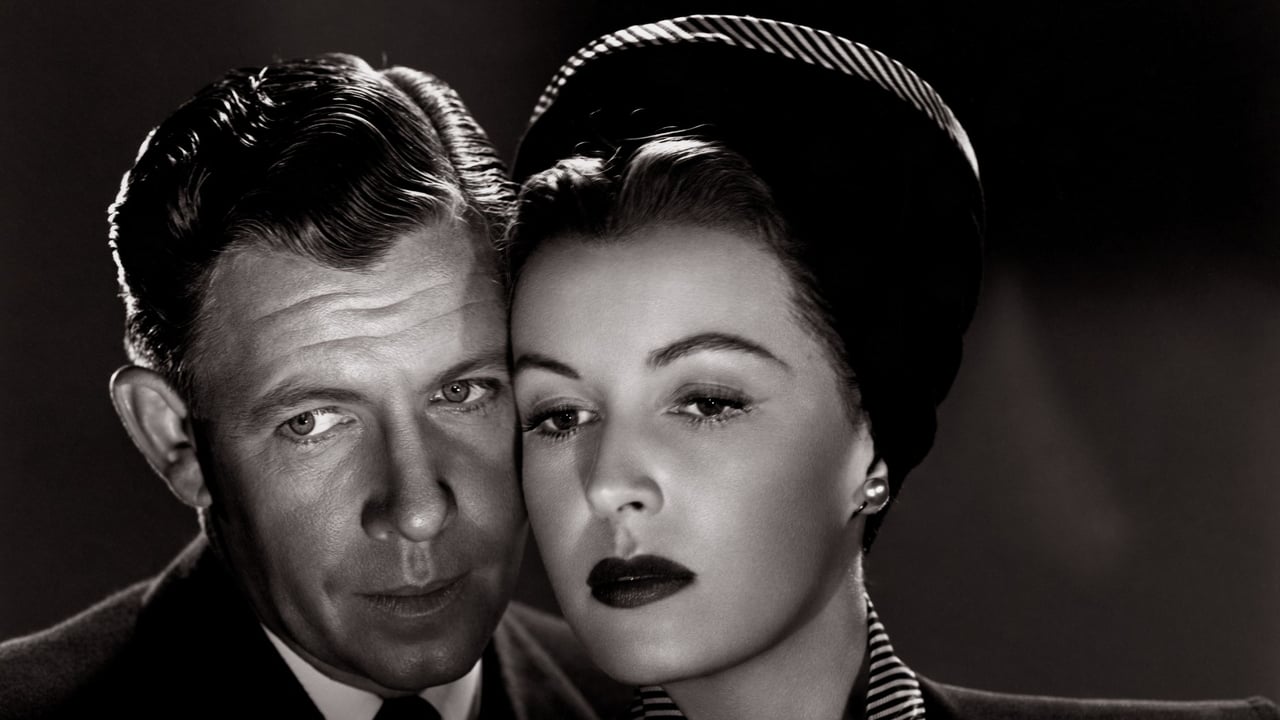
The Arnelo Affair is a minor MGM noir that benefits from being better than its reputation suggests. Arch Oboler, better known for radio and the gimmick of 3-D cinema, brings to the film a restraint that suits the material. The domestic setting – comfortable house, respectable profession, unhappy wife – allows the film to locate its menace in social arrangement rather than criminal spectacle. John Hodiak is well cast as Arnelo, deploying a surface charm that never quite conceals the calculation beneath. Frances Gifford carries the film's moral weight in a performance of genuine interiority; her Anne is neither a femme fatale nor a passive victim, but a woman whose single act of vulnerability has consequences she cannot control. The film's treatment of memory loss as both plot mechanism and psychological condition places it in dialogue with more celebrated noirs of the period. Where it falls short is in its resolution, which retreats toward reassurance when the material demands something darker. As a document of postwar anxiety about domesticity and the American marriage, it earns sustained attention.
– Classic Noir
Arnelo and Anne sit in a curved booth at the edge of the club floor. Charles Salerno Jr. positions the camera at near-table height, so that the light source – a candle lamp between them – divides the frame into two moral hemispheres. Arnelo's face catches the light cleanly; Anne's is partially turned away, her cheekbone illuminated while her eyes remain in soft shadow. The background resolves into indistinct figures and cigarette haze, collapsing the world to the space between these two people.
The composition argues what the dialogue will not quite say: that Anne has already moved into Arnelo's territory, that the crossing was incremental and is now complete. The shadow on her face is not ominous decoration but moral notation – she is half in the world she knows, half in one she cannot yet see clearly. The scene establishes the film's central problem: not whether Arnelo is dangerous, which the visual grammar has already confirmed, but whether Anne understands the nature of the danger before it is too late to matter.
Charles Salerno Jr. works within the constraints of an MGM studio production that never fully surrenders its gloss to noir's preferred darkness, but he finds meaningful shadow work in the film's interior sequences. His lighting setups in the nightclub scenes favor single-source practicals – table lamps, candles, bar fixtures – that allow faces to partially disappear rather than the high-contrast chiaroscuro of more expressionist noirs. The domestic interiors are deliberately over-lit in the early sections, a choice that makes Anne's comfort legible as a kind of blindness; as the film progresses and her situation deteriorates, the key light shifts and the fill drops away. Salerno does not have the latitude here that a smaller studio production might have allowed, but within the MGM house style he uses shallow depth of field in the booth and interrogation scenes to isolate characters from their surroundings, reinforcing the film's argument that the moral trap closes around individuals, not circumstances.
TCM remains the most reliable source for this title and typically presents a clean print; check the schedule or the TCM app for on-demand availability.
Archive.orgFreeA public domain print is available on Archive.org at no cost, though transfer quality varies and a TCM broadcast print is preferable if accessible.
TubiFreeTubi has carried this title intermittently; availability is not guaranteed, but it is worth checking for a no-cost streaming option.