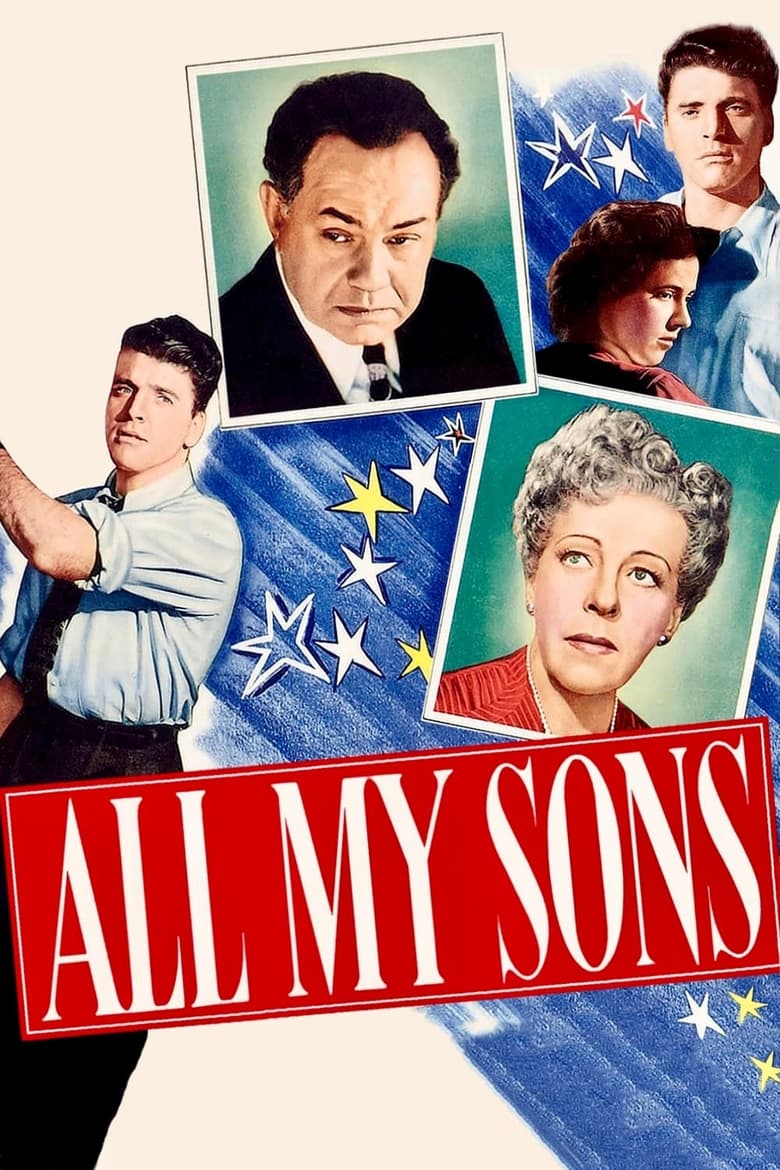
In a comfortable Midwestern suburb, Joe Keller presides over his household with the quiet confidence of a self-made man. A successful manufacturer who weathered a wartime scandal – the shipment of defective cylinder heads that caused the deaths of twenty-one Army pilots – Joe was exonerated while his partner, Herbert Deever, went to prison. His wife Kate clings to the belief that their elder son Larry, missing in action, will one day return. Into this fragile domesticity comes Ann Deever, Herbert's daughter and Larry's former sweetheart, drawn back by her love for Joe's younger son Chris.
Chris intends to marry Ann, but his mother's resistance runs deeper than grief – Kate's insistence that Larry is alive is bound up in a truth she cannot afford to face. When Ann's brother George arrives, freshly visited with their imprisoned father, the family's carefully constructed peace begins to fracture. George carries accusations that implicate Joe directly in the wartime crime, and the allegiances of the younger generation are tested against loyalty, evidence, and the cost of silence. Chris, who fought in the war and lost men under his command, finds himself at the center of a moral reckoning that his father's pragmatism cannot contain.
Adapted from Arthur Miller's 1947 stage play, All My Sons uses the conventions of domestic drama to pursue the logic of noir: guilt deferred is guilt compounded, and prosperity built on concealment carries its own sentence. The film occupies a precise postwar moment when the gap between official vindication and private knowledge could define – or destroy – a family. Irving Reis keeps the pressure interior, and the story builds toward a confrontation that implicates not just one man's crime but the systems of compromise that enabled it.
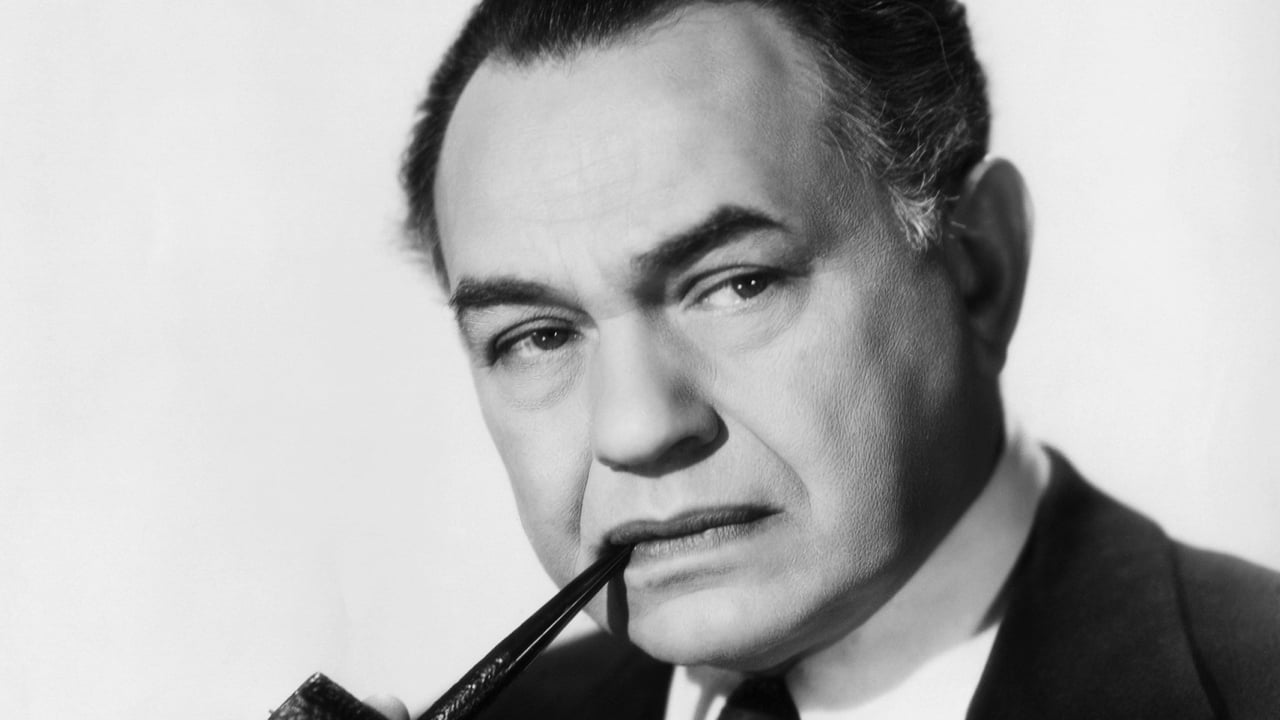
All My Sons arrives at the intersection of two postwar anxieties: the corruption embedded in the wartime industrial economy, and the returning veteran's discovery that the home front had its own casualties. Irving Reis, working from Chester Erskine's adaptation of Miller's play, resists the impulse to open the material up into conventional thriller mechanics. The result is a film that derives its tension from restraint. Edward G. Robinson brings to Joe Keller precisely the quality that makes the character dangerous – a genuine warmth, a conviction that providing for one's family constitutes its own moral law. Burt Lancaster as Chris channels the veteran's particular fury: the sense of having paid a price that others avoided. The film's ideological argument – that private crime and public consequence cannot be separated – was pointed in 1948, and the Production Code's pressure on the ending introduces a compromise that slightly distorts Miller's original calculus. Even so, the film holds its charge as a study in how guilt propagates through domestic space.
– Classic Noir
Reis and cinematographer Russell Metty position Joe Keller in the family's backyard at night, the house lights behind him casting a warm interior glow that fails to reach where he stands. The tree stump – remnant of a tree planted in Larry's memory, brought down in a storm at the film's opening – sits at the edge of the frame as a persistent negative space. Metty keeps the camera at eye level, refusing the low angles that would heroize or the high angles that would diminish; the choice is quietly precise, presenting a man who must be seen clearly before judgment can be rendered.
The scene condenses the film's central argument into geography: Joe stands between the house he built and the darkness he has kept at bay. When the evidence of his crime can no longer be suppressed by explanation or sentiment, the domestic frame that has held him – the yard, the neighbors, the ordinary Saturday-morning world – ceases to function as shelter. What the camera has shown throughout the film as comfort is here revealed as enclosure, and the distinction between the two is the film's moral territory.
Russell Metty, who would later shoot Touch of Evil for Orson Welles, brings to All My Sons a visual discipline suited to its theatrical origins. Rather than liberating the story with location work, Metty uses the studio backyard set as a controlled environment where light can be managed to track the shifting moral weight of scenes. His key lighting favors faces in partial shadow, particularly in the two-shots between Robinson and Lancaster, where the difference in how each character carries guilt is made visible through the angle and warmth of the source. Interior sequences use practical window light to suggest the boundary between domestic safety and outside accountability. Metty avoids the expressionist shadow patterns of harder noir, working instead in a mode that could be called domestic realism under pressure – the surfaces look ordinary until the framing tightens and the light narrows, at which point the same rooms begin to feel like testimony.
Available to stream at no cost; print quality varies but the film is fully watchable.
Archive.orgFreePublic domain copy available for free streaming or download, though sourced from varying elements.
Amazon Prime VideoRentalDigital rental typically offers a cleaner print than free streaming sources; confirm availability by region.