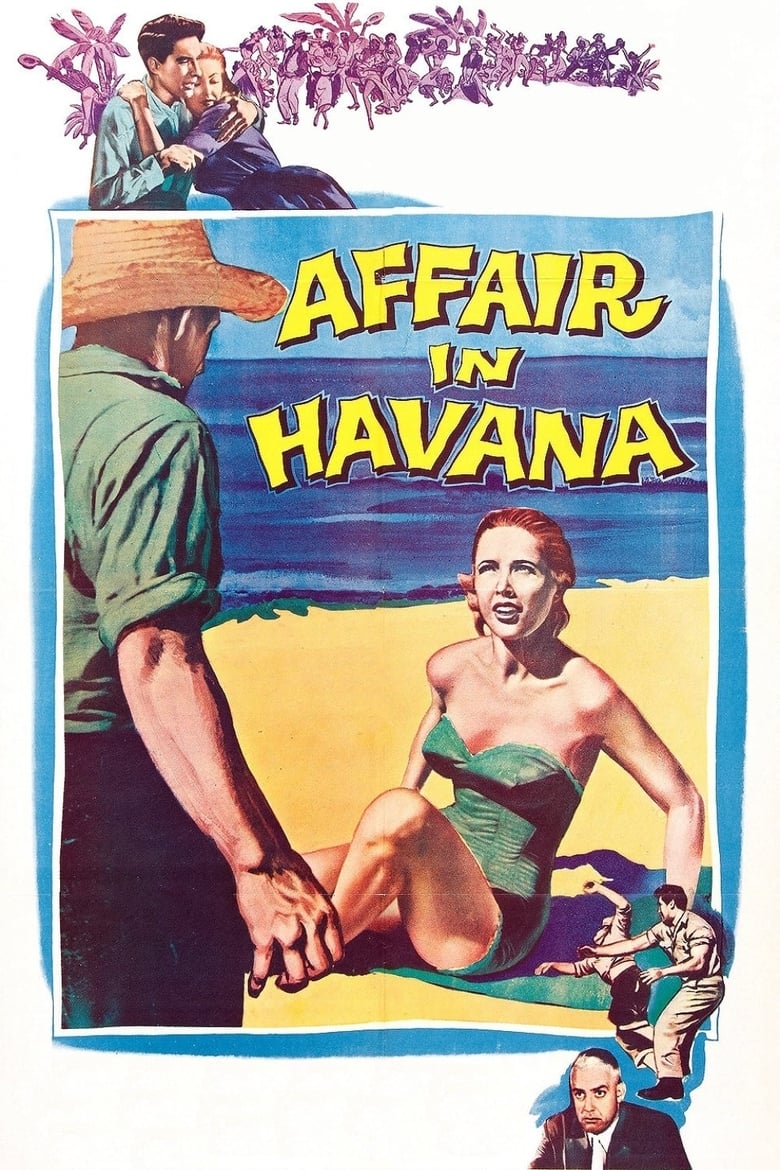
Nick Douglas, an American songwriter played by John Cassavetes, arrives in Havana chasing a contract and finds himself drawn into the orbit of Mallabee, a wealthy and physically immobilized plantation owner portrayed with cold authority by Raymond Burr. Mallabee controls his sugar estate from a wheelchair, his power concentrated entirely in money and will, while his young wife Lorna, played by Sara Shane, exists in a marriage that functions more as captivity than partnership.
Nick and Lorna's attraction moves quickly from attraction to conspiracy, the geometry of the situation pulling in Fina Valdes, a local woman played by Lilia Lazo whose loyalties and knowledge complicate every calculation Nick makes. Mallabee, for all his physical limitation, is not without resources or cunning, and the film refuses to let him settle into simple villainy. The island setting, filmed largely on location in Cuba, adds another layer of remove from American legal and moral convention, isolating the characters in a world where ordinary consequences feel suspended.
Affair in Havana belongs to a strand of late-cycle noir that displaces its American characters into foreign terrain to examine what ambition and desire look like without the usual social scaffolding. Like other sun-drenched noirs of the period, it inverts the genre's customary expressionist darkness, using tropical light and open landscape to expose rather than conceal. The film sits at the margins of the canon, modest in budget and scope, but coherent in its understanding of the noir triangle as a system always rigged against the man who enters it last.
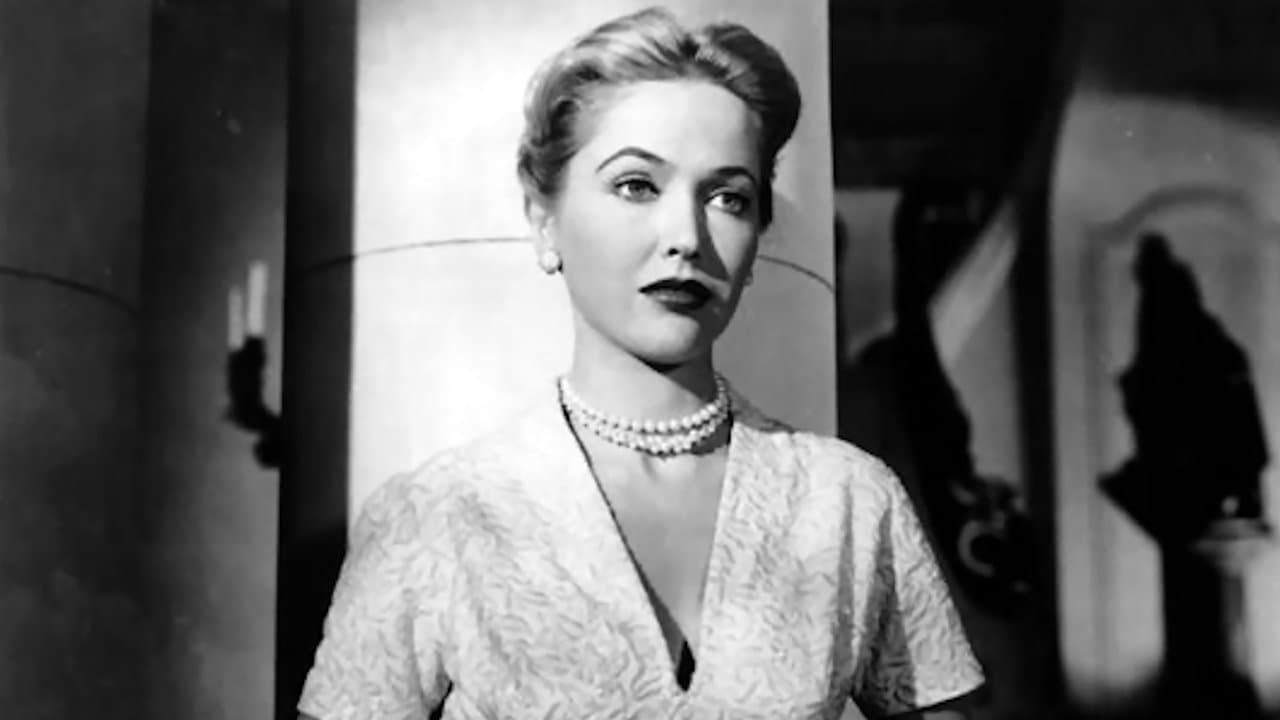
Affair in Havana is a minor but purposeful entry in the late noir cycle, notable chiefly for what it does with its physical setting and its casting against type. László Benedek, whose credentials included Death of a Salesman and The Wild One, directs with economy rather than flair, and the film is better for it. Raymond Burr, so often deployed as the threat that lurks at the edge of the frame, is here given a different arrangement: confined to a wheelchair, his menace must work through stillness and speech, and Burr locates something genuinely unsettling in that restriction. Cassavetes, still in his pre-independent phase, carries the lead with a restless energy the script cannot quite channel. The Cuban location, shot in the year before the revolution would permanently close that backdrop to Hollywood productions, gives the film a documentary texture it did not fully intend. Cinematographer Alan Stensvold uses the Caribbean light not as glamour but as exposure, stripping the characters of shadow and thereby of concealment. The film belongs to a tradition that understood foreign soil as a moral vacuum.
– Classic Noir
Benedek and Stensvold frame Mallabee in a medium shot that places the wheelchair at the precise center of the room, the walls of the study pressing inward from either side while Nick stands near the doorway, partially backlit and therefore partially illegible. The light falls hard from a single lateral source, cutting Burr's face into two distinct planes and leaving Nick's expression softened by distance. The composition insists that Mallabee, for all his physical immobility, is the fixed point around which everything else in the film must organize itself.
The scene establishes the film's central argument: that power in this world is not a function of freedom of movement but of the ability to make others move. Mallabee does not need to pursue Nick because the house, the contract, and the wife are all already his. The scene makes clear that Nick has entered a system already in operation and that his arrival has changed nothing about its ownership.
Alan Stensvold's cinematography for Affair in Havana makes a deliberate choice to refuse the expressionist toolkit that defined noir in its Hollywood studio years. Shooting on location in Cuba, Stensvold works with abundant natural and available light, using it not to glamorize the island but to deny his characters the shadow cover that noir convention typically extends to the guilty and the compromised. Interior scenes rely on hard lateral sources that carve faces rather than soften them, while exterior footage allows the tropical sun to function as an interrogation light, flat and indifferent. The effect is a visual moral logic in which concealment becomes harder the further the characters move from the controlled studio environment. Lens choices favor mid-range focal lengths that keep both foreground and background legible, denying easy focal separation between the protagonist and his circumstances. The result is a film that looks, at moments, more like documentary witness than genre fiction, an effect that serves the story's argument about Americans who travel abroad expecting to disappear and find instead that they are more visible than ever.
Tubi has carried this title in its classic noir rotation and remains the most accessible free option, though availability should be confirmed before viewing.
Archive.orgFreeAs a low-budget independent production from Dudley Pictures Corporation, this film may fall into the public domain and appear on Archive.org, though print quality will vary.
Amazon Prime VideoSubscriptionAmazon's rotating catalog of classic genre titles has included this film; availability is subject to change and worth checking under its full title.