Films People Pull a Fast One Night Beat Reading Room On TV Shop
Writer · Architect of Moral Collapse

William P. McGivern

BornNovember 4, 1918, Chicago, Illinois
DiedNovember 4, 1997, Los Angeles, California
Noir Films8 films
Peak Years1950–1956
Photo: TMDB
Scroll

William P. McGivern was born in Chicago, the crucible of American crime writing, and carried its streets into his fiction with documentary precision. Beginning his career as a pulp magazine contributor in the late 1930s, he graduated to hardboiled novels that attracted Hollywood's attention during noir's ascendancy. His breakthrough came through collaboration with Fritz Lang on The Big Heat, a film that would define both men's late-career renaissance. By the 1950s, McGivern had become one of Hollywood's most reliable sourcers of crime narratives, his novels optioned repeatedly by studios hungry for authentic underworld vernacular and moral ambiguity.

What distinguished McGivern from competitors was his refusal to sentimentalize his criminals or idealize his lawmen. In Rogue Cop and Shield for Murder, adapted from his own work, the protagonists occupy morally compromised positions where survival trumps ethics. His screenplays expose the thin membrane separating the cop from the criminal, suggesting that institutional pressure and personal desperation corrupt as thoroughly as greed. This philosophical consistency across his adaptations made him invaluable to directors seeking scripts with intellectual weight beneath their action surfaces.

McGivern understood that noir's real subject was institutional betrayal–the cop corrupted not by evil but by payroll and compromise. – Film noir historian Alain Silver

McGivern's collaboration with director Fritz Lang proved particularly fertile. Lang's expressionist sensibility found perfect complement in McGivern's brutal narrative logic, creating films where visual darkness mirrored psychological darkness. The Big Heat transcended its pulp origins to become a meditation on vengeance's corrosive effects, with McGivern's dialogue providing the emotional precision Lang's compositions demanded. This partnership represented the rare convergence of European art cinema and American crime writing, each elevating the other's possibilities.

By the late 1950s, as television began absorbing noir's conventions and audiences tired of black-and-white fatalism, McGivern's career momentum slowed. Yet his influence persisted through writers who learned from his technique: the economy of exposition, the placement of moral dilemmas within generic structures, the refusal to resolve contradictions artificially. His legacy rests not in individual masterworks but in a consistent body of work that proved pulp fiction and serious art need not be antagonistic.

Noir Archetype The Pulp Moralist

McGivern embodied the pulp writer elevated to serious cinema, transforming crime fiction into examinations of institutional corruption and personal betrayal. His screenplays favored ordinary men confronted with impossible choices, where the noir universe punishes righteousness as swiftly as villainy. He wrote not to condemn crime but to anatomize the systems that breed it.

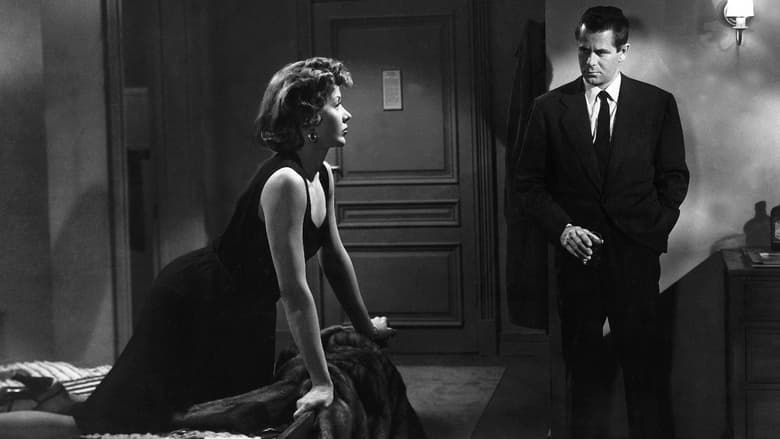
The Scene That Defines Them

The Big Heat
The Big Heat – 1953

The Scalding

Third act, climactic confrontation

Debbie Marsh, the gangster's girlfriend, throws a pot of boiling coffee in her lover's face in a moment of jealous rage, an act of violence so sudden and intimate it ruptures the film's moral framework. McGivern's screenplay builds to this scene through accumulating betrayals and compromises, making the outburst feel both shocking and inevitable. The scene encapsulates his thematic preoccupation: violence erupts not from evil intentions but from human weakness and desperation. In this moment, Lang's visual composition and McGivern's narrative logic achieve perfect synthesis, the scalding coffee standing as the film's truest representation of noir's corrosive universe.

The Noir Canon

YearFilmRoleDirector
1950Rogue CopRoy RowlandEssential
1951Shield for MurderHoward Bretherton, Budd BoetticherEssential
1953The Big HeatFritz LangEssential
1954Killer's Kiss– (story)Stanley KubrickRecommended
1956The Phenix City Story– (source)Phil KarlsonRecommended
1957Odds Against Tomorrow– (story)Robert WiseEssential

The Road In

1918
Born in Chicago

William Peter McGivern enters the world in America's premier crime city, an origin that would define his literary sensibility.

1939
Pulp magazine contributor

McGivern begins publishing short crime fiction in pulp magazines, honing the lean prose and plot economy that would characterize his screenwriting.

1945
First novel published

Establishes himself as a novelist, writing hardboiled crime fiction that attracts Hollywood attention during noir's commercial peak.

1950
Rogue Cop produced

First major screenplay adaptation brings McGivern to Hollywood as a credible source for crime narratives, with Roy Rowland directing.

1953
The Big Heat released

Collaboration with Fritz Lang produces McGivern's masterwork, elevating his reputation from pulp writer to serious screenwriter.

1954
Stanley Kubrick adaptation

Young director Kubrick draws on McGivern's story material for Killer's Kiss, demonstrating McGivern's influence across generations.

1956
The Phenix City Story success

Based on McGivern's source material, the film's critical success reinforces his reputation as Hollywood's premier crime fiction adapter.

1957
Odds Against Tomorrow

McGivern contributes story to Wise's groundbreaking heist noir, one of his final major contributions to the genre before its commercial decline.

1960
Noir's commercial fade

As television and new genres absorb noir conventions, McGivern's Hollywood activity gradually diminishes, though his influence persists.

1997
Death in Los Angeles

McGivern dies at 79, leaving behind a body of work that proved pulp fiction could achieve artistic legitimacy through intelligent screenwriting.