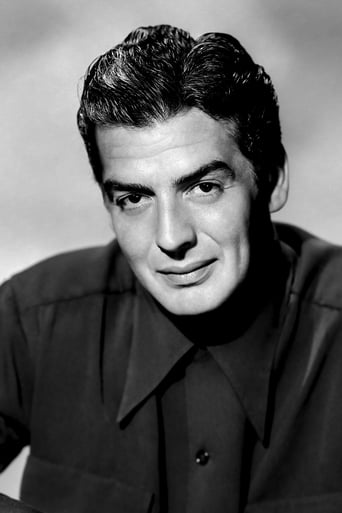
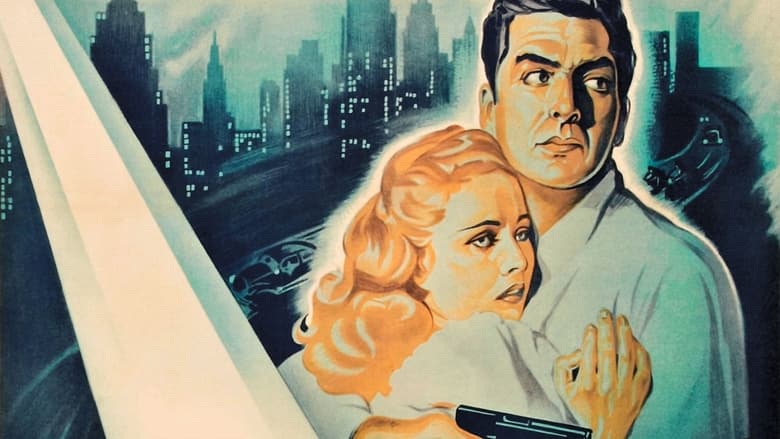
Victor Mature was born in Louisville, Kentucky, in 1913, the son of an Italian immigrant father and a Swiss mother. He came to acting through theatrical training in the 1930s, achieving early prominence on the Broadway stage before moving to Hollywood in 1939. Unlike many noir stars who cultivated an intellectual mystique, Mature possessed a disarming frankness about his profession and his own limitations as an actor, an honesty that paradoxically deepened his credibility on screen. His dark good looks and powerful build made him a natural for dangerous male leads.
The 1940s marked Mature's ascendancy into noir's upper echelon, particularly after his electrifying turn in Otto Preminger's *Kiss of Death* (1947), where he portrayed a morally compromised informant opposite Richard Widmark's unforgettable psychopath. His roles in H. Bruce Humberstone's *I Wake Up Screaming* (1941) and Robert Siodmak's *Cry of the City* (1948) established him as an actor capable of nuance within the genre's violent constraints. Mature brought a weary pragmatism to noir's universe, suggesting men who understood the game's rules and paid the price anyway.
What distinguished Mature from his noir contemporaries was his refusal to sentimentalize his characters or exploit them for tragic effect. He played working men–cops, criminals, fall guys–with a physical authenticity that transcended the often-baroque dialogue of the scripts. His collaborations with top-tier directors like Preminger and Siodmak proved he could anchor complex moral narratives, yet he never achieved the critical canonization of Mitchum or Bogart, in part due to his own self-deprecating attitude toward his craft.
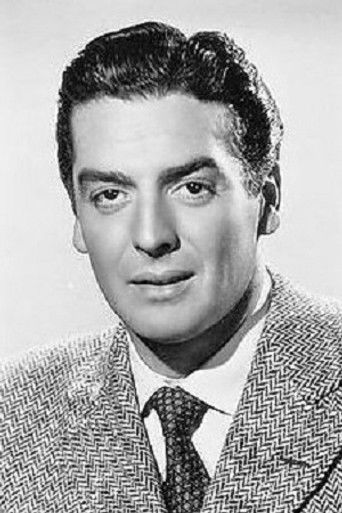
By the 1950s, Mature's attention drifted toward epic adventure films and biblical costume dramas, gradually abandoning the noir terrain that had defined his greatest work. He remained active in film through the 1960s and beyond, but his noir period–concentrated between 1941 and 1950–constitutes his most artistically vital body of work. Mature died in 1999 in Los Angeles, largely remembered by cinephiles as a undervalued instrument of noir's darker frequencies.
Mature embodied the noir protagonist caught between raw physicality and moral ambiguity, a man whose imposing frame and chiseled features masked an interior struggle with corruption and violence. His characters were rarely pure heroes or villains, but rather working-class men ensnared by circumstance, desire, or their own nature.