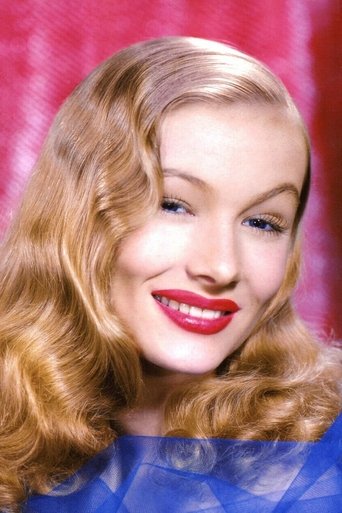
Born Constance Frances Marie Ockelman in Brooklyn in 1922, Veronica Lake rose to prominence during Hollywood's golden age with an otherworldly beauty and pale, luminous screen presence that seemed to glow against noir's shadowy landscapes. She signed with Paramount Pictures in 1941 and quickly became one of the studio system's most bankable stars, cultivating a carefully crafted image of elegance and mystery. Her sultry voice and ice-blue eyes proved ideal for the morally ambiguous heroines that defined 1940s cinema, establishing her as a natural fit for the emerging noir genre even as she maintained her status as a glamorous leading lady.
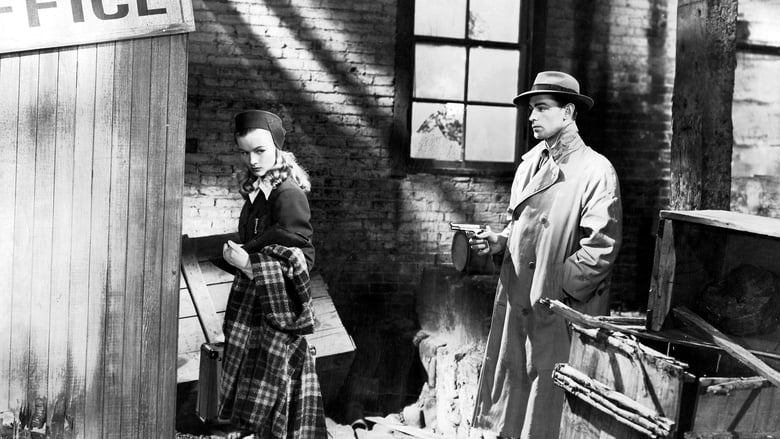
Lake's noir period coincided with her creative and commercial peak, beginning in earnest with This Gun for Hire (1942), where she played opposite Alan Ladd in a role that established the template for her finest work–the calculating yet vulnerable woman caught between legitimate longing and criminal necessity. The Blue Dahlia (1946) and The Glass Key (1942) cemented her status as noir's preeminent glamorous siren, roles that required her to convey psychological complexity through minimal dialogue and sustained visual enigma. Directors recognized that Lake's greatest strength lay in what she suggested rather than what she stated, her famous hairstyle creating a veil of mystery that made audiences question her characters' true motivations and loyalties.
By the late 1940s, Lake's career began its precipitous decline, a trajectory that mirrored the genre's own shifts and the post-war entertainment landscape's changing tastes. Her final major noir work came in 1948, after which she appeared in increasingly marginal productions and pursued stage work, attempting to revive a career that had burned with extraordinary intensity but limited staying power. The actress struggled with personal difficulties, including alcoholism and failed marriages, challenges that would become distressingly public and ultimately define her post-Hollywood narrative. Despite her abbreviated peak, Lake's influence on noir's visual and thematic vocabulary remained indelible, her image synonymous with the genre's most seductive and treacherous archetypes.

Lake's legacy as a noir icon endures disproportionately to her total output, a testament to the singular power of her screen presence and her instinctive understanding of the genre's psychological dimensions. She spent her later years in relative obscurity, eventually finding employment in small roles and on television before her death in 1973. Film historians have increasingly recognized her contributions to noir's development, reassessing her work beyond the studio's marketing machinery to appreciate her genuine dramatic gifts. Her collaboration with director Frank Tuttle and cinematographer John Seitz on This Gun for Hire remains a masterclass in visual noir storytelling, one that established aesthetic and narrative precedents the genre would pursue throughout the 1940s.
Lake embodied the enigmatic, luminous femme fatale whose ethereal beauty masked moral ambiguity and hidden depths. Her signature peek-a-boo hairstyle became an icon of noir's visual language, framing her face as a weapon of seduction and mystery. She specialized in roles that balanced vulnerability with dangerous allure, making her a perfect instrument for noir's exploration of desire and deception.