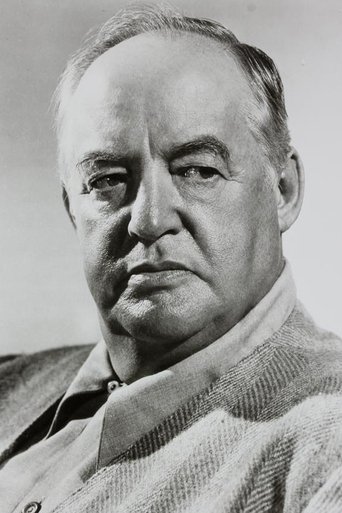
Sydney Greenstreet was born in Sandwich, Kent, England, in 1879, and spent three decades performing in British theatre before immigrating to America. His stage work earned him respect in classical roles, but cinema would transform him into one of noir's most iconic presences. Despite not appearing in his first film until age sixty-two, Greenstreet became a major Hollywood star within months, his commanding presence and mellifluous voice immediately commanding attention on screen.
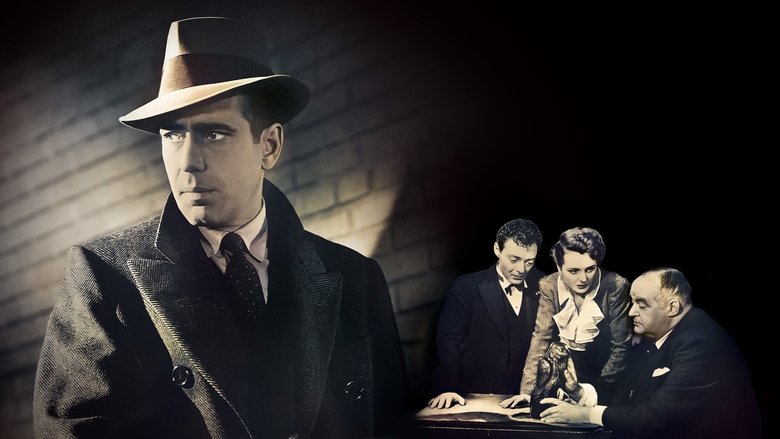
Greenstreet's collaboration with director John Huston and actor Humphrey Bogart in The Maltese Falcon (1941) launched his film career spectacularly, earning him an Academy Award nomination for Best Supporting Actor. His portrayal of the sinister Kasper Gutman–avuncular yet menacing–established the template for his noir roles: men of intellect and taste whose moral corruption runs deep. Over the next two decades, he would become synonymous with the calculating villain, a figure of genuine sophistication rather than mere brutality.
Working primarily for Warner Bros. throughout the 1940s, Greenstreet appeared in a succession of psychological thrillers and crime dramas that capitalized on his unique persona. In The Mask of Dimitrios (1944) and Conflict (1945), he demonstrated remarkable range, playing both mysterious puppet-masters and seemingly respectable men harboring dangerous secrets. His scenes invariably carried an electric tension; audiences knew that beneath his courteous demeanor lurked lethal cunning.
Greenstreet's later years saw him continue in character roles across film, television, and radio until his death in Hollywood in 1952. Though his noir period lasted little more than a decade, his legacy as cinema's quintessential sophisticated villain remains indelible. Few actors so completely dominated their archetype with such eloquent malevolence.
Greenstreet embodied the portly, silken-voiced villain who moves through noir's criminal underworld with aristocratic ease. His characters–often sophisticated blackmailers, crime lords, or treacherous partners–used cunning and urbane charm rather than violence, making them psychologically more menacing than brutish thugs.