Sydney Boehm emerged in the 1940s as one of noir cinema's most intellectually rigorous screenwriters, a craftsman who transformed pulp material into vehicles for moral inquiry. Born in Philadelphia, Boehm brought to Hollywood a writer's sensibility shaped by Depression-era realism and a fascination with the criminal mind as a mirror of social failure. His early work in B-pictures and serials served as apprenticeship; by mid-decade, he had mastered the architecture of suspense and the psychology of men pushed past their breaking points.
Boehm's collaboration with director Fritz Lang on The Big Heat (1953) stands as the apotheosis of his noir vision–a screenplay that transforms a pulp revenge narrative into a philosophical inquiry on the nature of violence and justice. Working with Lang's Germanic expressionism, Boehm crafted dialogue that crackled with subtext, exploring how a man's decent life can evaporate in an instant, leaving only the hunger for retribution. The film's power derives from Boehm's refusal to sentimentalize his protagonist's descent; Glen Ford's cop becomes as much a casualty of fate as its instrument.
Before and alongside his Lang partnership, Boehm proved his versatility across multiple noir idioms. Union Station (1950) showcases his mastery of the procedural thriller, while Side Street (1950) reveals his gift for tracing the hairline fracture between respectability and criminality in working-class lives. His scripts typically center on men of marginal status–taxi drivers, postal workers, cops–whose ordinariness makes their corruption or victimization all the more devastating. Boehm understood that noir's true subject was not crime but the fragility of the social contract.
Boehm's career extended into the 1950s and beyond, though his most concentrated period of noir brilliance burned brightest between 1948 and 1955. He wrote with economical precision, avoiding the overwrought metaphors that plagued lesser noir scripts, instead letting situation and dialogue carry thematic weight. His influence rippled through television and later film, establishing a template for crime writing that valued psychological authenticity over stylistic flourish.
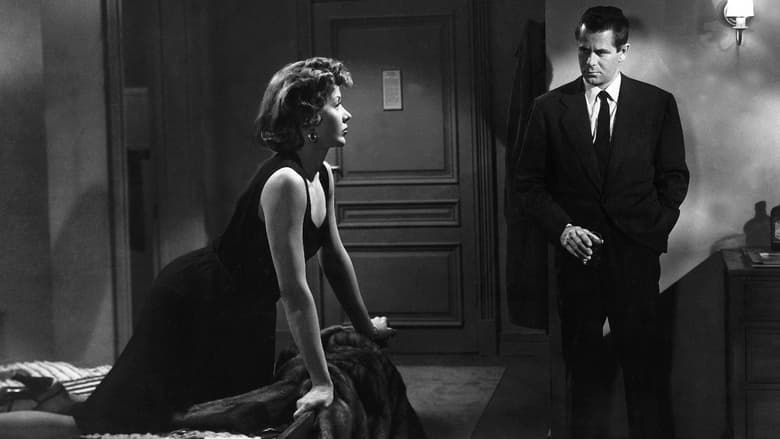
In the film's most brutal and morally clarifying moment, Lee Marvin's brutal gangster Vince Stone hurls scalding coffee into Gloria Grahame's face—an act of savage jealousy that disfigures her and ignites her desire for revenge. The scene crystallizes Boehm's thematic obsession: the way violence spirals outward, corroding everyone it touches, and how cruelty breeds its own retribution. The script's genius lies in making this act of sadism feel not like melodrama but like the logical endpoint of a world built on brutality and contempt. It is noir's coldest reckoning with the price of living among predators.
| Year | Film | Role | Director | |
|---|---|---|---|---|
| 1948 | The Undercover Man | – | Joseph H. Lewis | Recommended |
| 1949 | Gun Crazy | Story | Joseph H. Lewis | Essential |
| 1950 | Union Station | – | Rudolf Maté | Essential |
| 1950 | Side Street | – | Anthony Mann | Essential |
| 1952 | The Whip Hand | – | William Cameron Menzies | Recommended |
| 1953 | The Big Heat | – | Fritz Lang | Essential |
| 1954 | Hell's Half Acre | – | John H. Auer | Curio |
| 1954 | Rogue Cop | – | Roy Rowland | Recommended |
| 1955 | Illegal | – | Lewis Allen | Recommended |
Sydney Boehm enters the world in a city shaped by industrial decline and working-class struggle–experiences that would later inform his noir narratives.
Boehm relocates to Los Angeles during the Depression, beginning work in radio and pulp publishing before entering the film industry.
Boehm receives his first screenwriting credit, beginning a career that would span three decades in film and television.
His first significant noir work establishes Boehm as a writer capable of bringing moral complexity to crime narratives.
Co-writes the original story for Joseph H. Lewis's landmark film, demonstrating his gift for depicting criminal passion with psychological authenticity.
Two essential noir films establish Boehm as a major voice in the genre; both explore the corruption of ordinary men in ordinary circumstances.
Boehm's collaboration with Fritz Lang produces what many consider his masterpiece, a philosophical inquiry into vengeance and moral degradation.
As the classic noir cycle fades, Boehm transitions to television and other genres, though continuing to work in crime-related material.
Boehm continues writing for episodic television, bringing noir sensibilities to series work into the 1970s.
Sydney Boehm dies at age 82, leaving behind a body of work that represents noir cinema at its most morally serious and psychologically acute.