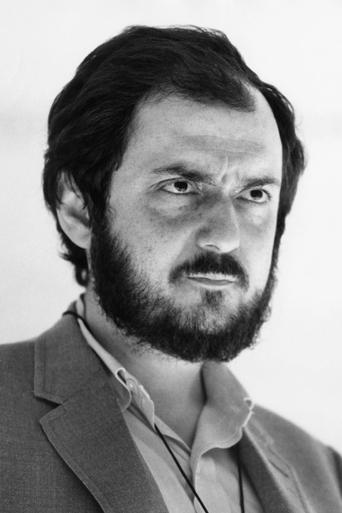
Stanley Kubrick was born in the Bronx, the son of a physician, and developed an early fascination with photography and chess–two pursuits that would define his directorial aesthetic. After working as a photographer for Look magazine, he transitioned to cinema with a hunger to master the medium's technical possibilities. His early noir films emerged from a restless intelligence dissatisfied with conventional storytelling, seeking instead to embed psychological complexity within tightly controlled visual compositions. By the mid-1950s, Kubrick had established himself as a formidable new voice, one willing to challenge the genre's established conventions.
The Killing and Killer's Kiss, made within months of each other, announced Kubrick as a filmmaker of singular vision. The Killing, in particular, demonstrated his talent for structural innovation, fracturing the heist narrative across multiple perspectives and temporal disruptions that presaged postmodern approaches to cinema. His compositions–stark, symmetrical, and frequently shot through doorways and corridors–created a visual language of entrapment. Kubrick's noir work proved that the genre remained vital as a vehicle for exploring how systems of fate, whether criminal or institutional, crush individual will.
Unlike many of his noir contemporaries, Kubrick harbored ambitions beyond the constraints of crime cinema. Yet his noir period provided the laboratory for developing a directorial philosophy rooted in meticulous control: every frame composed with mathematical precision, every actor's movement choreographed, every narrative twist earned through logical inevitability rather than melodramatic convenience. This discipline would carry into his subsequent work, but the noir films remain essential documents of a director discovering his extraordinary powers.
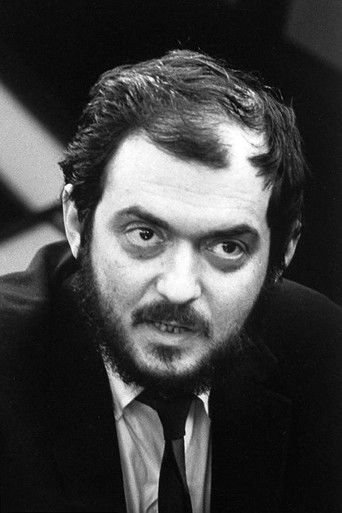
Kubrick's noir output was brief but devastating. He moved toward larger canvases–war films, science fiction, historical epics–yet the sensibility formed in these black-and-white crime dramas persisted: the conviction that cinema must engage the viewer's intellect as rigorously as it seduces the eye. His noir films stand as proof that the genre could accommodate genuine artistic ambition.
Kubrick emerged as noir's intellectual architect, a director who treated crime narratives as geometric puzzles of fate and human weakness. His films eschew sentimentality for clinical precision, constructing moral labyrinths where characters become trapped by their own ambitions and the cold machinery of circumstance.