Films People Pull a Fast One Night Beat Reading Room On TV Shop
Director · The Unflinching Documentarian

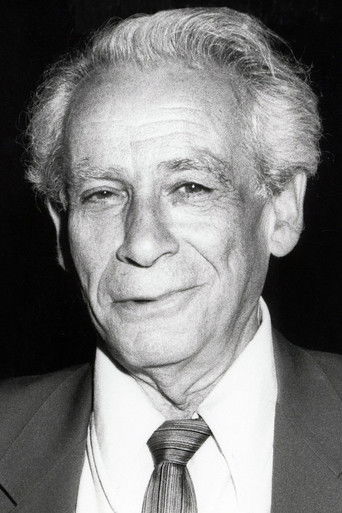
Samuel Fuller

BornAugust 12, 1911, New York City, New York
DiedOctober 30, 1997, Hollywood, California
Noir Films8 films
Peak Years1950–1958
Photo: TMDB
Scroll

Samuel Fuller was born in New York City and came of age as a newspaperman and crime reporter before his military service in World War II. These twin obsessions–journalism and combat–infused his directorial sensibility with an almost anthropological urgency. Fuller believed cinema should function as a kind of visual journalism, capturing the texture of real streets and real violence without the softening filters of conventional melodrama. He entered filmmaking in the mid-1940s with this unflinching philosophy already formed, convinced that the camera's primary obligation was to truth.

Fuller's noir period crystallized in the early 1950s with films that treated crime and corruption as sociological phenomena rather than moral tales. Pickup on South Street (1953) and House of Bamboo (1955) demonstrated his mastery of location shooting and his refusal to sentimentalize either criminals or the law. He populated his films with informants, prostitutes, and small-time operators–the actual human geography of noir–and allowed them the complexity of real people rather than archetypes. His directorial style was deliberately confrontational, using stark compositions and jarring cuts to force audiences into uncomfortable proximity with his characters.

Crime is a disease and I wanted to cure it by showing it, not by preaching. – Samuel Fuller

Where other noir directors sought psychological depth or moral ambiguity, Fuller pursued empirical observation. His later work, including The Naked Kiss (1964), pushed beyond noir's conventions toward a kind of grotesque realism that anticipated the dissolution of the genre itself. Fuller's influence lay not in stylistic innovation but in his insistence that cinema could be simultaneously art and journalism, that the lowest subjects deserved the highest formal attention. He demonstrated that noir's streetscapes were not merely backdrops for private drama but legitimate territories for serious artistic inquiry.

Fuller remained an outsider within Hollywood, never fully assimilated into the studio system despite his commercial success. His combative personality and refusal to compromise his vision often limited his opportunities, yet this marginality reinforced his artistic authenticity. By the 1960s, he was increasingly recognized as a visionary whose commitment to documentary truth had anticipated the New Wave's interrogation of cinema's relationship to reality. His legacy rests not on technical virtuosity but on moral clarity and an unshakeable belief in cinema's obligation to witness.

Noir Archetype The Street-Level Realist

Fuller embodied the noir director who rejected studio polish for raw authenticity, embedding his camera in the gritty margins of American life. His work privileges documentary truth over psychological introspection, treating criminals and cops alike as products of their environment rather than moral abstractions.
The Scene That Defines Them

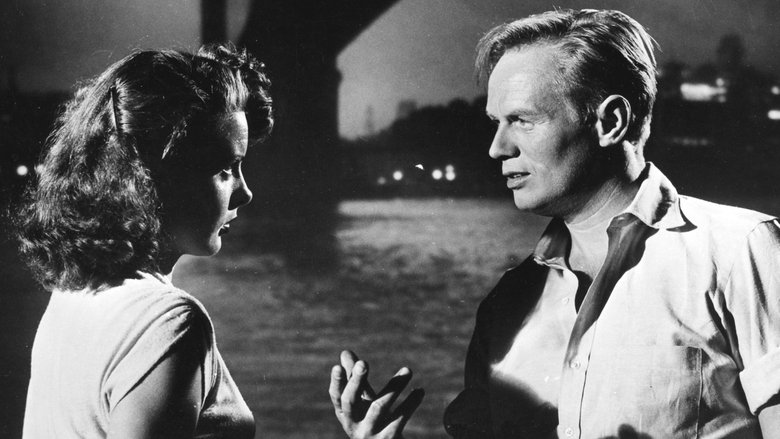
Pickup on South Street
Pickup on South Street – 1953

Candy's Confession at the Canal

Third act, interrogation sequence

A police stool pigeon confronts the female lead in the industrial shadowland beneath Manhattan, and Fuller's camera refuses sentimentality or judgment. The scene encapsulates Fuller's noir philosophy: characters are shaped by their circumstances, survival trumps morality, and the camera's job is to witness without flinching. The composition emphasizes the raw brick and exposed infrastructure of the city's underbelly, treating environment as character. No musical score, minimal dialogue–just the texture of place and the weight of economic desperation.

The Noir Canon

YearFilmRoleDirector
1953Pickup on South StreetSamuel FullerEssential
1955House of BambooSamuel FullerEssential
1957The Crimson KimonoSamuel FullerEssential

The Road In

1930
Becomes crime reporter

At age nineteen, Fuller begins work as a crime reporter for the New York Graphic, immersing himself in the street life and criminal underworld of Depression-era Manhattan.

1935
Turns to pulp fiction

Frustrated with journalism's limitations, Fuller publishes crime fiction in pulp magazines while maintaining his reporting work, blending documentary observation with narrative innovation.

1942
Enlists in U.S. Army

Fuller abandons his writing career to serve in World War II, becoming a combat infantryman with the 1st Infantry Division in North Africa and Europe, an experience that permanently shaped his artistic vision.

1947
Enters film industry

After military discharge, Fuller moves to Hollywood and begins work as a screenwriter, bringing his journalistic eye and war experience to crime and action scripts.

1949
Makes directorial debut

Fuller directs The Baron of Arizona, a low-budget crime film that establishes his signature style of location shooting and documentary realism, immediately distinguishing him from studio conventions.

1953
Reaches artistic peak

Pickup on South Street becomes a critical success, establishing Fuller as a major noir voice and demonstrating his ability to merge commercial appeal with uncompromising artistic vision.

1955
International recognition

House of Bamboo, shot partly in Japan, extends Fuller's reputation abroad and gains significant critical appreciation from European cineastes, particularly the Cahiers du cinéma circle.

1957
Explores racial themes

The Crimson Kimono, addressing interracial relationships in Los Angeles, pushes Fuller's social documentary impulses into overtly progressive territory, one of the few Hollywood films of the era to engage seriously with racial integration.

1964
Transcends noir

The Naked Kiss marks Fuller's evolution beyond noir conventions toward a grotesque, hallucinatory realism that anticipates both psychedelia and post-classical cinema, confirming his status as a visionary outlier.