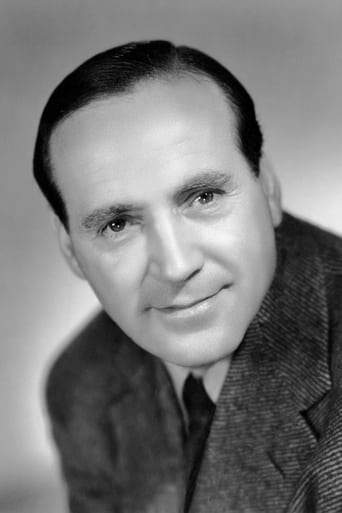
Rudolph Maté was born in Kraków, Poland, in 1898, the son of a chemist, and came of age during the fervent artistic movements of interwar Europe. He studied painting and engineering in Vienna, then gravitated toward cinema in the 1920s, initially as a cinematographer in Berlin under the tutelage of German Expressionist masters. His work as a director of photography on films like Dreyer's *Vampyr* established him as a virtuoso of chiaroscuro and spatial anxiety. When the Nazi ascendancy made Europe untenable for Jewish artists, Maté emigrated to Hollywood in 1935, where his European credentials and technical mastery made him invaluable–first as a cinematographer for major studios, then gradually as a director.
Throughout the late 1930s and early 1940s, Maté worked in the shadow of Hollywood's studio system, cinematographing films for directors like Anatole Litvak while building the visual vocabulary that would define his own directorial work. His approach was fundamentally architectural: he conceived scenes as geometric puzzles of light and shadow, treating the frame as a space to be navigated rather than merely observed. This sensibility found its perfect expression in noir, where existential dread could be rendered through negative space, steep angles, and the careful orchestration of darkness. When he finally moved behind the camera as director in the mid-1940s, Maté brought with him the precision of a Swiss watchmaker and the fatalism of a European who had witnessed civilization's collapse.
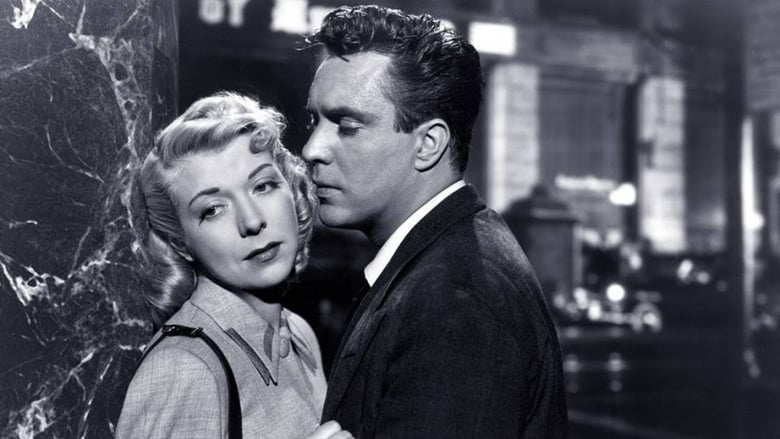
Maté's masterwork, *D.O.A.* (1950), crystallized everything he had learned. The film's opening–a man walking into a police station to report his own murder–became the perfect visual and narrative corollary to Maté's aesthetic: a world where causality is inverted, where the protagonist is already dead and merely discovering the fact. His direction of *Union Station* (1950) and *The Dark Past* (1948) demonstrated his ability to modulate tension through purely visual means: the tightening of frames, the encroachment of shadow, the strategic placement of bodies in space. Unlike more flamboyant noir directors, Maté never called attention to his technique; instead, his direction felt inevitable, as though the camera had discovered rather than created the noir universe.
Maté continued directing through the 1950s, gradually moving away from noir as the cycle waned, working in science fiction and adventure films with the same technical precision he had brought to crime thrillers. He died in 1964, largely forgotten by the generation that had celebrated younger, more openly auteurist directors. Yet his films endure as models of classical craft–austere, geometrically severe, and deeply pessimistic about human agency. For students of noir technique, Maté remains essential: the director who proved that visual mastery could be more expressive than any script.
Mate embodied the European émigré director who brought Old World cinematographic sophistication to American noir. His visual command–rooted in German Expressionism and refined through years in Hollywood's technical departments–created baroque, intricately composed frames that elevated pulp material into something austere and fatalistic. He was less the visionary auteur than the meticulous architect, engineering suspense through composition and light rather than psychological depth.