Films People Pull a Fast One Night Beat Reading Room On TV Shop
Director · The Kinetic Action Master

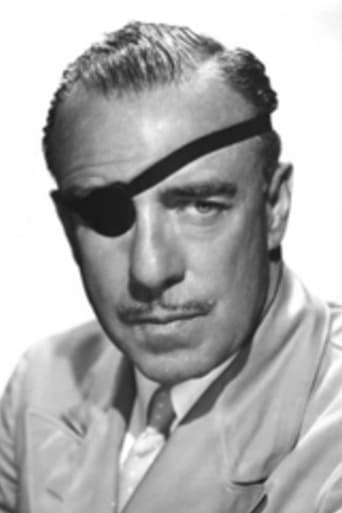
Raoul Walsh

BornMarch 11, 1887, New York City, New York
DiedDecember 31, 1980, Burbank, California
Noir Films12 films
Peak Years1941–1950
Photo: TMDB
Scroll

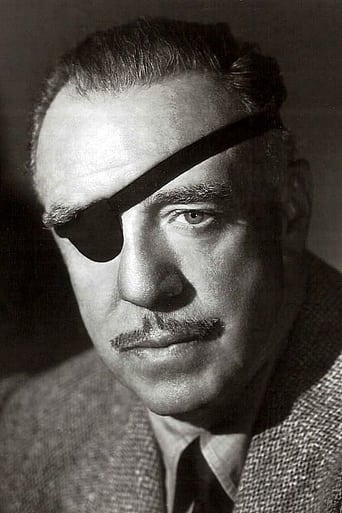
Raoul Walsh was born in New York City in 1887, the son of a hat manufacturer and an actress, inheriting theatrical sensibilities that would define his directorial vision. He entered cinema as an actor and assistant director, working with D.W. Griffith on Birth of a Nation before transitioning to directing in the mid-1910s. By the 1920s and 1930s, Walsh had established himself as a master of action spectacle and intimate character drama, though the loss of his right eye in a 1928 automobile accident only intensified his visual compositional discipline. His career spanned nearly five decades, making him one of the most prolific and enduring figures in American cinema.

Walsh's approach to film noir emerged fully formed in the early 1940s, driven by his conviction that crime stories were fundamentally about momentum and survival instinct. He rejected the shadowy expressionism favored by European-trained contemporaries, instead employing brightly lit, deeply focused compositions that made the criminal underworld feel immediate and tangible. His collaborations with James Cagney and Humphrey Bogart produced some of noir's most physically dynamic narratives, where protagonists moved through landscapes with the purposefulness of hunted animals. Walsh's camera never stopped moving, mirroring the restless energy of men operating outside society's constraints.

Walsh is the last of the great action directors, and his films move like nothing else in American cinema – – David Bordwell, Film Historian

White Heat stands as Walsh's noir apotheosis–a film that transcended genre conventions to become a psychological case study of maternal obsession and explosive violence. The film's celebrated climax, in which Cagney's Cody Jarrett ignites an oil refinery in apocalyptic self-immolation, epitomized Walsh's belief that action should serve characterization. His influence on postwar American cinema extended far beyond noir, shaping the kinetic grammar of action filmmaking itself. Walsh retired in the mid-1950s after suffering a stroke, leaving behind a legacy of over 140 films that demonstrated cinema's capacity for visceral storytelling.
Raoul Walsh

Walsh's directorial philosophy centered on the primacy of movement and visual clarity. He worked quickly, improvised frequently on set, and trusted his actors' instincts, creating an environment where spontaneity and precision coexisted. Though often dismissed by auteur critics as a mere craftsman rather than an artist, contemporary scholarship has recognized Walsh as a stylist of profound sophistication, whose formal innovations anticipated modern cinema's emphasis on kinetic narrative and embodied performance.

Noir Archetype The Visceral Realist

Walsh embodied the director who transformed crime narratives into kinetic physical experiences, prioritizing raw action and masculine psychology over psychological introspection. His noir films eschewed static dialogue for movement, propulsion, and the visual language of bodies in motion, treating violence and betrayal as natural extensions of character rather than moral commentary.
The Scene That Defines Them

White Heat
White Heat – 1949

Cody Jarrett's Final Conflagration

Third act climax

Cagney's Cody Jarrett, cornered atop a massive oil refinery, screams 'Made it, Ma–top of the world!' before deliberately igniting the structure in a suicidal inferno. The explosion consumes both criminal and landscape in a single image of apocalyptic catharsis. Walsh's decision to film the action in bright daylight rather than shadow intensifies the horror and spectacle, transforming melodrama into tragedy. This scene crystallizes Walsh's philosophy: violence is not an aberration but the logical endpoint of unchecked desire and fractured psyche.

Made it, Ma–top of the world!

The Noir Canon

YearFilmRoleDirector
1941High SierraRaoul WalshEssential
1940They Drive by NightRaoul WalshEssential
1949White HeatRaoul WalshEssential
1946The Man I LoveRaoul WalshRecommended

The Road In

1912
Film Career Begins

Walsh enters cinema as an actor and assistant director, working under D.W. Griffith at Biograph Studios, absorbing the fundamentals of visual storytelling from American cinema's founding generation.

1915
Directorial Debut

Walsh directs his first film, The Life of General Villa, establishing himself as a director capable of managing large-scale action sequences and location shooting.

1928
Automobile Accident

A jackrabbit darts into Walsh's windshield; shattered glass destroys his right eye. Rather than retire, he adapts his technique, developing an even more precise compositional style dependent on deeper focus and camera movement.

1940
Noir Period Begins

They Drive by Night marks Walsh's entry into crime cinema, introducing the kinetic approach to noir narrative that would define his 1940s work and influence postwar action filmmaking.

1941
High Sierra Released

High Sierra, with Humphrey Bogart, establishes Walsh's signature treatment of the doomed criminal protagonist, emphasizing movement through landscape and the inevitability of downfall.

1949
White Heat Premiere

White Heat with James Cagney becomes Walsh's masterpiece, a psychological noir that transforms the gangster film into intimate tragedy. The film's critical and commercial success consolidates Walsh's reputation as a major American director.

1950
Peak Years Conclude

By 1950, Walsh has completed his most significant noir work. The director begins shifting toward adventure and Technicolor spectacles, though maintaining his kinetic aesthetic throughout the 1950s.

1954
Career Winds Down

Walsh directs his final film, The Tall Men, after suffering a stroke that limits his ability to work on set. He retires with a legacy of 142 films spanning four decades of cinema history.