Films People Pull a Fast One Night Beat Reading Room On TV Shop
Director · The Composer of Shadows

Otto Preminger

BornDecember 5, 1905, Vienna, Austria-Hungary
DiedApril 23, 1986, New York City, New York
Noir Films8 films
Peak Years1944–1959
Photo: TMDB
Scroll

Otto Ludwig Preminger was born in Vienna in 1905, the son of a prominent Austrian lawyer and politician. After studying law at the University of Vienna, he abandoned jurisprudence for the theater, becoming a stage director of considerable reputation in Central Europe during the 1920s and early 1930s. His theatrical work–marked by innovative blocking, symbolic lighting, and a refusal of sentimentality–would define his cinematic approach. He fled Nazi-occupied Austria in 1935, eventually reaching Hollywood where his European sophistication and uncompromising artistic vision would prove both his greatest asset and his most persistent obstacle.

Preminger's early Hollywood years were marked by friction with studio executives who resisted his modernist sensibility. His breakthrough came with Laura (1944), a murder mystery that revolutionized noir aesthetics through its sophisticated use of subjective narration, chromatic cinematography, and psychological complexity. The film's famous theme song and dreamlike atmosphere established Preminger as a major directorial voice. Throughout the late 1940s and 1950s, he navigated the tension between studio demands and personal artistic vision, often clashing with producers but delivering films of remarkable technical precision and moral nuance.

Preminger's camera doesn't judge; it observes. In that restraint lies all the moral complexity noir promised but rarely delivered. – David Bordwell, film theorist

Where the Sidewalk Ends (1950) and Anatomy of a Murder (1959) represent the zenith of his noir vision–works that expanded the genre's vocabulary to encompass institutional critique and philosophical doubt. His camera, controlled and observant rather than expressionistic, revealed character through spatial relationships and compositional geometry. Preminger's dialogue, often sparse and naturalistic, contrasted sharply with the baroque melodrama typical of his contemporaries. He championed controversial subject matter, pushing against the Production Code's restrictions on sexuality, violence, and moral relativism.
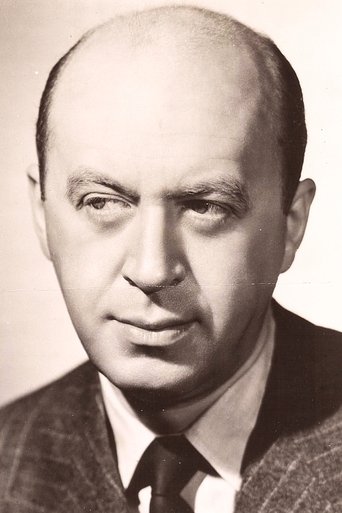
Otto Preminger

Preminger's legacy extends beyond noir into courtroom drama, biblical spectacle, and political thriller–genres he approached with the same architectural rigor. His influence on 1960s and beyond cinema was substantial, particularly among European directors who recognized in his work a bridge between classical and modernist cinema. He remained active until his death in 1986, never abandoning the formal precision that defined his vision.

Noir Archetype The Formal Modernist

Preminger elevated noir beyond pulp melodrama into formal experimentation and moral ambiguity. His geometric compositions, long takes, and restless camera work transformed the genre into a vehicle for psychological and social critique, anticipating postmodern cinema while remaining rooted in classical storytelling.

The Scene That Defines Them

Laura
Laura – 1944

The Portrait Revelation

Final act, climactic confrontation

Detective Mark McPherson stands before Laura's portrait while she listens from the shadows, the painting's mysterious power collapsing into human vulnerability. Preminger's camera moves with glacial precision, the composition shifting as truth emerges–a spatial metaphor for the unveiling of deception. The scene encapsulates Preminger's method: subjective psychology rendered through objective form, shadow and light as moral indicator rather than atmospheric flourish.

The Noir Canon

YearFilmRoleDirector
1944LauraOtto PremingerEssential
1945Fallen AngelOtto PremingerRecommended
1950Where the Sidewalk EndsOtto PremingerEssential
1959Anatomy of a MurderOtto PremingerEssential

The Road In

1905
Born in Vienna

Otto Ludwig Preminger born December 5 into a prominent Austrian-Jewish family with deep roots in law and politics.

1928
Directorial debut in theater

After studying law at the University of Vienna, Preminger abandons his legal career to direct for the Burgtheater, establishing himself as an innovative stage director.

1935
Flees Nazi Austria

Preminger emigrates to the United States following the rise of the Nazi regime, initially finding work in Hollywood as an actor and dialogue director.

1941
First directorial assignment

Premieres as Hollywood director with a minor film; spends years in studio servitude directing forgettable pictures while perfecting his craft.

1944
Laura becomes breakthrough

Release of Laura transforms Preminger's career; the film's critical and commercial success establishes him as a major director and introduces his modernist sensibility to American audiences.

1950
Where the Sidewalk Ends released

Preminger's masterwork of psychological noir appears, featuring radical narrative techniques and moral ambiguity that push genre boundaries; Dana Andrews gives career-best performance.

1952
Contracts with studio end

Preminger becomes an independent producer-director, gaining greater creative control and ability to pursue controversial subject matter previously rejected by moguls.

1959
Anatomy of a Murder released

Final noir masterpiece tackles courtroom procedure and sexual violence with unprecedented frankness; receives nomination for Academy Award for Best Cinematography and solidifies Preminger's status as major artist.

1970
Receives Thalberg Award

Preminger honored with Irving G. Thalberg Memorial Award, recognizing lifetime achievement in cinema and influence on modernist filmmaking.

1986
Death in New York

Preminger dies April 23 at age 80, leaving behind a legacy of formal innovation and uncompromising artistic vision that influenced generations of directors.