Films People Pull a Fast One Night Beat Reading Room On TV Shop
Actor · The Magician of Shadows

Orson Welles

BornMay 6, 1915, Kenosha, Wisconsin
DiedOctober 10, 1985, Hollywood, California
Noir Films7 films
Peak Years1947–1958
Photo: TMDB
Scroll

George Orson Welles (1915–1985) arrived in Hollywood as a prodigy from the New York theater world, already famous for his War of the Worlds radio broadcast and groundbreaking stage productions. Though primarily known as a director and producer, his acting performances in noir cinema revealed a performer of extraordinary range–capable of projecting both magnetism and menace, vulnerability and domination. His approach to character was psychological and baroque, influenced by German Expressionism and his own Shakespearean training. Welles transformed every role into an exploration of power, deception, and the American dream's dark underbelly.

In the 1940s and 1950s, Welles appeared in some of noir's most visually innovative and thematically complex films. His collaborations with directors like Carol Reed and Robert Siodmak demonstrated his willingness to serve stories larger than his own ego, though his unpredictability and perfectionism often complicated productions. Welles possessed a distinctive voice–deep, measured, cadenced–and a physical presence that commanded attention even in supporting roles. His performances were never merely acting; they were orchestrated events, each gesture and intonation calculated for maximum psychological impact.

Welles had the gift of bringing out the sinister potential in the most commonplace situations. – James Naremore, Film Noir film historian

Financial constraints and his own artistic restlessness limited Welles's noir output in later decades, yet his influence on the genre remained immeasurable. He demonstrated that noir could be intellectually rigorous and formally experimental without sacrificing entertainment value. His characterizations–whether the mysterious Harry Lime or the tormented Miguel Vargas–refused easy moral judgments, instead presenting characters as products of corrupted systems and their own fatal ambitions. Welles proved the actor could be as much an auteur as the director, shaping meaning through performance choices rather than dialogue alone.
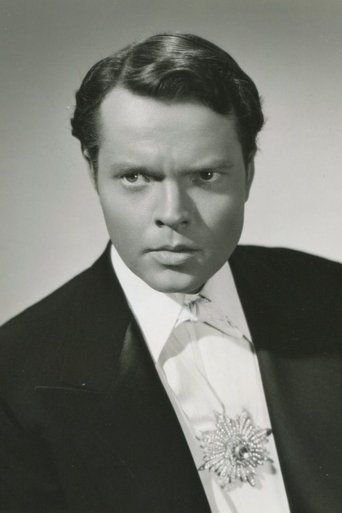
Orson Welles

Welles's noir legacy rests on a relatively small but indelible body of work. These performances showcased an artist uninterested in conventional heroism, preferring instead the moral complexity of men caught between desire and destruction. His technical mastery–the control of voice, face, and body–combined with an intuitive understanding of camera and shadow made him irreplaceable in the genre's most ambitious films. He remains the standard against which all noir performances are measured.

Noir Archetype The Visionary Rogue

Welles embodied the brilliant, self-destructive antihero–a man of towering intellect and artistic ambition whose moral compass spins wildly. He brought Shakespearean grandeur to noir's moral ambiguity, playing characters whose charisma masks deep corruption or paranoia, transforming the genre into high art.

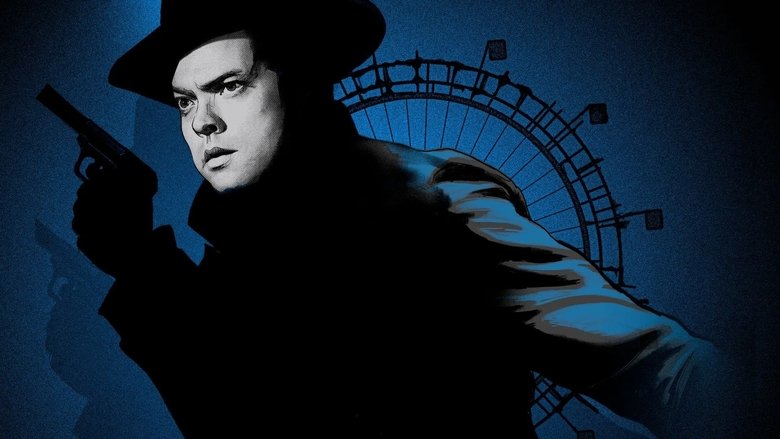
The Scene That Defines Them

The Third Man
The Third Man – 1949

The Ferris Wheel Confrontation

Third act

Atop the Vienna Ferris wheel, Lime reveals his true nature to his old friend Holly Martins, articulating a philosophy of pure moral relativism wrapped in urbane charm. The scene is shot with severe compositional precision, Lime's silhouette against the city below, his voice smooth and persuasive even as he expounds on the worthlessness of human life. Welles delivers the monologue with an almost gentle menace, making villainy seem rational and seductive. This moment defines his noir persona: the sophisticated criminal who has transcended conventional morality through intellect and will.

In Italy, for thirty years under the Borgias, they had warfare, terror, murder, bloodshed–they produced Michelangelo, Leonardo da Vinci, and the Renaissance. In Switzerland, they had brotherly love, five hundred years of democracy and peace, and what did they produce? The cuckoo clock.

The Noir Canon

YearFilmRoleDirector
1947The Lady from ShanghaiMichael O'HaraOrson WellesEssential
1949The Third ManHarry LimeCarol ReedEssential
1955Mr. ArkadinGregory ArkadinOrson WellesRecommended
1958Touch of EvilHank QuinlanOrson WellesEssential

The Road In

1915
Born in Kenosha, Wisconsin

George Orson Welles enters the world to a middle-class family with theatrical ambitions. His precocious talent would be evident from early childhood.

1934
New York theater debut and early acting roles

Welles begins his stage career with the Todd School theater program and quickly gains attention in New York productions, establishing himself as an innovative director and performer.

1938
War of the Worlds radio broadcast

Welles directs and narrates the CBS radio adaptation, causing nationwide panic and cementing his reputation as a media genius capable of extraordinary effect.

1941
Citizen Kane released

Welles's directorial masterpiece establishes him as a revolutionary filmmaker, though his acting in the lead role reveals equal brilliance in character work and psychological depth.

1947
The Lady from Shanghai released

Welles directs and stars in this visually baroque noir thriller, demonstrating his mastery of the genre's formal possibilities while delivering a performance of paranoid intensity.

1949
The Third Man released

Welles appears opposite Joseph Cotten in Carol Reed's Vienna-set masterpiece, delivering a brief but iconic performance as the mysterious Harry Lime that becomes the film's moral center.

1958
Touch of Evil released

Welles directs and plays Captain Quinlan in this Mexican border noir, creating one of cinema's great tragic villains–a corrupt cop whose obsession with justice has destroyed his own.

1958
Compulsion released

Welles appears as the famous defense attorney Jonathan Wilk in Richard Fleischer's adaptation of the Leopold-Loeb case, his courtroom monologue showcasing his oratorical power.

1962
The Trial released

Welles adapts Kafka's novel, casting himself in supporting roles and constructing a nightmarish bureaucratic noir that prefigures 1960s cinema while commenting on political paranoia.

1975
Later career reassessment begins

As print and television work occupy Welles, film historians begin serious reappraisal of his noir contributions, recognizing their formal innovations and thematic depth.