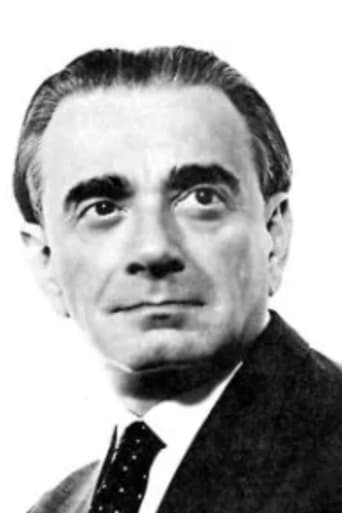
Miklós Rózsa was born in Budapest in 1907 into a musical family of Hungarian gentry. He studied composition at the Leipzig Conservatory and established himself in Europe as a concert and ballet composer before fleeing the Nazi occupation in 1940. His arrival in Hollywood coincided with the emerging aesthetic of film noir, and Rózsa's already-developed modernist sensibility–influenced by Bartók and Kodály–found its perfect expression in the genre's demand for unsettling, psychologically penetrating soundscapes.
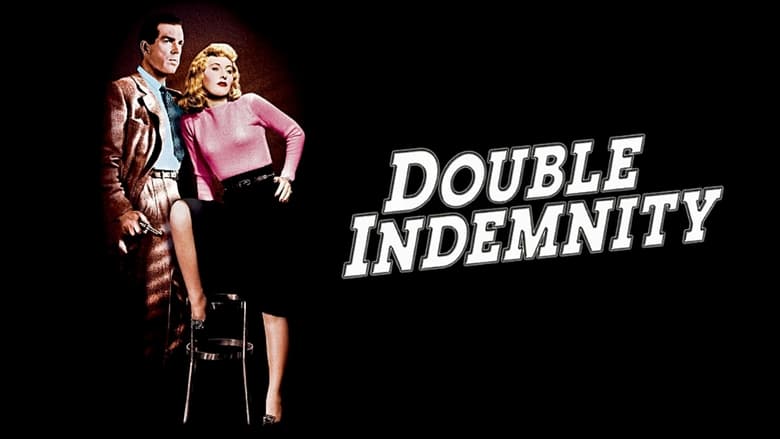
Rózsa's breakthrough came with Double Indemnity (1944), Billy Wilder's masterwork of moral corruption, where the composer's kaleidoscopic orchestration of strings and brass became inseparable from the narrative's spiral into depravity. Unlike Max Steiner's romantic maximalism or Dimitri Tiomkin's heroic urgency, Rózsa employed dissonance, chromaticism, and chamber instrumentation to render the interior life of characters trapped in their own duplicity. His score for Spellbound (1945), with its famously unsettling theremin contributions, demonstrated his willingness to embrace experimental sonorities in service of psychological instability.
Throughout the late 1940s and early 1950s, Rózsa became the composer of choice for filmmakers exploring the fractured psyche–Minnelli, Siodmak, and John Huston all sought his collaboration. The Killers (1946) and The Asphalt Jungle (1950) showcase his mature style: lean orchestration, thematic economy, and the deployment of dissonance not as mere effect but as a structural principle reflecting moral ambiguity. His scores resisted the sentimentality that often threatened noir's cynical vision, instead offering cool, cerebral accompaniment to tales of betrayal and doom.
Rózsa's influence on film composition proved foundational; his techniques were adopted by younger composers and his insistence on thematic coherence and modernist sophistication elevated the entire art form. Though he would later turn to historical epics and biblical dramas, his noir work remains his most enduring legacy–evidence that cinema's most transient genre produced some of its most intellectually rigorous music.
Rózsa pioneered the integration of modernist classical composition with noir's psychological landscape, treating the score not as accompaniment but as a structural pillar of narrative tension. His work elevated film music from functional underscoring to thematic inevitability, making the orchestra itself a character in the moral decay of his stories.