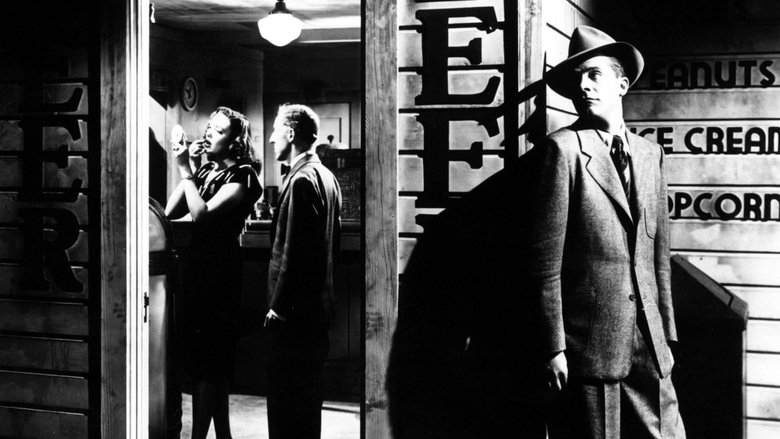
Linda Darnell emerged from Texas as one of Hollywood's most luminous young talents, signed by Twentieth Century-Fox at sixteen. Her early career was dominated by period dramas and adventure films, but by the mid-1940s she discovered noir's murky terrain. With her dark eyes, sharp cheekbones, and husky voice, she possessed the exact physicality noir demanded. She would spend the latter half of the decade perfecting the art of the compromised woman caught between desire and doom.
In *Fallen Angel* (1945), Otto Preminger cast her against her ingénue past, revealing the actress who could sustain moral complexity. Her performance as Stella, the sultry diner waitress who lures men to their undoing, established her as a first-rank femme fatale. She followed this with *No Way Out* (1950), playing a white woman in a Harlem tenement whose lie destroys lives around her. These roles demonstrated her capacity to embody the noir protagonist who is both victim and architect of her own catastrophe.
Though her noir period was relatively concentrated, Darnell's work in the genre showcased a dramatic intelligence often obscured by her beauty. *Dark City* (1950) found her navigating the labyrinthine streets of a gambling underworld, her character caught between competing male obsessions. Her filmography reveals an actress increasingly comfortable with ambiguity and moral surrender. By the early 1950s, she had proven herself equal to any actress working in the genre's highest registers.

Darnell's career extended well beyond the classic noir period, but her work in these five years remains her most critically celebrated. She returned frequently to dramatic roles that drew on the sophisticated cynicism she'd mastered in noir. Her legacy rests on a handful of exceptional performances that redefined the femme fatale as a complex, tragic figure rather than a mere plot device.
Linda Darnell embodied the dangerous allure of noir's most seductive women–beautiful, cunning, and morally ambiguous. Her characters operated in the shadowy margins of respectability, using their sexuality as both weapon and curse. She brought vulnerability beneath the surface charm, suggesting depths of desperation beneath the glamour.