Lee J. Cobb was born Leo Jacoby in New York City on December 8, 1911, the son of a Jewish immigrant family. He trained at the American Laboratory Theatre under Richard Boleslavski and established himself as a formidable stage actor before Hollywood beckoned in the late 1930s. By the 1940s, Cobb had become one of cinema's most recognizable character actors, commanding attention in every frame through sheer force of personality. His transition from Broadway to film coincided precisely with noir's golden age, and his authoritarian bearing made him essential to the genre's moral landscape.
Throughout the noir period, Cobb specialized in roles that placed him at the nexus of institutional power and corruption. In Call Northside 777 (1948), he portrayed a tough-minded police officer skeptical of innocence itself, while in The Dark Past (1949), he embodied a psychiatrist wrestling with redemption and professional ethics. These performances showcased his ability to convey internal conflict beneath a facade of certainty. His voice–deep, gravelly, often edged with threat–became as iconic as his brooding physical presence, making him the perfect visual and vocal anchor for narratives about authority's corrupting influence.
Cobb's work in Party Girl (1958) demonstrated his continued relevance in late noir, playing a ruthless crime boss with calculating intelligence rather than mere brutishness. He refused to play villains as one-dimensional; instead, he crafted characters whose power derived from conviction, however misguided. His collaborations with directors like Henry Hathaway and Alfred Werker produced some of the era's most psychologically complex crime dramas. By the 1950s, Cobb had become both a titan of the stage–winning critical acclaim in Death of a Salesman–and a cinema institution whose mere presence could elevate a production.
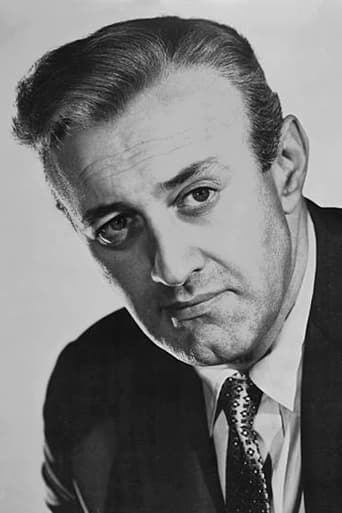
Lee J. Cobb's legacy in noir cinema rests not on leading-man glamour but on the authority of presence. He aged into his power rather than away from it, becoming more commanding as his hair grayed and his face grew weathered. His postwar work in television and film continued until his death on November 11, 1976, in Woodland Hills, California, leaving behind a body of work that defined the visual and vocal language of institutional villainy in American cinema.
Lee J. Cobb embodied the noir archetype of the powerful, often corrupt authority figure–judges, cops, crime bosses–whose moral ambiguity and commanding physicality made him the ideal foil to protagonists caught in webs of law and lawlessness. His deep voice and imposing frame conveyed both menace and gravitas, making him the ultimate symbol of institutional power gone wrong.

