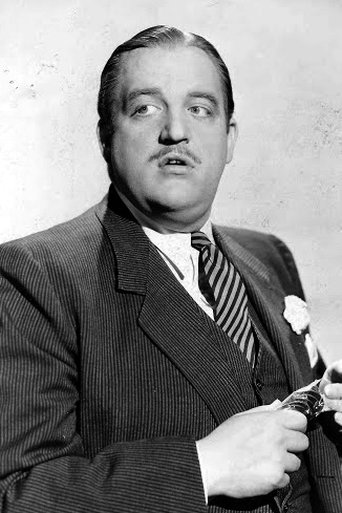
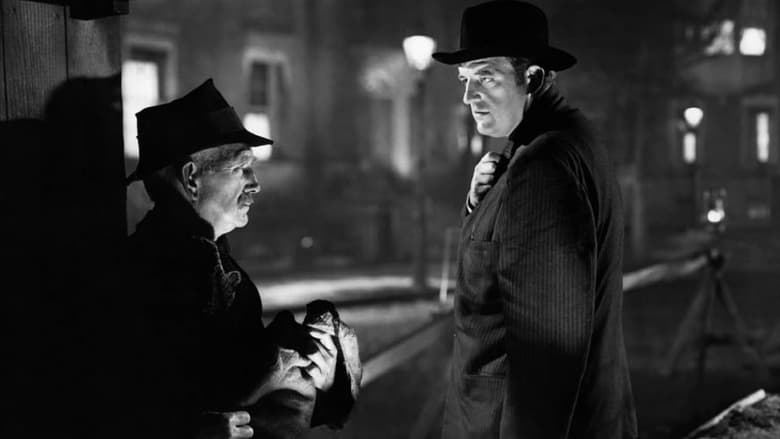
Samuel Laird Cregar was born in Philadelphia in 1913, the son of a prominent merchant family with theatrical connections. A towering figure at six feet three inches, Cregar initially studied drama at Amherst College before pursuing a career on the stage. He worked extensively in theater throughout the 1930s, including performances with the prestigious Pasadena Playhouse, where his commanding presence and voice made him a natural for roles demanding authority and menace. His transition to cinema came relatively late, but once established in Hollywood, he quickly became one of the most distinctive character actors of the 1940s.
Cregar's noir period began in earnest with This Gun for Hire (1942), where he played the heavy opposite Alan Ladd, establishing the archetype he would refine throughout the decade. His breakthrough role came in I Wake Up Screaming (1941), directed by H. Bruce Humberstone, where Cregar's Inspector McCallum became the template for the obsessed detective whose pursuit of justice borders on pathology. The role showcased his ability to render menace through psychological intensity rather than physical violence, a technique he perfected in subsequent films. His deep, modulated voice and glacial stare became signature elements of his screen persona.
Hangover Square (1945) proved to be Cregar's masterwork and finest noir achievement. Playing George Harvey Bone, a psychologically fractured composer in 1903 London, Cregar created a portrait of mental illness and murderous rage that remains psychologically piercing. The film's lush production design and John Brahm's expressionistic direction allowed Cregar to explore the darker dimensions of his character–a man capable of extraordinary violence during his episodes of madness. This performance cemented his status as one of noir's most accomplished actors, a player willing to inhabit morally complex and deeply disturbing characterizations.

Cregar's career was cut tragically short by his death in 1944, just as he was reaching his creative peak. He had struggled with weight throughout his life, and the extreme diet regimen he undertook contributed to his sudden death at age thirty-one. His relatively brief filmography contains some of noir's most memorable villain performances, and his influence on the genre extended far beyond his years of work. He remains a shadowy, enigmatic figure in noir history–a actor of genuine power whose full potential was never realized.
Cregar embodied the educated, cultured villain whose refined exterior masked violent impulses and psychological instability. His imposing frame and cultured voice made him the perfect noir antagonist–a man whose intelligence and charm only deepened the horror of his capacity for murder. He represented the corruption of civilization itself.