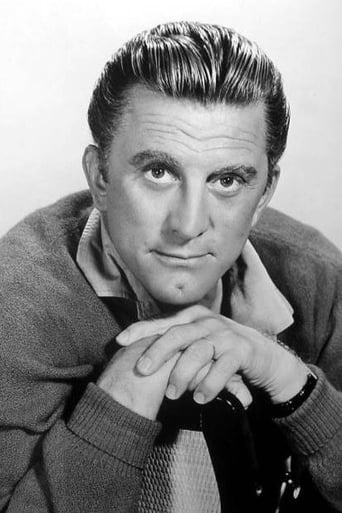
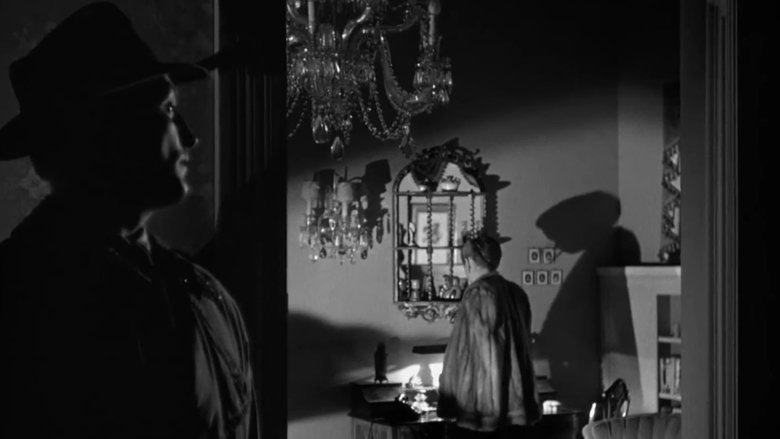
Kirk Douglas emerged in the immediate postwar era as one of American cinema's most visceral and intellectually engaged actors. Born Issur Danielovitch Demsky in Amsterdam, New York, to Belarusian Jewish immigrants, Douglas brought to his roles an almost Method-like intensity that prefigured the Actors Studio generation. His early work in film noir–beginning in 1946–revealed an actor willing to inhabit morally fractured men with unflinching honesty. Unlike the cool, detached noir heroes of the era, Douglas played characters whose internal conflicts erupted in nervous energy, ambition, and periodic violence.
His collaboration with director Jacques Tourneur and cinematographer John Alton on Out of the Past (1947) remains one of noir's defining achievements. As Jeff Bailey, Douglas delivered a performance of wounded vulnerability and dangerous desperation, a man trapped between a fatal woman and his own past. The role established him as more than a pretty face–he was a serious actor capable of complex emotional registers. Throughout the late 1940s and 1950s, he pursued increasingly challenging material, working with noir's greatest directors and playing protagonists whose ambitions and moral failures drove narrative catastrophe.
Detective Story (1951), directed by William Wyler, showcased Douglas's capacity for righteous anger and psychological unraveling. As Detective Jim McLeod, he portrayed a cop whose obsession with justice curdles into fascism and personal cruelty. Champion (1949) had already demonstrated his range, transforming a boxing narrative into a study of ruthless self-advancement. Douglas's noir work was never comfortable; his characters sweat, hesitate, and rage. He brought a working-class intensity to roles that might otherwise have been mere archetypes.
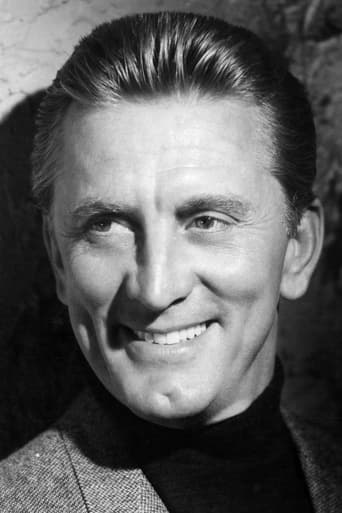
Beyond noir, Douglas would become one of Hollywood's most independent and politically courageous stars, producing Paths of Glory (1957) and advocating for blacklisted artists. His noir period, however, remains his most artistically fearless. He departed the genre by the mid-1950s, having exhausted its psychological territories and established himself as a major dramatic actor. Douglas proved that noir could accommodate not just fatalism and doom, but the raw texture of American ambition and moral struggle.
Kirk Douglas embodied the noir protagonist driven by relentless ambition and moral compromise. His characters claw upward through corrupt systems, their intensity and vulnerability masking a capacity for both violence and redemption. He brought a raw, psychological depth to men caught between desire and conscience.