Films People Pull a Fast One Night Beat Reading Room On TV Shop
Writer · The Dialogue Architect

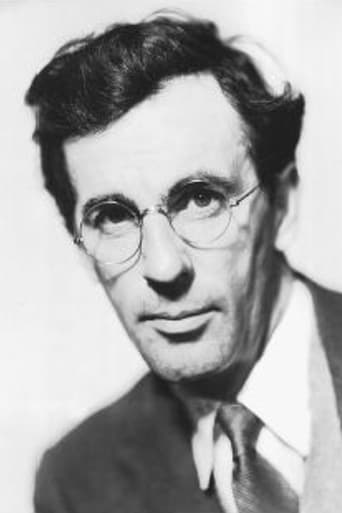
Jules Furthman

BornMarch 5, 1888, Chicago, Illinois
DiedMay 9, 1966, Los Angeles, California
Noir Films15 films
Peak Years1944–1950
Photo: TMDB
Scroll

Jules Furthman was born in Chicago in 1888, the son of a Jewish immigrant family navigating the nascent American entertainment industry. He began his career as a journalist and playwright before transitioning to silent film scenarios in the 1910s, where he developed an ear for authentic speech patterns and the vernacular cadences of urban life. By the 1920s, he had established himself as a sought-after screenwriter for major studios, crafting scenarios that blended action, romance, and psychological realism. His early work demonstrated an intuitive understanding of how dialogue could reveal character beyond narrative exposition.

The 1940s marked Furthman's golden period as the architect of film noir's most sophisticated dialogue. His collaboration with director Howard Hawks on To Have and Have Not (1944) and The Big Sleep (1946) established a new standard for witty, sexually charged banter that masked deeper currents of danger and desire. Furthman's scripts for these films transformed Ernest Hemingway's spare prose and Raymond Chandler's dense plotting into visual narratives driven by subtext and innuendo. His characters speak in riddles, their words concealing as much as they reveal, creating a verbal texture that mirrored the visual darkness of noir cinematography.

Furthman understood that in noir, the best lies are told with perfect syntax – the sentence structure of corruption. – Geoffrey O'Brien, The Phantom Empire

Furthman's 1947 adaptation of William Lindsay Gresham's Nightmare Alley demonstrated his range beyond the romantic crime drama. Working with director Edmund Goulding, he crafted a screenplay that penetrated the psychological degradation of its protagonist with unflinching precision. The script's carnival setting and circus-mirror aesthetics allowed Furthman to explore themes of exploitation and self-delusion through dialogue that ranged from barker patter to intimate confession. This film solidified his reputation as a writer capable of mining the darkest corners of American consciousness.

Furthman continued working into the 1950s, though his influence on noir aesthetics had already become foundational. He worked frequently with Hawks and maintained relationships with major studios, adapting novels and original stories with consistent intelligence. His career spanned from the silent era through the decline of the studio system, making him a bridge between multiple eras of American cinema. Furthman died in 1966, leaving behind a body of work that defined how noir dialogue could function as both entertainment and art.

Noir Archetype The Screenwriter as Stylist

Furthman embodied the writer-for-hire who transcended formula through sheer mastery of vernacular dialogue and psychological subtext. His scripts became visual poems of moral ambiguity, where characters reveal their corruption through wit rather than exposition. He transformed pulp source material into art through rhythm, innuendo, and the unsaid.
The Scene That Defines Them

The Big Sleep
The Big Sleep – 1946

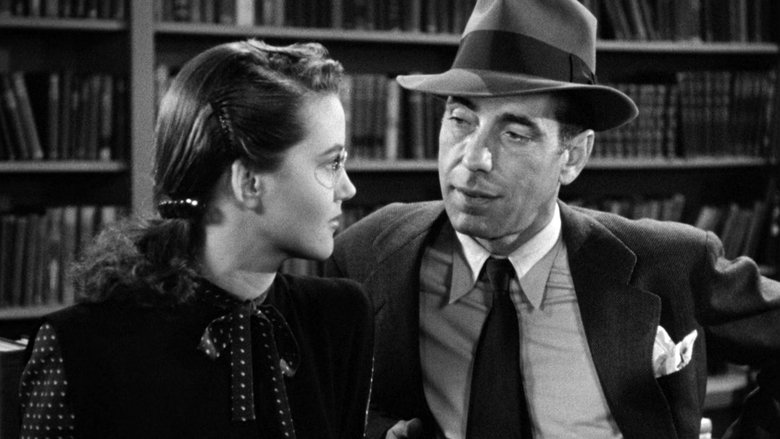
The Bookstore Encounter

Early sequence, approximately 20 minutes

Marlowe enters a rare bookstore and encounters Sternwood's younger daughter Carmen in one of cinema's most economical displays of sexual manipulation and moral corruption. Their dialogue crackles with innuendo as Carmen tests Marlowe's integrity through flirtation, each line a feint and parry in a psychological chess match. Furthman's script allows the scene to function on multiple registers simultaneously–surface charm concealing predatory intent, attraction intertwined with danger. The exchange establishes the film's central tension: the impossibility of maintaining moral clarity in a world of beautiful lies.

You're cute. I like cute men.

The Noir Canon

YearFilmRoleDirector
1944To Have and Have NotHoward HawksEssential
1946The Big SleepHoward HawksEssential
1947Nightmare AlleyEdmund GouldingEssential
1948The Brasher DoubloonJohn BrahmRecommended

The Road In

1910
Enters film industry as scenario writer

Furthman transitions from journalism to screenwriting during the silent era, beginning a career that would span five decades of American cinema.

1925
Establishes reputation as major screenwriter

By mid-decade, Furthman becomes a sought-after writer at major studios, known for dialogue that transcends silent film conventions even as intertitles.

1934
Adapts to sound cinema with ease

While many silent-era writers struggle with dialogue, Furthman's instinct for vernacular speech and rhythm makes him valuable in the new sound era.

1944
Begins collaboration with Howard Hawks on noir classics

To Have and Have Not marks the beginning of a partnership that would define 1940s noir. Furthman's script transforms Hemingway's novel into a vehicle for sexually charged dialogue.

1946
The Big Sleep establishes noir dialogue standard

Furthman's adaptation of Chandler becomes the template for how noir could function through language. The film's plot becomes secondary to the verbal sparring between protagonists.

1947
Writes Nightmare Alley, demonstrating range beyond Hawks partnership

Furthman moves beyond romantic crime drama to explore psychological degradation and moral corruption in carnival setting. The script marks a darker turn in his noir work.

1950
Peak influence on noir aesthetic established

By decade's end, Furthman's approach to dialogue and character psychology has become foundational to noir cinema, influencing younger writers and directors.

1953
Continues working as studio system evolves

Despite changing industry conditions, Furthman remains active and valued, adapting to new genres while maintaining his signature stylistic approach.