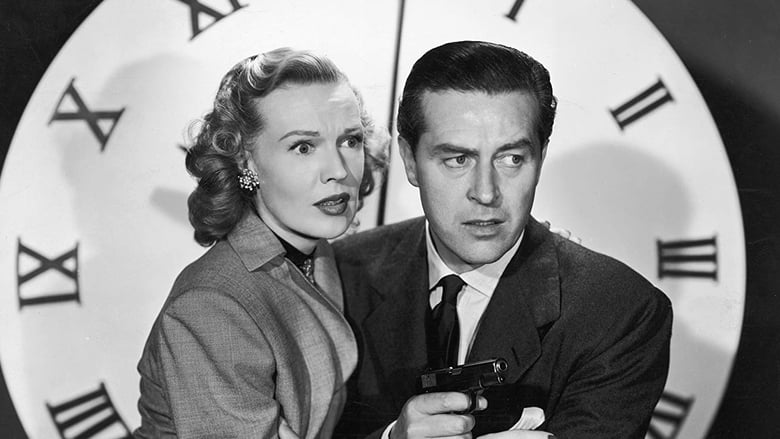
Jonathan Wheelock Latimer was born in Chicago in 1902, a midwesterner who would become one of noir cinema's most cerebral architects. Before his ascent in Hollywood, Latimer worked as a pulp fiction writer and journalist, honing a style marked by intricate plotting and dark wit. His transition to screenwriting in the early 1940s coincided with noir's maturation as an aesthetic force, and he quickly established himself as a writer capable of translating the genre's philosophical anxieties into tightly wound narratives. Unlike many of his contemporaries, Latimer never abandoned the writer's craft; he remained actively engaged in shaping scripts even as his reputation grew.
The Big Clock (1948), adapted from his own novel, stands as Latimer's masterwork–a dazzling exercise in temporal manipulation and framing narratives where a man must solve his boss's murder while the machinery of a vast publishing empire closes in around him. The film exemplifies Latimer's fascination with systems, institutions, and the ways ordinary men become ensnared in webs of circumstance beyond their control. His collaborations with directors Fred Zinnemann and Henry Hathaway yielded some of noir's most visually austere and narratively complex works, establishing him as a writer whose ambitions transcended genre conventions.
Latimer's scripts transform the noir frame into a labyrinth where plot becomes destiny–the protagonist moves through increasingly narrow corridors until escape becomes impossible. – Eddie Muller, Dark City: The Lost World of Film Noir
Nocturne (1946) demonstrated Latimer's range within noir's parameters–a psychological mystery involving a composer's death and supernatural suggestion. Both films reveal Latimer's preference for unreliable perspectives and labyrinthine plot construction, strategies that would influence noir practice throughout the decade. His scripts resisted sentimentality and moral clarity, instead embracing ambiguity and the noir conviction that the world operates according to incomprehensible rules.
Latimer's career trajectory peaked during noir's golden age before declining in the 1950s as tastes shifted. He continued writing for film and television into the 1960s, though with diminishing prominence. His legacy rests not on single iconic films but on a body of work that elevated the noir screenplay to the level of literary sophistication, proving that genre fiction could accommodate genuine intellectual and emotional complexity. He died in La Jolla, California, in 1983, largely forgotten by general audiences but revered by scholars as a master of narrative architecture.