John Viloca Farrow was born in Sydney, Australia, in 1904 and immigrated to Hollywood during the silent era. After years as a screenwriter and dialogue director, he established himself as a reliable craftsman capable of managing complex narratives and studio star vehicles. By the early 1940s, Farrow had become a sought-after director for suspense and crime films, known for his meticulous technical approach and ability to extract professional performances from contracted players.
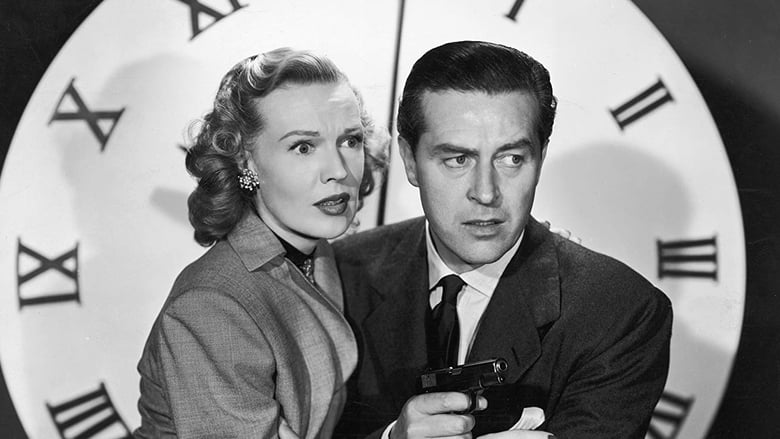
Farrow's noir work flourished between 1946 and 1952, a period during which he directed some of RKO's most stylish thrillers. The Big Clock (1948) exemplified his strengths: intricate plotting, dynamic visual composition, and an almost mathematical precision in structuring scenes for maximum tension. He demonstrated equal facility with psychological noir and conventional heist narratives, adapting his method to suit each project's demands without sacrificing craft.
Unlike certain contemporaries drawn to expressionistic excess, Farrow favored clarity and momentum. His camera work was intelligent rather than showy; his editing snappy and purposeful. He worked frequently with cinematographer John F. Seitz and understood how to use deep focus, high-contrast lighting, and architectural space to reinforce themes of entrapment and moral compromise. This technical vocabulary served his narratives without overwhelming them.
Farrow's noir career gradually diminished by the mid-1950s as his style fell somewhat out of favor and industry priorities shifted. Yet his best films reveal a director of uncommon intelligence and discipline–a studio professional whose commitment to narrative architecture and visual grammar defined an often-overlooked strand of American noir. He remained active in film and television until his death in 1966.

George Stroud hunted through the labyrinthine RKO offices by security and private investigators, the mechanical movements of the titular clock advancing relentlessly. Farrow's use of architectural space–corridors, stairwells, glass partitions–transforms an ordinary building into a modernist maze of paranoia. The editing is crisp and rhythmic, cutting to the ticking clock face with metronomic precision, embodying the film's central metaphor of time as executioner.
| Year | Film | Role | Director | |
|---|---|---|---|---|
| 1948 | The Big Clock | – | John Farrow | Essential |
| 1948 | Night Has a Thousand Eyes | – | John Farrow | Recommended |
| 1950 | His Kind of Woman | – | John Farrow | Essential |
| 1950 | Where Danger Lives | – | John Farrow | Recommended |
John Viloca Farrow born February 10 to English parents in Sydney. He would later emigrate to America seeking opportunities in the emerging film industry.
Farrow immigrates to the United States and enters the film industry during the silent era, initially working as a screenwriter and assistant director at various studios.
With the advent of sound cinema, Farrow establishes himself as a proficient dialogue director, assisting on numerous studio productions and earning respect for his technical competence.
Farrow directs Men in Exile, beginning a career as a feature director. Throughout the late 1930s and early 1940s, he develops his craft on B-pictures and studio assignments.
Following World War II service, Farrow begins his most productive noir period at RKO, becoming known for suspenseful crime thrillers and sophisticated visual storytelling.
The Big Clock premieres to critical and commercial success, establishing Farrow as a master of intricate suspense narratives. The film becomes his signature work and a noir classic.
Both His Kind of Woman and Where Danger Lives release, demonstrating Farrow's range across different noir subgenres and confirming his status as RKO's most reliable thriller director.
As film noir begins its commercial decline, Farrow shifts toward adventure films and other genres. His noir output diminishes, though he remains an active studio director.
Farrow increasingly directs for television, helming episodes of Perry Mason and other series, adapting his efficient studio methods to the small screen.
John Farrow dies on January 27, 1966, in Beverly Hills at age 61. His legacy as a sophisticated studio craftsman endures among noir scholars and film historians.