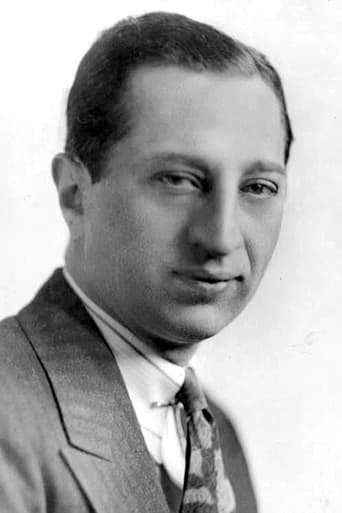
Jay Adler was born in Brooklyn, New York, the son of Polish-Jewish immigrants who worked in the garment trade. He grew up in a tenement environment that would later inform his naturalistic approach to character work, particularly in depicting working-class desperation and urban alienation. After completing high school, Adler pursued acting through the Yiddish theater circuit of New York's Lower East Side, where he honed his craft in small roles before transitioning to Broadway in the late 1930s. His theatrical background gave him a precision of gesture and vocal modulation that would distinguish his film work.
Adler's film career began in earnest during World War II, initially in minor roles that exploited his ability to project unease and moral compromise. By the late 1940s, he had become one of Hollywood's most reliably unsettling character actors, a go-to performer for directors seeking to populate their noir worlds with credible figures of institutional corruption, betrayal, and psychological fracture. His collaborations with Joseph H. Lewis and André de Toth established him as a specialist in depicting men whose nerves had been worn thin by circumstances beyond their control. He appeared in over forty films, though it is his noir work that remains most cinematically vital.
The early 1950s marked Adler's peak years, when he appeared in three essential noir masterpieces: Crime Wave (1954), 99 River Street (1953), and The Big Combo (1955). In these films, he demonstrated a remarkable capacity for rendering visible the internal collapse of men caught between competing loyalties. His performances were characterized by a nervous precision–the tremor in his hands, the catch in his throat, the way his eyes never quite met those of his scene partner. He brought Kafkaesque anxiety to American crime cinema, suggesting that the noir protagonist's paranoia was not the symptom of a disordered mind but a rational response to an irredeemably corrupt world.
Though his career extended into television and smaller character roles through the 1950s, Adler's legacy remains anchored in his noir work. He died in New York in 1978, largely forgotten by the cinema that had briefly made him indispensable. Contemporary reassessment of his performances reveals an actor of considerable psychological subtlety whose ability to convey internal disintegration through minimal external means deserves reconsideration alongside his more celebrated noir contemporaries.
Jay Adler embodied the twitchy, compromised figure caught between criminal underworld and law enforcement. His trembling voice and darting eyes made him the perfect vessel for men worn down by moral capitulation, their humanity corroded by proximity to violence and corruption. He represented the ordinary person unmade by extraordinary circumstance.