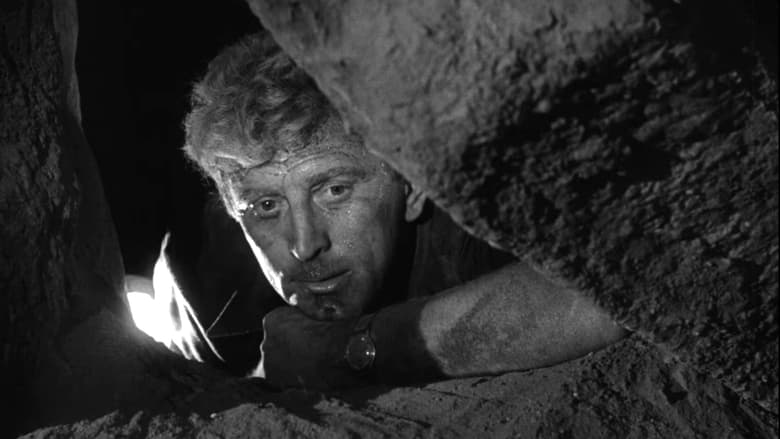
Born Jane Sterling Adrienne Samuels in 1921, Jan Sterling emerged as one of Hollywood's most underrated character actresses, bringing a sharp-edged realism to the noir genre. Unlike the exotic fatales who dominated the era, Sterling specialized in playing women of middle-class respectability who discovered their own capacity for deception and survival. Her angular features and penetrating gaze conveyed intelligence rather than glamour, making her perfect for roles that demanded moral complexity. By the mid-1940s, she had established herself as a reliable dramatic presence, though major stardom eluded her throughout a long career.
Sterling's breakthrough in noir came with her performance in Billy Wilder's Ace in the Hole (1951), where she played Lorraine Minosa, the faithless wife of a trapped miner. Her portrayal–calculating, unsentimental, and utterly human–provided the emotional core of Wilder's savage critique of American exploitation. The role showcased her gift for finding sympathy in characters whom other actresses might have played as mere villains. This performance established her as an actress capable of carrying complex dramatic weight, demonstrating that she could hold her own against established male leads.
Throughout the 1950s, Sterling balanced noir and crime pictures with mainstream drama and adventure films, never quite achieving the iconic status of her contemporaries. She appeared in William Wellman's The High and the Mighty (1954) and John Sturges' Mystery Street (1950), proving her versatility across genres. Her collaborations with major directors–Wilder, Sturges, Hawks–confirmed her reputation as a professional's actress, valued for her reliability and craft. Yet Sterling remained a second-lead player, her talent often overshadowed by more celebrated names, a fate common to actresses who possessed brains rather than bombshell appeal.
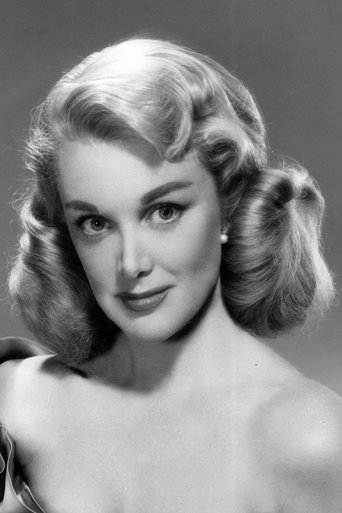
Jan Sterling's legacy rests on her intelligent, unglamorous approach to female characterization during noir's golden age. She refused the artifice that defined much of 1950s cinema, instead offering audiences women who thought, schemed, and survived on their own terms. Her quiet professionalism and refusal to trade on sex appeal represented a different kind of strength in an era obsessed with curves and mystery. Sterling's work remains a testament to the depth available to actresses willing to embrace moral ambiguity and the everyday desperation of ordinary lives.
Jan Sterling embodied the intelligent, morally ambiguous woman of noir–neither saint nor seductress, but a shrewd operator navigating a corrupt world with her wits intact. Her characters possessed backbone and cunning rather than mystique, making her invaluable in exposing the hypocrisy of masculine institutions.