Films People Pull a Fast One Night Beat Reading Room On TV Shop
Actor · The Everyman Unraveled

James Stewart

BornMay 20, 1908, Indiana, Pennsylvania
DiedJuly 2, 1997, Beverly Hills, California
Noir Films7 films
Peak Years1948–1958
Photo: TMDB
Scroll

James Stewart emerged from small-town Indiana as Hollywood's most deceptively simple leading man. His drawling affect and gangling physicality seemed designed for Americana–the everyman next door. Yet throughout the 1940s and 1950s, director Alfred Hitchcock recognized in Stewart a capacity for psychological darkness that belied his affable surface. Where other stars played noir antiheroes with swagger or menace, Stewart played them with a kind of wounded bewilderment, as if his characters could not quite believe the moral abyss opening beneath them.

His collaboration with Hitchcock produced some of cinema's most penetrating explorations of male psychology and obsession. In *Rope* (1948), Stewart's performance as the morally ambiguous professor carries an intellectual weight and subtle complicity that elevates the film beyond thriller mechanics. *Rear Window* (1954) and *Vertigo* (1958) showcase Stewart at the apex of his noir work–playing voyeurs, obsessives, and men undone by their own desires. His voice becomes an instrument of self-deception, narrating himself deeper into darkness while maintaining an outward composure that crumbles only at the film's darkest moments.

Stewart brought to noir an anguished sincerity that made his characters' moral compromise feel like a personal tragedy rather than a genre inevitability. – David Thomson, *The New Biographical Dictionary of Film*

What distinguished Stewart's noir work was his refusal of the conventional antihero's glamour. He did not seduce audiences into complicity; instead, he made viewers uncomfortable by mirroring their own capacity for obsession and moral drift. His everyman quality became a Trojan horse for examining the psychological underbelly of postwar America. The slight tremor in his voice, the hesitation before a confession, the way his eyes register the moment of moral recognition–these became the grammar of his noir performances.
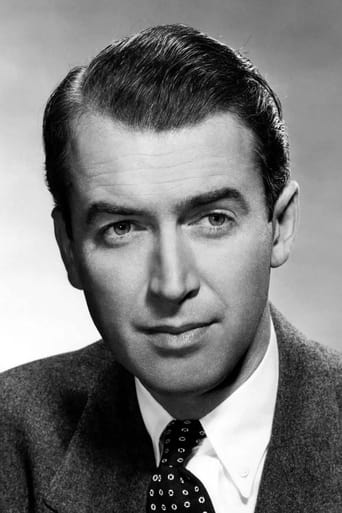
James Stewart

Stewart's arc in American cinema demonstrates how the noir sensibility infiltrated even the most mainstream entertainment. After 1960, he would return to more conventional roles, but his psychological depth remained. The actor who played small-town heroes had spent a decade in the company of Hitchcock exploring the thin membrane between civilized restraint and inner chaos.

Noir Archetype The Ordinary Man in Extraordinary Darkness

Stewart embodied the noir archetype of the respectable American male whose veneer of normalcy conceals psychological fracture or moral compromise. His trademark drawl and folksy demeanor made his descent into obsession, complicity, or madness all the more unsettling–he was not born a criminal, but circumstances and his own nature conspired to make him one.

The Scene That Defines Them

Vertigo
Vertigo – 1958

The Bell Tower Descent

Climax, final third

Stewart's character climbs the bell tower of the mission, his acrophobia battling his obsession to save the woman he loves. The scene crystallizes Stewart's noir archetype: an ordinary man in the grip of forces–psychological, emotional, societal–beyond his control. His voice wavers between determination and anguish as he ascends, each step a moral and physical reckoning. The scene defines not just Stewart's performance but the entire postwar American noir sensibility: the interior landscape of male psychology made visible through physical ordeal.

The Noir Canon

YearFilmRoleDirector
1948RopeProfessor Rupert CadellAlfred HitchcockEssential
1959Anatomy of a MurderPaul BieglerOtto PremingerEssential

The Road In

1908
Born in Indiana, Pennsylvania

James Maitland Stewart born to a hardware-store owner in a small industrial town that would inform his everyman persona throughout his career.

1932
MGM contract signing

Stewart signed with MGM and began small roles in Hollywood films, initially cast as romantic leads in comedies and musicals.

1941
Military service begins

Enlisted in the U.S. Army Air Forces; would serve as a pilot in combat operations and rise to the rank of Colonel, absent from Hollywood until 1946.

1946
*It's a Wonderful Life* released

Returned to Hollywood to star in Frank Capra's Christmas masterpiece, earning an Oscar nomination and establishing himself as a major star.

1948
First Hitchcock collaboration: *Rope*

Stewart's psychological intensity catches Hitchcock's eye; the director casts him as Professor Cadell, marking the beginning of their transformative partnership.

1950
First Mann western: *Winchester '73*

Collaborates with director Anthony Mann on a morally complex western, establishing Stewart's capacity to play flawed, determined men pursuing obsessive goals.

1954
*Rear Window* released

Hitchcock's masterly thriller establishes Stewart as the cinema's great psychologically vulnerable leading man; the film becomes a defining noir statement.

1958
*Vertigo* released

Hitchcock's most audacious collaboration with Stewart produces a film about obsession, desire, and masculine failure that redefines the noir psychological drama.

1959
*Anatomy of a Murder* released

Stewart plays a small-town lawyer defending a murder case; the film demonstrates his sustained capacity for playing morally ambiguous men in complex narratives.

1960
Noir era concludes

By 1960, Stewart's great noir period ends; he would continue as a major star but in more conventional roles, having spent a transformative decade exploring American male psychology.