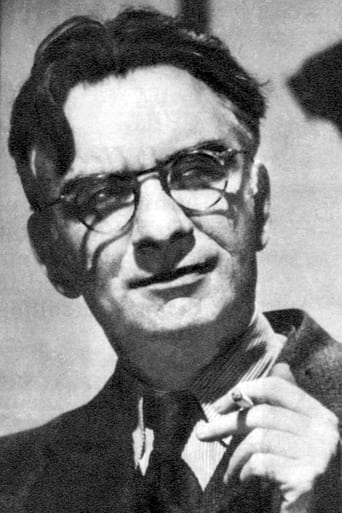
James Mallahan Cain was born in Maryland in 1892 and came of age during the Progressive Era, earning a degree from Washington College before serving in World War I. His early career spanned journalism, music criticism, and drama before he discovered his true calling in the 1930s: the composition of hard-boiled crime novels that would define an era. Cain's prose style–spare, colloquial, propulsive–brought the vernacular of the street directly onto the page, creating a new literary register for American fiction. Unlike his contemporaries Hammett and Chandler, Cain focused obsessively on the psychology of ordinary criminals and their victims, the housewife and the drifter whose desires propelled them toward ruin.
His breakthrough came with *The Postman Always Rings Twice* (1934), a slender, lethal novel about adultery and murder that became the template for his entire oeuvre. The book's success established Cain as the bard of American transgression, a writer who understood that the greatest crimes often begin in the bedroom. Throughout the 1930s and 1940s, Cain produced a string of masterpieces–*Double Indemnity*, *Mildred Pierce*, *The Killers*–each a meticulously constructed descent into moral chaos. His novels possessed an almost mathematical inevitability; characters made rational choices within their constraints, yet every choice led inexorably toward catastrophe. This fatalism, more European than American, gave his work a tragic dimension absent from mere entertainment.
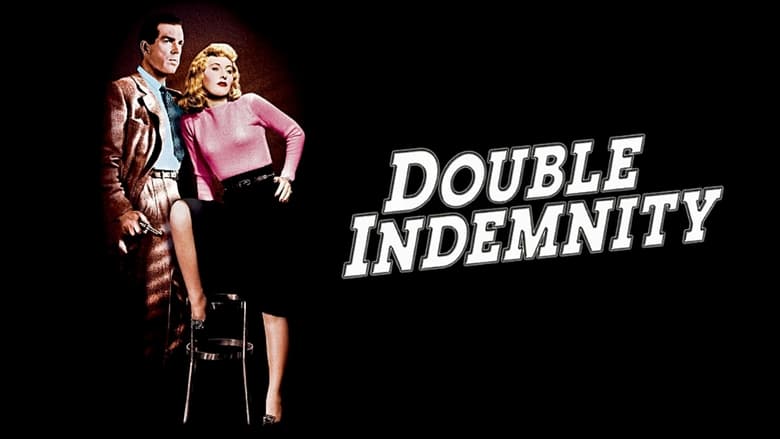
When Hollywood finally recognized Cain's commercial and artistic worth, the results were extraordinary. *Double Indemnity* (1944), directed by Billy Wilder and adapted by Wilder and Raymond Chandler, became the foundational text of film noir, establishing visual and narrative conventions that would govern the genre for two decades. Cain's novels proved ideal source material for cinema: their tight plotting, psychological intensity, and economical prose translated seamlessly to the screen. Yet he remained largely indifferent to the film adaptation process, viewing screenplays as a secondary art form. His influence on noir cinema was therefore partly paradoxical–his words shaped the visual language of a medium he considered subordinate to literature.
Cain lived until 1977, witnessing the rehabilitation of noir as a serious artistic movement and the canonization of his own work as central to American letters. He remained remarkably prolific, publishing novels and stories well into his eighties, though his later work never achieved the cultural impact of his prewar masterpieces. His legacy rests on a small shelf of perfect books–*Postman*, *Indemnity*, *Mildred Pierce*–each a concentrated dose of American darkness, each a blueprint for the noir aesthetic that would dominate cinema and literature for generations to come.
Cain was the pulp novelist who elevated crime fiction into literature, exposing the predatory desires lurking beneath American domesticity. His protagonists are ordinary people–insurance salesmen, waitresses, housewives–undone by lust and greed, their moral collapse rendered with unflinching psychological precision. He wrote not to condemn but to diagnose, finding in noir's dark mirror a reflection of capitalism's corrupting influence on the American soul.