Films People Pull a Fast One Night Beat Reading Room On TV Shop
Actor · The Weary Cynic

Humphrey Bogart

BornDecember 25, 1899, New York City, New York
DiedJanuary 14, 1957, Los Angeles, California
Noir Films23 films
Peak Years1941–1954
Photo: TMDB
Scroll

Humphrey DeForest Bogart was born into Manhattan privilege, the son of a prominent surgeon and a celebrated illustrator, yet his path to stardom was neither swift nor obvious. After World War I service and years of theatrical struggle, he spent the 1930s in supporting roles and B-pictures, often cast as disposable villains. His breakthrough came in 1941 with The Maltese Falcon, where director John Huston recognized in Bogart's weathered face and measured delivery an authenticity that Hollywood's more conventionally handsome stars could never achieve. By his mid-forties, Bogart had become cinema's supreme articulation of the compromised American male.

The 1944–1950 period represented his artistic and commercial zenith, a span during which he collaborated with the finest noir craftsmen. With Howard Hawks on The Big Sleep, he created an iconic pairing with Lauren Bacall, their chemistry crackling with subtext and knowing wit. In A Lonely Place, directed by Nicholas Ray, Bogart delivered perhaps his most psychologically complex performance–playing a Hollywood screenwriter whose rage and volatility threaten to consume him, blurring the line between character and actor in deeply unsettling ways. These films cemented his status as noir's philosophical center.

Bogart is the only actor who can hold the screen alone for two minutes in a close-up with no action and no dialogue–just thinking. – Billy Wilder

Bogart's technique was deceptively minimalist: a cigarette became an instrument of existential meditation, a pause in dialogue conveyed depths of moral conflict, a sidelong glance expressed centuries of disillusionment. Unlike contemporaries who relied on histrionics, Bogart suggested rather than demonstrated emotion, trusting the camera to find truth in restraint. His partnerships with Bacall, Mary Astor, and Gloria Grahame showcased his ability to anchor ensemble pieces while remaining the emotional core. He refused to sentimentalize his characters, presenting instead men shaped by noir's moral ambiguity.

Humphrey Bogart

Off-screen, Bogart cultivated an image of hardscrabble authenticity–a serious actor who read literature, questioned Hollywood convention, and maintained friendships across industry hierarchies. His 1952 Academy Award for The African Queen represented mainstream recognition of a talent that had always transcended genre. By the 1950s, illness began limiting his roles, yet he continued working until his death in 1957, leaving behind a legacy that redefined American masculinity on film.

Noir Archetype The Hardboiled Detective

Bogart embodied the world-worn private investigator or morally compromised operator–a man shaped by circumstance and betrayal who maintains a code beneath his cynicism. His distinctive rasp, penetrating gaze, and restrained physicality created an archetype of masculine vulnerability masquerading as toughness. He transformed the detective from mere plot device into a philosophical vessel for noir's deepest existential doubts.

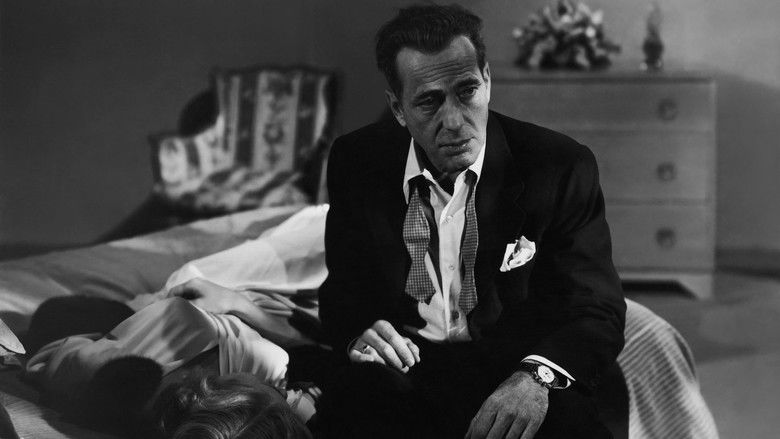
The Scene That Defines Them

In a Lonely Place
In a Lonely Place – 1950

The Screenplay Confrontation

Third act, climactic domestic scene

In Bogart's apartment, his screenwriter character Dixon Steele erupts in volcanic rage at his lover Laurel, his facade of civilization obliterated. The scene captures noir's central anxiety: the proximity of violence within the ordinary, the way genteel society masks primal aggression. Bogart's performance walks a knife's edge between justified anger and terrifying unpredictability, leaving both character and viewer uncertain whether he is victim or perpetrator. It remains cinema's most incisive portrait of masculine rage.

I was born when she kissed me. I died when she left me. I lived a few weeks while she loved me.

The Noir Canon

YearFilmRoleDirector
1941The Maltese FalconSam SpadeJohn HustonEssential
1944To Have and Have NotHarry MorganHoward HawksEssential
1946The Big SleepPhilip MarloweHoward HawksEssential
1947Dark PassageVincent ParryDelmer DavesRecommended
1950In a Lonely PlaceDixon SteeleNicholas RayEssential
1955The Desperate HoursGlenn GriffinWilliam WylerNotable

The Road In

1917
Military Service

Enlisted in U.S. Navy during World War I; served aboard USS Leviathan as gun captain.

1922
Broadway Debut

Began acting career on New York stage, initially in minor theatrical roles and productions.

1930
Hollywood Contract

Signed to Fox Studios; cast primarily as villain or supporting player in numerous B-pictures and crime films.

1941
The Maltese Falcon Released

John Huston's directorial debut and Bogart's transformative role as Sam Spade established him as major star and noir archetype.

1946
The Big Sleep Release

Paired with Lauren Bacall in Howard Hawks' adaptation of Chandler; created iconic on-screen chemistry and romantic partnership.

1948
The Treasure of the Sierra Madre

Reunited with Huston for portrait of greed and paranoia; demonstrated range beyond detective archetype.

1950
In a Lonely Place Released

Nicholas Ray's psychological noir showcased Bogart's most introspective work, examining violence and Hollywood mythology.

1952
Academy Award Winner

Received Best Actor Oscar for The African Queen, validating his artistic legitimacy beyond genre cinema.

1955
Final Major Noir Role

Starred in The Desperate Hours, playing escaped convict; continued working despite growing health concerns.

1957
Death

Died of cancer in Los Angeles at age 57; mourned as defining figure of American cinema and noir tradition.