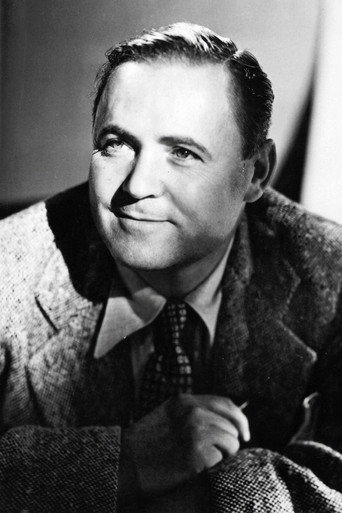
Henry Hathaway was born Henri Leopold Berthoud in Sacramento, California, in 1898, the son of a playwright and stage actress. He entered the film industry as a child actor before transitioning to assistant directing in the silent era, working under some of Hollywood's most disciplined craftsmen. By the 1930s, he had established himself as a reliable director of Westerns and action pictures, developing a reputation for efficiency and visual clarity that would define his entire career. His apprenticeship in the studio system taught him to work swiftly without sacrificing dramatic coherence, a skill that proved invaluable in the postwar crime cinema.
Hathaway's noir period coincided with the rise of location shooting and semi-documentary aesthetics in American crime films. Kiss of Death (1947) announced his arrival as a major noir architect, introducing Richard Widmark's psychotic killer Tommy Udo in a performance that would influence the genre's portrayal of pathological violence. The film's unflinching brutality–particularly the sequence involving the elderly widow and the staircase–marked a watershed in noir's willingness to depict casual cruelty. Call Northside 777 (1948) further consolidated his reputation by importing the visual language of newsreel and street-level photography into fictional narrative, suggesting that crime itself was an investigative problem rather than a moral parable.
Niagara (1953), his most audacious work, transformed the tourist landscape into a nightmare geography where matrimonial betrayal and murder schemes unfold against postcard scenery. The film's use of color cinematography and psychological instability anticipated the psycho-noir that would emerge in the mid-1950s, while Hathaway's precise staging of suspense scenes demonstrated his command of audience manipulation. His collaboration with Joseph MacDonald's cinematography created a visual style that was simultaneously beautiful and deeply unsettling, collapsing the boundary between picturesque Americana and psychological terror.
Hathaway's noir work represents the institutional efficiency of the studio era married to the hard realism of postwar crime investigation. He never adopted the expressionistic excess or bohemian fatalism of his contemporaries; instead, he built tension through procedural detail, clear sightlines, and the casual revelation of human wickedness. His influence extended into the police procedural television dramas of the 1950s and beyond, establishing a template for masculine, matter-of-fact storytelling that privileged investigation over psychology.
Hathaway embodied the pragmatic studio director who mastered genre formulas while maintaining an unflinching eye for procedural authenticity and moral ambiguity. He brought documentary precision to crime narratives, grounding noir's psychological darkness in the operational reality of police work and institutional corruption.