Films People Pull a Fast One Night Beat Reading Room On TV Shop
Writer · The Procedural Innovator

Harry Essex

BornMonth Day, Year, Place
DiedFebruary 27, 1997, Woodland Hills, California
Noir Films18 films
Peak Years1948–1954
Scroll

Harry Essex emerged as one of Hollywood's most prolific and dependable crime writers during the golden age of film noir, bringing to the screen a craftsman's precision and an outsider's fascination with the criminal underworld. Born in the early twentieth century, Essex developed a gift for plotting that proved invaluable to the rapidly-evolving noir genre, which demanded narratives as intricate and morally ambiguous as the cities that spawned them. His work was never flashy or self-consciously literary; instead, it possessed the clarity of a police report and the momentum of a con artist's monologue. By the mid-1940s, Essex had become a sought-after script doctor and original writer, capable of salvaging troubled productions or crafting entirely new vehicles for stars hungry for authenticity.

Essex's masterpiece, *Kansas City Confidential* (1952), demonstrated his genius for the ensemble crime procedural–a form he had been refining throughout the previous decade. The film's fractured narrative, told through multiple perspectives and a central mystery that unfolds like an investigation, became a template for post-war noir structure. Essex understood that audiences craved not just morally compromised heroes but entire corrupt ecosystems, and he populated his scripts with cops, crooks, informants, and victims whose fates intertwined through circumstance and greed. His ability to sustain tension across multiple plot threads while maintaining clarity of exposition made him invaluable to directors navigating the genre's increasingly complex storytelling demands.

Essex writes crime the way Hemingway wrote about bullfighting–without sentiment, but not without respect. – Robert Aldrich, director

*I, the Jury* (1953) and *The Killer That Stalked New York* (1950) showcased Essex's range within the crime-writing realm. The former, adapted from Mickey Spillane's notorious novel, required Essex to capture the brutish directness of Spillane's prose while navigating Hollywood's moral constraints–a balance he achieved through brutal efficiency rather than artistic compromise. The latter, a biological thriller disguised as a crime picture, proved Essex's willingness to experiment with genre hybrids, using a smallpox outbreak as the organizing principle for a noir narrative about desperation and containment. Each film bore Essex's signature: economical dialogue, credible procedural detail, and a refusal to sentimentalize either crime or punishment.

Essex's later career saw him increasingly employed as a script consultant and rewriter, a role in which his technical mastery proved indispensable. He remained active through the 1950s, adapting novels, punching up scripts, and occasionally receiving sole writing credit for originals. Though he never achieved the critical recognition of a Chandler or Hammett, Essex's influence on the structure of American crime cinema proved durable and profound–his procedural clarity and multi-threaded plotting became the template for television's emerging crime shows and modern detective fiction.
Noir Archetype The Crime-Story Architect

Essex belonged to that rare breed of noir writers who privileged narrative structure and procedural authenticity over psychological angst. He crafted tight, efficiently-plotted crime stories rooted in documentary realism–police work, con games, disease investigations–transforming mundane institutional machinery into the machinery of fate itself.

The Scene That Defines Them

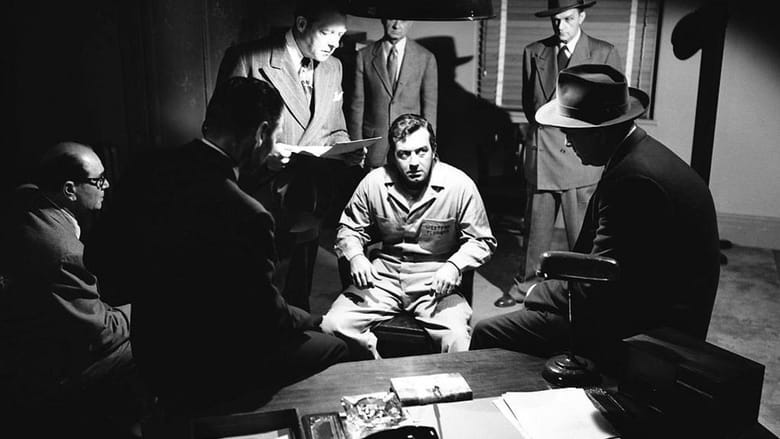
Kansas City Confidential
Kansas City Confidential – 1952

The Framed Man's Realization

First act, approximately 12 minutes in

Joe Rolland, unjustly accused of the armored car robbery, is confronted with photographic evidence of his guilt at the police station. Essex's scene construction–cutting between Rolland's denials, the detectives' cold certainty, and the damning photographs–establishes the procedural machinery that will crush or redeem him. The economy of exposition and the visual grammar of institutional power define Essex's approach: narrative propulsion through bureaucratic momentum, fate determined by paperwork and procedure.

I wasn't there. I don't know anything about it.

The Noir Canon

YearFilmRoleDirector
1950The Killer That Stalked New YorkEarl McEvoyEssential
1951The Underworld StoryCy EndfieldRecommended
1952Kansas City ConfidentialPhil KarlsonEssential
1951The ProwlerJoseph LoseyEssential
1954Cry VengeanceMark StevensNotable
1949Port of New YorkLaszlo BenedekNotable

The Road In

1945
Early script work in Hollywood

Essex begins establishing himself as a reliable writer for mid-budget features, focusing on crime and police procedural material.

1949
*Port of New York* screenplay

Essex writes the narcotics-trafficking procedural, establishing his signature style of documentary realism and multi-character ensemble work.

1950
*The Killer That Stalked New York* released

Essex's innovative biological thriller establishes him as a writer willing to experiment with genre hybridity, blending noir with public-health crisis narrative.

1951
Collaboration with Joseph Losey on *The Prowler*

Essex and Losey create a domestic noir masterpiece, proving Essex's range in psychological and intimate crime narratives.

1952
*Kansas City Confidential* premiere

Essex's masterwork arrives, establishing the fractured multi-perspective procedural as a viable noir form and cementing his reputation as a structural innovator.

1953
Adaptation of *I, the Jury*

Essex tackles Mickey Spillane's notorious novel, balancing pulp brutality with Production Code constraints through efficient, economical dialogue.

1954
Transition to script consulting

Essex increasingly works as a rewriter and consultant, applying his procedural expertise to other writers' scripts and troubleshooting narrative problems.

1956
Later noir work diminishes

As the classic noir cycle winds down, Essex's output becomes more sporadic, though he remains active in television and occasional feature work.