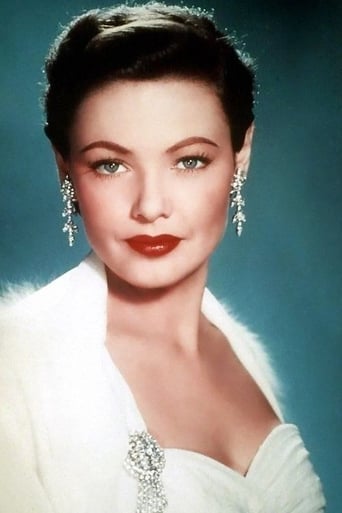
Gene Tierney was born November 19, 1920, in Brooklyn, New York, to a prominent family with deep theatrical roots. Her father, Howard Tierney, was a financier and former actor, while her mother, Belle Maude Taylor, came from a wealthy Connecticut family. Groomed for success from childhood, Tierney studied drama and dance, making her stage debut in 1938. She quickly attracted studio attention, signing with Twentieth Century-Fox in 1940, where she would remain a contract player through the golden age of American cinema, becoming one of the studio system's most radiant and versatile stars.
Tierney's ethereal beauty–marked by distinctive high cheekbones and penetrating eyes–made her ideal for both Technicolor melodrama and expressionistic noir. Yet she was far more than a decorative presence; her intelligence and range allowed her to inhabit morally ambiguous characters with surprising depth. Her breakthrough came in 1944 with Otto Preminger's Laura, in which she played the titular portrait subject with a mixture of sophistication and cool mystery. The film's iconic imagery, with Tierney's face dominating the canvas above the detective's fascination, became emblematic of noir's aesthetic worship of feminine allure paired with emotional inscrutability.
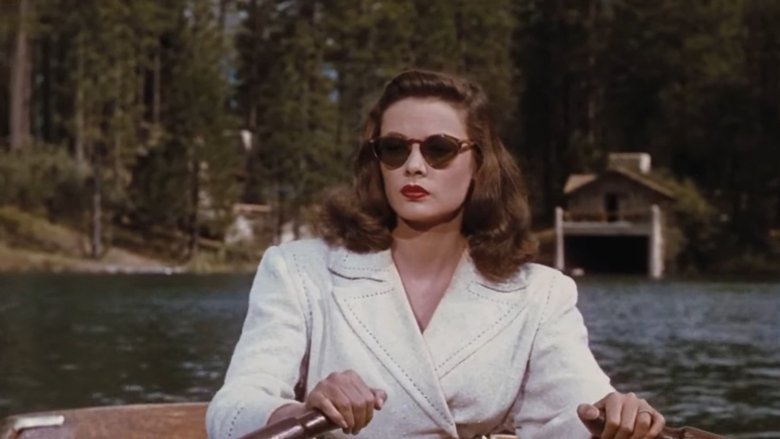
Throughout the 1940s, Tierney demonstrated remarkable versatility across multiple registers. In John M. Stahl's Leave Her to Heaven (1945), she delivered a tour-de-force performance as Ellen Berent, a woman whose obsessive love becomes pathological jealousy and murderous resentment. The film, shot in vivid Technicolor, proved that noir sensibility transcended black-and-white cinematography–psychology, not palette, defined the genre. By mid-decade, Tierney was among Hollywood's most bankable stars, yet she possessed the intelligence to avoid becoming typecast, alternating between noir roles and prestige dramas with deliberate artistic calculation.
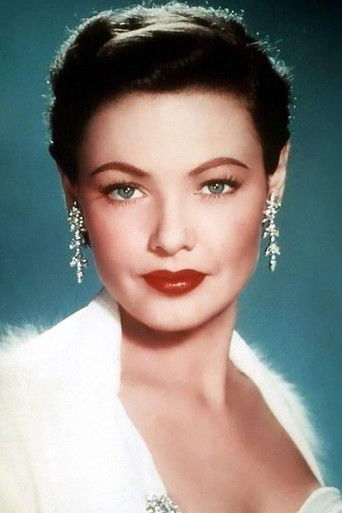
Her later noir work, including Whirlpool (1949) and Night and the City (1950), showcased a deepening psychological sophistication. Tierney could convey desperation, cunning, and vulnerability within single scenes, often through understated gesture rather than theatrical display. Her career was curtailed in the 1950s following a nervous breakdown and personal difficulties, but her noir legacy remained secure–a body of work that proved feminine beauty and moral complexity were not mutually exclusive, establishing her as one of the genre's most essential and enigmatic figures.
Tierney embodied a rare noir archetype: the beautiful, intelligent woman whose destructive capacity emerges not from desperation but from calculated malevolence or psychological complexity. Unlike the reactive femmes fatales of lesser films, her characters possessed agency, ambition, and often a chilling indifference to the damage they inflicted, making her the thinking man's dangerous woman.