Films People Pull a Fast One Night Beat Reading Room On TV Shop
Composer · The Architect of Dread

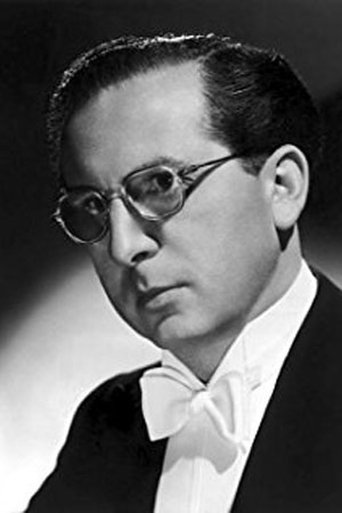
Franz Waxman

BornJune 24, 1906, Königshütte, Upper Silesia, Germany
DiedFebruary 24, 1967, Los Angeles, California
Noir Films18 films
Peak Years1944–1954
Photo: TMDB
Scroll

Franz Waxman was born Franz Wachsmann in Königshütte, Upper Silesia, in 1906, the son of a cantor whose musical heritage would echo through decades of Hollywood's darkest visions. Trained rigorously at the Dresden Academy and Berlin Conservatory, he absorbed the modernist innovations of his era–Schoenberg's atonality, Stravinsky's angular rhythms–before fleeing Nazi Germany in 1933. He arrived in Hollywood as an émigré composer with European sophistication and an instinctive grasp of psychological terror, qualifications that positioned him perfectly for the emerging noir idiom.

Throughout the 1940s and 1950s, Waxman became the voice of bourgeois unraveling and metropolitan menace. His collaboration with director Billy Wilder on *Sunset Boulevard* (1950) produced perhaps cinema's most acidic dissection of Hollywood itself–a score that treated the city as a siren, beautiful and poisonous. For Alfred Hitchcock, he composed the metallic dread of *Rear Window* (1954), transforming a confined Greenwich Village apartment into a chamber of moral vertigo. His work for *Sorry, Wrong Number* (1948) pioneered the use of fractured motifs to mirror a protagonist's psychological dissolution.

Waxman understood that the darkest thing about film noir wasn't on the screen–it was in the orchestra pit. – David Raksin, composer

Waxman's compositional method rejected the lush romanticism that dominated film scoring. Instead, he wielded dissonance, ostinato, and orchestral fragmentation as tools of narrative psychology. Strings shrieked rather than soared; brass interjected with sudden, brutal punctuation; violins often played in unison rather than harmony, creating a sterile, anxious unison that mirrored the alienation of his films' protagonists. He understood that noir's true subject was not crime but the texture of urban anxiety–the way modernity corrodes the self.

Beyond noir, Waxman's influence extended to television and concert halls, where he conducted the Los Angeles Philharmonic and premiered ambitious orchestral works. He remained restlessly productive until his death in 1967, never content to repeat formulas, always pushing toward greater harmonic complexity and psychological precision. His legacy reshaped how cinema could use music not as ornament but as the very substance of mood and meaning.

Noir Archetype The Symphonist of Shadow

Waxman embodied the European-trained composer who elevated noir's sonic landscape from mere accompaniment to psychological necessity. His lush, dissonant orchestrations didn't underscore the narrative–they *were* the narrative, transforming anxiety into architecture. He proved that a film's true darkness lived not in shadows on screen, but in the frequencies that invaded the viewer's nervous system.
The Scene That Defines Them

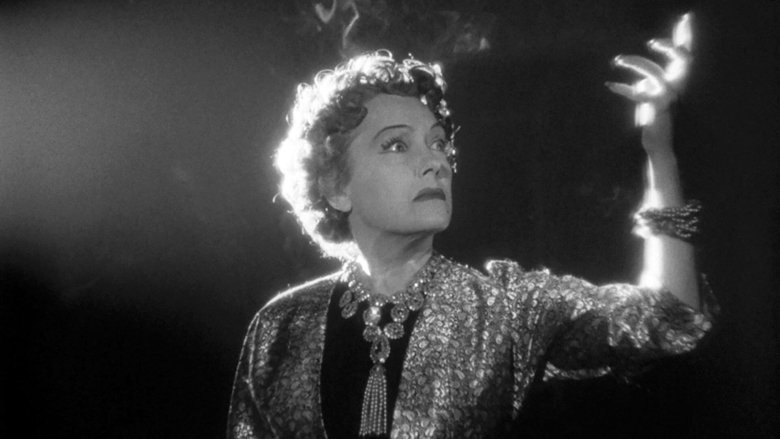
Sunset Boulevard
Sunset Boulevard – 1950

Norma Desmond's Return to the Screen

Final sequence, after Desmond's descent into madness

As Gloria Swanson's Norma Desmond descends the staircase in her delusion–believing herself restored to silent-film stardom–Waxman's score swells with grotesque grandeur. The orchestra mimics the artificial majesty of 1920s cinema while remaining tonally unstable, fractured by dissonance. The music is simultaneously majestic and decomposing, a sonic mirror of Desmond's psychological collapse. It's perhaps cinema's most profound use of orchestration to dramatize the boundary between fantasy and annihilation.

The Noir Canon

YearFilmRoleDirector
1936FuryComposerFritz LangEssential
1940RebeccaComposerAlfred HitchcockEssential
1947The Paradine CaseComposerAlfred HitchcockRecommended
1951A Place in the SunComposerGeorge StevensEssential

The Road In

1906
Born in Königshütte, Silesia

Franz Wachsmann was born into a musical family; his father was a synagogue cantor whose liturgical traditions influenced his later harmonic sensibilities.

1924
Enters Dresden Academy

Waxman began formal training in composition and orchestration, absorbing the modernist techniques emerging in 1920s German music.

1930
Film scoring debut in Germany

He began composing for German and French films, establishing his reputation as a technically accomplished and innovative orchestrator.

1933
Flees Nazi Germany

Following the rise of fascism and hostile reception to his Jewish background, Waxman emigrated to Paris, then secured passage to Hollywood.

1935
Hollywood debut with *Captain Blood*

Waxman was hired by Warner Bros., where he quickly became one of the studio's most prolific and respected composers.

1944
Noir period begins with *The Woman in the Window*

His collaboration with Fritz Lang marked the beginning of his definitive period, introducing dissonant modernism to American noir cinema.

1950
*Sunset Boulevard* and critical recognition

The film earned Waxman an Academy Award win and established him as the preeminent composer of psychological noir drama.

1954
Hitchcock partnership deepens with *Rear Window*

The collaboration produced one of cinema's most distinctive and imitated scores, featuring innovative use of orchestral timbre as narrative device.

1960
Appointed conductor of Los Angeles Philharmonic

Waxman transitioned into classical music direction, bringing his film-world innovations to concert hall audiences.

1967
Death in Los Angeles

Waxman died at age 60, leaving behind a legacy that permanently altered how film composers approached the relationship between harmony and psychology.