Films People Pull a Fast One Night Beat Reading Room On TV Shop
Actor · The Menacing Everyman

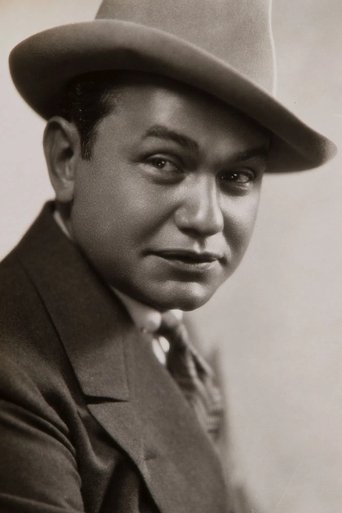
Edward G. Robinson

BornDecember 12, 1893, Bucharest, Romania
DiedJanuary 26, 1973, Hollywood, California
Noir Films18 films
Peak Years1944–1952
Photo: TMDB
Scroll

Emmanuel Goldenberg was born in Bucharest, Romania, in 1893 and immigrated to New York at age nine. He trained at the American Academy of Dramatic Arts and became a distinguished stage actor before his screen debut in 1923. Throughout the 1930s, Robinson built a reputation as a versatile character actor in gangster films and dramas, establishing himself as Hollywood's go-to performer for morally ambiguous tough guys. By the 1940s, he was poised to dominate the emerging noir genre with his weathered face, hooded eyes, and ability to convey menace through stillness.

Robinson's noir period crystallized his legacy as one of cinema's greatest actors. In Double Indemnity (1944), directed by Billy Wilder, he played insurance investigator Barton Keyes with such magnetic intelligence that he nearly stole the film from its romantic leads. His subsequent roles–the trapped painter in Scarlet Street (1945), the gangster returning to power in Key Largo (1948)–showcased his range and psychological complexity. Robinson brought Shakespearean gravity to pulp narratives, suggesting that his criminals and compromised men were driven by recognizable human weakness rather than abstract evil.

Robinson brought a Dostoyevskian depth to the criminal mind–he made you understand the spiritual rot beneath the suit and fedora. – Foster Hirsch, film historian

Working repeatedly with Fritz Lang, John Huston, and other auteur directors, Robinson became essential to noir's visual and moral landscape. He was equally comfortable playing protagonists and antagonists, victims and predators, often occupying multiple roles simultaneously in the genre's moral ambiguity. His collaborations with cinematographer John Alton produced some of noir's most visually striking moments, with Robinson's expressive face rendered in shadow and harsh light. By the 1950s, he had become a noir institution, summoned whenever a production required an actor capable of suggesting decades of corruption and regret in a glance.

Edward G. Robinson

Beyond noir, Robinson's career encompassed over 100 films and significant stage work. He was blacklisted during the McCarthy era due to his left-wing political affiliations, though he was never a communist. Robinson continued working until his death in 1973, remaining a vital presence in cinema and an advocate for social justice. His legacy rests on his refusal to play villains as cartoons and his insistence that even noir's darkest characters deserved psychological authenticity.

Noir Archetype The Noir Villain

Robinson embodied the calculating criminal and morally compromised protagonist with unsettling naturalism. His ability to shift from urbane charm to explosive menace made him the perfect vessel for noir's exploration of corruption lurking beneath respectable surfaces. He brought psychological depth to murderers and schemers, refusing to make villainy theatrical.
The Scene That Defines Them

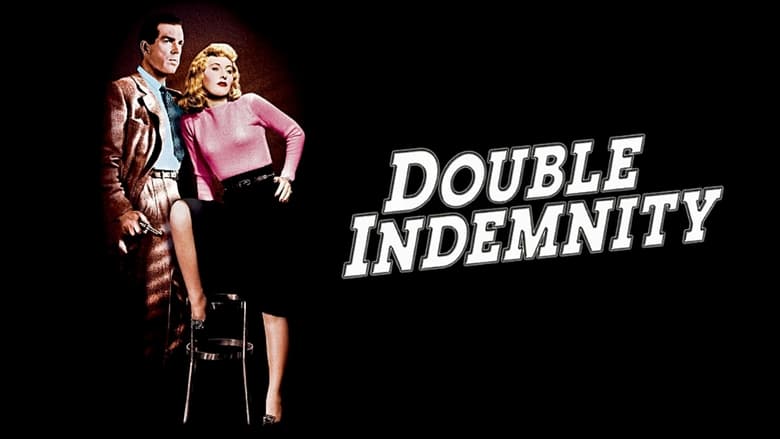
Double Indemnity
Double Indemnity – 1944

Barton Keyes' Final Monologue

Final minutes; climax

Robinson's insurance investigator stands in Fred MacMurray's darkened home, piecing together the murder scheme with methodical precision. His voice drops to a near-whisper as he explains how MacMurray's guilt betrayed itself through fractional details–the pace of walking, the timing of claims. Robinson's face flickers with the shadows of the venetian blinds, expressing both triumph and world-weary sadness. The scene epitomizes noir's belief that human nature is ultimately transparent to the keen observer; Robinson embodies that observing conscience.

You know, the first thing that got me was the beer bottle on the kitchen sink.

The Noir Canon

YearFilmRoleDirector
1944Double IndemnityBarton KeyesBilly WilderEssential
1945Scarlet StreetChristopher CrossFritz LangEssential
1945The Woman in the WindowProfessor Richard WanleyFritz LangEssential
1948Key LargoJohnny RoccoJohn HustonEssential
1947The Red HousePete MorganDelmer DavesRecommended
1955IllegalVictor ScottLewis AllenRecommended
1956NightmareChris EbsonMaxwell ShaneNotable

The Road In

1893
Born in Bucharest, Romania

Emmanuel Goldenberg born to a Jewish family; family immigrates to New York in 1902 when Edward was nine.

1913
Trains at American Academy of Dramatic Arts

Robinson pursues formal theatrical training in New York, establishing himself on Broadway before any film work.

1923
Film debut in Bright Shawl

Robinson makes his first screen appearance but returns to theater for the remainder of the decade.

1931
Breakthrough role in Little Caesar

Robinson's portrayal of gangster Rico Bandello in Mervyn LeRoy's crime drama makes him a star and launches the gangster film cycle.

1944
Double Indemnity and noir apotheosis

Robinson enters his peak noir period with Wilder's masterpiece; establishes himself as essential to the emerging genre's psychology and visual language.

1945
Collaborations with Fritz Lang begin

Robinson works with German expressionist director Fritz Lang on Scarlet Street and The Woman in the Window, deepening noir's visual and philosophical complexity.

1950
Continued genre maturity

Robinson consolidates his position as the genre's most psychologically astute character actor through a series of morally complex roles.

1952
Political blacklisting begins

Robinson's leftist sympathies and donations to progressive causes attract McCarthy-era scrutiny; though never a communist, his career faces pressure and disruption.

1956
Gradual return to work

Robinson continues acting in films and television, though major roles become less frequent; his blacklisting gradually eases by late 1950s.

1973
Death in Hollywood

Robinson dies at age 79; leaves a legacy as one of American cinema's greatest character actors and a defining figure of film noir.