Films People Pull a Fast One Night Beat Reading Room On TV Shop
Director · The Social Conscience Stylist

Edward Dmytryk

BornSeptember 4, 1908, Grand Forks, British Columbia, Canada
DiedJuly 1, 1999, Encino, California
Noir Films8 films
Peak Years1944–1950
Photo: TMDB
Scroll

Edward Dmytryk was born in Grand Forks, British Columbia, Canada, the son of a Ukrainian immigrant and a Canadian mother. He began his career in silent film as a editor and cameraman, learning the grammar of cinema through craft rather than theory. By the 1930s, he had graduated to directing B-pictures and serials at Paramount and Columbia, accumulating technical mastery and speed–skills that would prove invaluable when he entered the noir cycle in his forties. His rise to prestige came late but decisively, establishing him as one of the era's most intellectually engaged practitioners.

Dmytryk's first major noir, Murder, My Sweet (1944), announced his signature approach: a returning soldier's investigation becomes a meditation on vengeance and justice in a morally fractured postwar world. Murder My Sweet (1944) followed closely, transforming Raymond Chandler's Farewell, My Lovely into a fever dream of betrayal and double-cross, with Dick Powell's transformation into a noir antihero serving as both entertainment and social commentary. These films established Dmytryk's visual fluency with low-key lighting and diagonal compositions, but always in service of character psychology rather than atmosphere alone.

Dmytryk understood that noir was not decoration but diagnosis–a formal language adequate to American moral failure. – Jonathan Lethem, Esquire

Crossfire (1947) marked his artistic and political apex. A taut murder mystery set in postwar Washington, the film's investigation of antisemitism and racial prejudice gave noir a documentary urgency without sacrificing formal sophistication. The film's success brought Dmytryk serious critical attention and several award nominations, positioning him as a major studio director. Yet his willingness to explore social injustice through noir's framework–treating prejudice as a noir corruption of the American dream–would eventually align him with liberal filmmakers scrutinized during the McCarthy era.

The blacklist of 1950 forced Dmytryk into exile and moral reckoning. He relocated to England, where he continued directing, eventually returning to America after a controversial recantation before the House Committee on Un-American Activities in 1951. This episode complicated his legacy, though his finest noir work remains a testament to cinema's capacity to merge formal innovation with genuine moral vision. His later career, though productive, never matched the fervent intensity of his peak noir years.

Noir Archetype The Humanist Technician

Dmytryk married noir's visual sophistication with a deep investment in social critique and moral ambiguity. Unlike stylists content with shadow and geometry, he channeled noir's darkness toward expose of racism, corruption, and institutional failure, using the form's formal vocabulary to interrogate American complicity rather than merely to seduce.

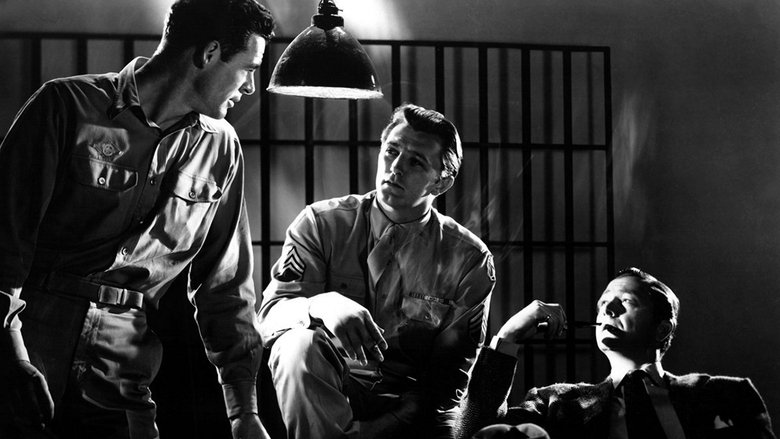
The Scene That Defines Them

Crossfire
Crossfire – 1947

The Drunken Confession

Act Two

A soldier, deep in liquor and rage, articulates his violent antisemitism to a sympathetic listener, his monologue growing increasingly unhinged as the camera pulls back, isolating him in the frame. The scene is a masterclass in noir's capacity for social realism: Dmytryk shoots it with unflinching directness, the performance raw and repellent, refusing the audience easy moral distance. There is no musical underscore, no visual stylization to cushion the ugliness. The scene insisted that noir could be a vehicle for indictment, not mere entertainment–a position that would mark Dmytryk as a politically engaged artist.

The Noir Canon

YearFilmRoleDirector
1945CorneredEdward DmytrykEssential
1947CrossfireEdward DmytrykEssential
1947The PitfallEdward DmytrykRecommended
1951The SniperEdward DmytrykNotable

The Road In

1924
Begins career in silent film

Dmytryk enters the industry as a editor and cameraman, working in Los Angeles during Hollywood's formative era. His technical apprenticeship would become foundational to his later directorial style.

1935
First directorial assignment

Dmytryk directs his first feature, The Hawk, a low-budget thriller for Columbia. Over the next decade, he becomes a prolific B-picture director, honing efficiency and visual craft.

1944
Murder My Sweet released

Dmytryk's breakthrough noir arrives to critical acclaim, establishing him as a serious director capable of elevating genre material. Dick Powell's performance and the film's psychological depth bring Dmytryk to industry attention.

1945
Cornered completes early noir trilogy

The film further solidifies Dmytryk's reputation as a socially conscious noir stylist, exploring postwar trauma and moral ambiguity through a revenge narrative.

1947
Crossfire released; major success

Dmytryk's masterpiece opens to widespread praise and four Academy Award nominations, including Best Director. Its unflinching treatment of antisemitism establishes noir as a vehicle for social critique.

1950
Blacklist begins

Dmytryk is named in HUAC proceedings as a suspected communist sympathizer. He travels to England to continue directing, avoiding immediate prosecution.

1951
Returns and testifies before HUAC

Dmytryk recants and provides names, a controversial decision that allows him to resume work in Hollywood but damages his reputation among liberal peers. His noir period effectively ends.

1954
The Caine Mutiny represents shift

Though critically successful, the film marks Dmytryk's turn toward prestige drama and large-scale productions, moving away from noir's moral intensity toward institutional critique framed in broader historical terms.

1960
Later career consolidates

Dmytryk becomes a successful studio director of dramas and historical epics, but never again achieves the creative fusion of formal innovation and moral urgency that defined his noir work.

1999
Death in Encino

Dmytryk dies at 90, his legacy contested but his finest noir films recognized as essential achievements in American cinema, testaments to the form's capacity for social conscience.