Films People Pull a Fast One Night Beat Reading Room On TV Shop
Director · Master of Poverty Row Poetry

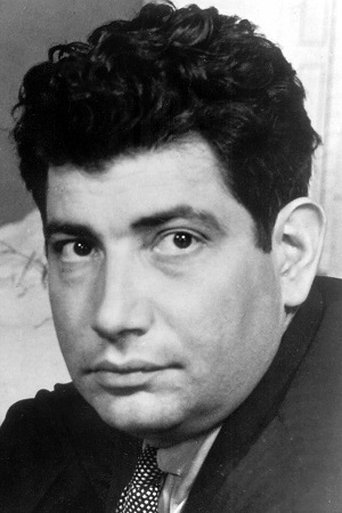
Edgar G. Ulmer

BornSeptember 17, 1904, Olmütz, Austria-Hungary
DiedSeptember 30, 1972, Tucson, Arizona
Noir Films12 films
Peak Years1944–1950
Photo: TMDB
Scroll

Edgar Georg Ulmer was born in Olmütz during the twilight of the Austro-Hungarian Empire, inheriting a sophisticated visual sensibility from European theater and architecture. He apprenticed under Max Reinhardt before emigrating to America in 1924, where he initially worked as an art director and set designer in Hollywood. This training in spatial composition and psychological environment would define his entire directorial career, allowing him to conjure nocturnal worlds of surprising depth from minimal resources. Unlike studio directors bound by contract obligations, Ulmer possessed the immigrant's hunger to prove himself through sheer cinematic intelligence.

Ulmer's directorial career began in earnest during the Depression, but his greatest noir achievements emerged after the war when he gravitated toward independent production. His 1945 masterpiece Detour–shot in six days on a negligible budget–became the apotheosis of poverty row noir: a hypnotic, fatalistic meditation on chance and American desire featuring Al Roberts' prototypical doomed protagonist. The film's expressionist lighting, audacious rear-projection sequences, and Roberts' stentorian voice-over established Ulmer as a master of mood over spectacle. He proved that noir's essential vocabulary–shadows, subjective narration, entrapment–required neither studio polish nor star power to achieve devastating emotional and philosophical impact.

Ulmer had the gift of wringing maximum emotional and aesthetic value from minimal resources–he understood that poverty could be a style. – Barry Gifford, film historian

Following Detour's underground success, Ulmer continued directing crime and horror films with remarkable consistency, including the period noir Bluebeard (1944) and the psychological thriller Strange Illusion (1945), each demonstrating his gift for extracting maximum atmospheric tension from limited budgets. His work anticipated the post-war indie ethos; he understood that constraint itself became a stylistic asset, forcing visual economy and narrative tautness. Ulmer's European temperament–his willingness to embrace darkness, ambiguity, and moral relativism–ran counter to Hollywood's sentimentality, creating an oeuvre that feels perpetually at odds with American optimism.

Ulmer remained prolific into the 1950s, directing across multiple genres while maintaining his noir sensibility and expressionist visual signature. Though never achieving major studio recognition or critical canonization during his lifetime, his influence on independent cinema proved incalculable, particularly for directors who inherited his philosophy of making art without infrastructure. His films endure as evidence that noir was fundamentally a style of vision rather than budget–a way of seeing the world as inherently tragic and corrupt.

Noir Archetype The Resourceful Expressionist

Ulmer embodied the resourceful auteur who transformed meager budgets into visually sophisticated noir through Germanic expressionism and fatalistic storytelling. Working primarily outside the studio system, he channeled European modernism into distinctly American tales of doom, proving that constraint breeds innovation rather than mediocrity.
The Scene That Defines Them

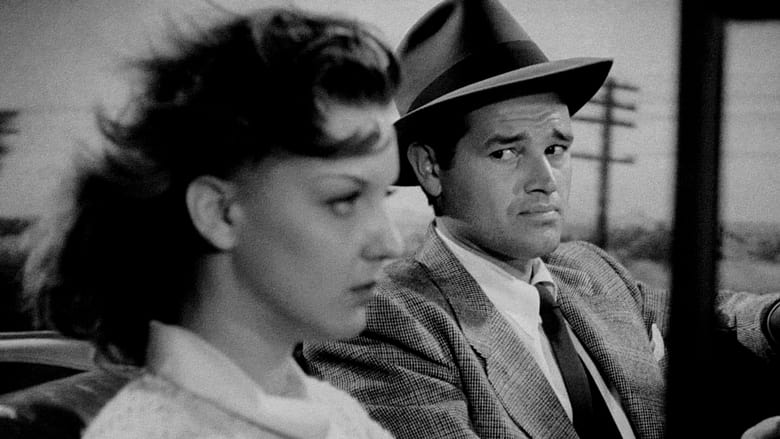
Detour
Detour – 1945

Al Roberts Meets Vera in the Car

Approximately 20 minutes in, establishing the fatal encounter

Roberts picks up the treacherous femme fatale Vera (Ann Savage) on a darkened desert highway, and in a few economical exchanges, Ulmer establishes the predatory sexual dynamics and inevitability of doom that will consume the narrative. Shot largely through the windshield with strategically placed shadows and Vera's cigarette glow, the scene exemplifies Ulmer's ability to generate claustrophobic menace within an open space. Roberts' voice-over, fatalistic and retrospective, combines with Vera's predatory dialogue to establish the noir universe as one where chance meeting equals inescapable entrapment. This scene distills Ulmer's entire aesthetic: economical, expressionist, and psychologically devastating.

The Noir Canon

YearFilmRoleDirector
1944BluebeardEdgar G. UlmerEssential
1945DetourEdgar G. UlmerEssential
1945Strange IllusionEdgar G. UlmerEssential
1948RuthlessEdgar G. UlmerRecommended
1950Murder Is My BeatEdgar G. UlmerRecommended

The Road In

1904
Born in Olmütz, Austria-Hungary

Edgar Georg Ulmer enters the world during the Austro-Hungarian Empire's final decades in a small town that would soon become part of Czechoslovakia.

1920
Apprentices under Max Reinhardt in Vienna

Young Ulmer studies theater design and direction under the legendary Austrian director, absorbing expressionist aesthetics and the psychology of spatial composition that would define his cinematic vision.

1924
Immigrates to the United States

Ulmer arrives in America and secures work as a set designer and art director in Hollywood, beginning his apprenticeship in the American film industry.

1929
First directorial work begins

Ulmer makes his early directorial efforts, establishing himself as a craftsman willing to work outside the studio system on independent and low-budget productions.

1944
Directs Bluebeard and Strange Illusion

Ulmer completes two distinct noir-inflected films that demonstrate his versatility across horror and psychological thriller terrain while maintaining expressionist visual sophistication.

1945
Detour becomes underground classic

Shooting Detour in six days on a minimal budget, Ulmer creates what becomes the quintessential poverty row noir, a film that will posthumously cement his reputation as a directorial visionary.

1946
The Black Cat consolidates style

Ulmer directs another expressionist crime film that further establishes his signature approach to violence, psychology, and visual composition within severe budgetary constraints.

1950
Murder Is My Beat marks later period

Ulmer's noir output continues into the 1950s with this film-within-a-film noir, demonstrating sustained mastery of the form as the cycle begins its decline.

1960
Enters semi-retirement and later work

By the end of the classic noir period, Ulmer transitions toward television and international co-productions, his innovations already absorbed by a new generation of filmmakers.

1972
Dies in Tucson, Arizona

Edgar G. Ulmer passes away at age 67, his reputation still confined to cult status; posthumous rediscovery and critical reappraisal would transform him into a noir canonical figure.