Films People Pull a Fast One Night Beat Reading Room On TV Shop
Actor · The Conscience of Noir

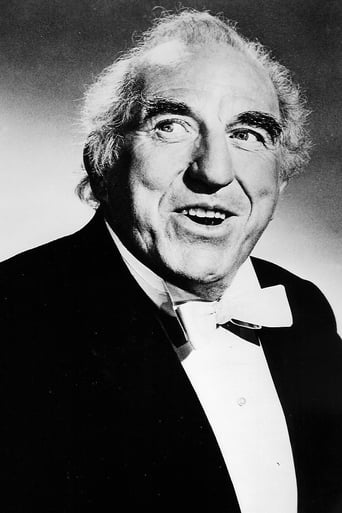
Ed Begley

BornMarch 25, 1901, Hartford, Connecticut
DiedApril 6, 1970, Los Angeles, California
Noir Films12 films
Peak Years1948–1959
Photo: TMDB
Scroll

Edward James Begley was born in Hartford, Connecticut, in 1901, the son of a police officer whose steady, principled bearing would echo through his son's entire career. After studying at Yale Drama School, Begley spent nearly two decades in theater, honing a naturalistic acting style that eschewed theatrical excess for psychological depth. He did not arrive in Hollywood until his mid-forties, an age when most actors are already fading; instead, it proved to be the beginning of his finest work. His late start granted him a maturity and gravitas that younger leading men simply could not muster.

The 1940s and 1950s became Begley's domain. While never a star in the conventional sense, he became indispensable to the best films of the era–a character actor of such intelligence and presence that directors competed for him. In Anatole Litvak's Sorry, Wrong Number (1948), he played the calm, competent police sergeant, the voice of reason amid hysteria and paranoia. Dark City (1950) found him as the captain of detectives, a man of integrity navigating a landscape of corruption. These were not showy roles; they required an actor who could project moral authority through understatement.

Begley had the rare gift of making integrity interesting–of suggesting that decency itself could be dramatic. – Eddie Muller, Dark City: The Lost World of Film Noir

Begley's work in Robert Wise's Odds Against Tomorrow (1959) marked perhaps his finest noir moment. As Detective Dave Burke, he commands scenes with a world-weary decency, a man whose faith in justice remains intact even as he confronts a crime born of American racism and desperation. The film proved that noir had evolved beyond its 1940s moorings, and Begley evolved with it, his acting style more spare and naturalistic than ever. He won the Academy Award for Best Supporting Actor in 1962 for Sweet Bird of Youth, recognition that came late but validating his lifetime of meticulous work.

Begley worked steadily in film and television through the 1950s and 1960s, never trading on youth or looks but on the accumulated wisdom of a lifetime spent in service to his craft. He died in 1970, having appeared in nearly one hundred films. Though contemporary critics rarely singled him out for praise, cinema historians have increasingly recognized him as among the finest supporting actors in American cinema, a man who understood that the best acting is often invisible–the foundation upon which greater structures are built.

Noir Archetype The Moral Witness

Begley embodied the everyman caught between complicity and conviction, a character actor whose weathered face and deliberate manner suggested quiet integrity under pressure. He rarely played the criminal or the femme fatale; instead, he was the functionary, the neighbor, the cop with doubts–men forced to confront their own compromises in a corrupt world.
The Scene That Defines Them

Odds Against Tomorrow
Odds Against Tomorrow – 1959

The Detective's Reckoning

Final act, Detective Burke's confrontation with Earle Sloan

In this crucial scene, Detective Dave Burke stands over the burnt corpses of the criminals, his weathered face registering not triumph but sorrow and moral exhaustion. As he pieces together the crime's racial and social dimensions, Begley's performance shifts subtly from procedural competence to existential weariness–he understands that solving the crime does nothing to heal the wound from which it sprang. His quiet delivery of exposition becomes a meditation on the limits of justice itself, the detective rendered small by the forces arrayed against him.

The Noir Canon

YearFilmRoleDirector
1947Deep ValleySheriff JackmanJean NegulescoNotable
1950Dark CityCaptain of DetectivesWilliam DieterleEssential
1951TensionLieutenant GaffneyJohn BerryRecommended
1959Odds Against TomorrowDetective Dave BurkeRobert WiseEssential

The Road In

1901
Born in Hartford, Connecticut

Son of Hartford police officer; early exposure to law enforcement figures who would later populate his film roles.

1919
Enrolls in Yale Drama School

Begins formal theater training, developing the naturalistic acting approach that would define his later film work.

1920
Begins stage career

Spends nearly two decades performing in Broadway productions and touring theater companies.

1942
Hollywood debut

Begins film career at age 41, relatively late but bringing maturity and gravitas to supporting roles.

1948
Sorry, Wrong Number released

Delivers commanding performance as Sergeant Donnelly; begins association with major noir productions.

1950
Dark City and period of peak noir activity

Works with William Dieterle; noir becomes his primary domain for the next decade.

1957
Paths of Glory

Collaborates with Stanley Kubrick in a war film that demonstrates his range beyond noir; receives critical acclaim.

1959
Odds Against Tomorrow, final major noir

Robert Wise's film becomes Begley's finest noir performance; marks transition away from the genre.

1962
Academy Award win

Wins Best Supporting Actor for Sweet Bird of Youth; recognition arrives late in career but validates decades of meticulous work.

1970
Death in Los Angeles

Dies at age 68; leaves behind legacy of nearly 100 films in which his quiet authority shaped countless scenes.