Richard Ewing Powell was born in Mountain View, Arkansas, in 1904, though his family relocated to Kansas City during his childhood. He began his entertainment career as a singer and actor in musical theater during the 1920s, eventually reaching Hollywood where he became a reliable leading man in musical comedies and romantic films throughout the 1930s. Powell's early persona was wholesome and energetic, the embodiment of American optimism. Yet beneath this cheerful exterior lay a more complex performer, one capable of deeper dramatic resonance. By the early 1940s, Powell grew restless with musicals and sought roles that would challenge and transform his public image.
The turning point arrived with Murder My Sweet in 1944, Edward Dmytryk's adaptation of Raymond Chandler's Farewell, My Lovely. Powell played Philip Marlowe, the hard-boiled private detective, opposite Ann Shirley and femme fatale Claire Trevor. The film was a revelation: Powell proved he could embody world-weary cynicism and moral ambiguity with the same conviction he once brought to song cues. Critics and audiences were astonished by his dramatic range. Murder My Sweet established Powell as a serious actor and opened the door to a succession of noir roles throughout the late 1940s. His transformation was complete–the song-and-dance man had become a creature of shadow and doubt.
Following his noir debut, Powell appeared in Cornered (1945), where he played a Canadian pilot seeking revenge across South America, and Johnny O'Clock (1947), a complex meditation on corruption and double-crossing in the nightclub underworld. In each role, Powell brought a distinctive quality: intelligence married to vulnerability, toughness tempered by residual humanity. His Marlowe and his subsequent detectives were men of principle navigating systems designed to corrupt them. Powell worked frequently with director Edward Dmytryk and collaborated with cinematographers like Harry Wild, who sculpted his face in the vocabulary of noir lighting. By the late 1940s, Powell had become one of the most reliable interpreters of Chandler's world.
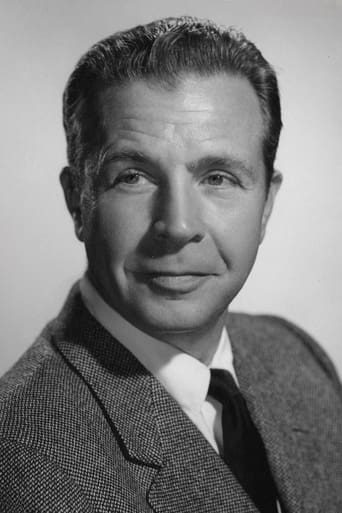
Powell's noir period lasted approximately six years, during which he demonstrated remarkable versatility across the genre's spectrum. His performances aged gracefully on screen–the traces of his musical past visible in his graceful physicality, his precise diction, his ability to convey charm without sacrificing hardness. Though his noir work eventually gave way to other genres, including Westerns and television roles, the films he made between 1944 and 1950 remain among the finest examples of the American private-eye tradition. Powell died in 1963, leaving behind a legacy as the entertainer who dared reinvent himself entirely.
Powell embodied the rare noir archetype of the former song-and-dance man thrust into moral darkness. His journey from Depression-era musical comedy to hard-boiled detective fiction represented a broader cultural shift, transforming light entertainment into existential inquiry. His likability and charm–assets from his musical past–became weapons in the hands of morally compromised protagonists.

