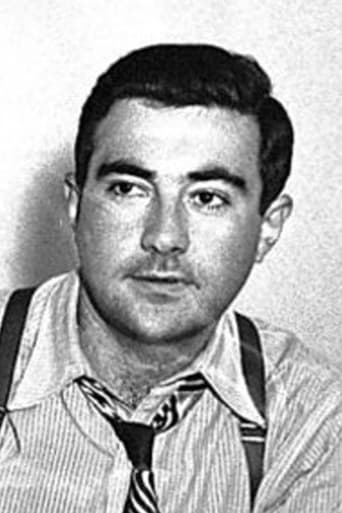
David Goodis was born in Philadelphia in 1917, a city that would haunt his imagination throughout his career. The son of a classical pianist and a mother from a prosperous Jewish family, Goodis grew up in relative comfort but remained psychologically drawn to the margins of urban life. He began writing early, publishing stories in pulp magazines and detective journals while still in his twenties. By the late 1930s, he had established himself as a reliable craftsman of crime fiction, though recognition remained modest. His gift lay not in plot mechanics but in the poetry of desperation–the way ordinary people spiraled into moral compromise and violence.
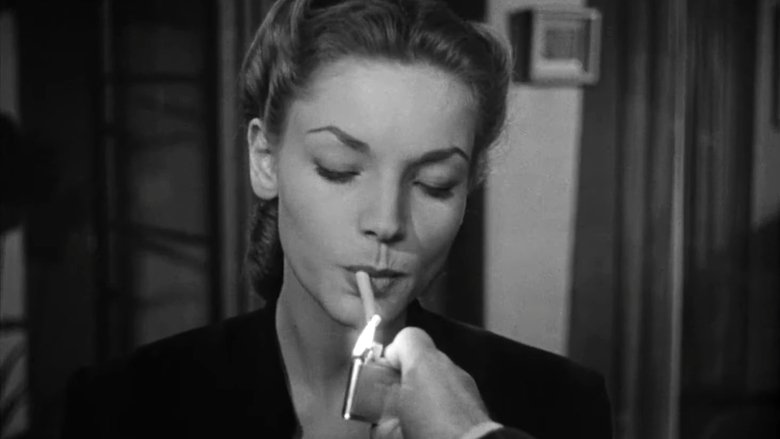
Goodis's Hollywood period (1946–1950) was creatively fertile but personally turbulent. He worked as a contract writer for Warner Bros., contributing to screenplays and adaptations, though his frustration with studio interference grew steadily. The 1956 adaptation of his novel Nightfall established his reputation with cinema audiences, and Dark Passage (1947), directed by Delmer Daves and starring Humphrey Bogart, became his most celebrated noir collaboration. Yet Goodis chafed at Hollywood's demands for clarity and redemption; his novels were darker, more ambiguous, more willing to leave characters morally unredeemed. By 1950, he had largely withdrawn from studio work, returning to Philadelphia to write.
The second half of Goodis's life was marked by increasing isolation and literary obscurity in America, though his reputation flourished in Europe, particularly in France. François Truffaut's 1960 adaptation of Shoot the Piano Player, itself based on Goodis's novel Down There, became a canonical work of the French New Wave and restored international attention to his writing. Goodis lived modestly in Philadelphia, publishing novels that were increasingly introspective and formally experimental, exploring the interior lives of the trapped and the damaged. He died in 1967, relatively unknown to mainstream American readers, his influence confined to noir specialists and European intellectuals who recognized in his work a profound meditation on American alienation.
Goodis's contribution to noir cinema lies in his unflinching psychological realism and his refusal to moralize about criminality. His characters do not sin and repent; they endure and deteriorate. His Philadelphia settings became iconic in noir geography, less glamorous than the Los Angeles of Chandler or the New York of Hammett, but more authentically American in their decay. His influence on crime fiction and noir cinema extends far beyond his modest filmography, evident in the work of writers and filmmakers who discovered in his novels a template for the intersection of form and moral darkness.
Goodis embodied the pulp writer who elevated genre material into genuine tragedy, mining the criminal underworld and street life for psychological depth rather than mere sensation. His novels provided fertile ground for noir cinema precisely because they treated the dispossessed and damaged with genuine compassion, seeing in their moral compromises the architecture of American failure.