Films People Pull a Fast One Night Beat Reading Room On TV Shop
Actor · The Haunted Everyman

Dana Andrews

BornJanuary 1, 1909, Collins, Mississippi
DiedDecember 17, 1992, Los Angeles, California
Noir Films18 films
Peak Years1944–1952
Photo: TMDB
Scroll

Carver Dana Andrews was born in Collins, Mississippi, in 1909, the son of a Baptist minister. He grew up in a household of strict propriety, studying drama at Sam Houston State Teachers College before moving to Los Angeles in the 1930s to pursue acting. His early years were marked by small roles and bit parts, but Andrews possessed a quality that directors recognized immediately: the ability to convey inner turmoil beneath a composed surface. By the early 1940s, he had begun to accumulate significant roles, his tall frame and sharp features ideal for the postwar anxieties that would define his finest work.

Andrews achieved stardom through his collaboration with director Otto Preminger on Laura (1944), where he played the obsessive detective Mark McPherson investigating the murder of a woman's portrait. The film's dreamlike quality and Andrews's brooding restraint created one of cinema's most iconic investigations, launching him into the first rank of noir actors. He would reunite with Preminger on Fallen Angel (1945) and later A Scandal in Paris (1946), establishing himself as a preferred player in the director's psychological explorations of desire and corruption. His success in Laura opened doors to a remarkable sequence of noir and crime films throughout the 1940s and 1950s.

Dana Andrews had the rare ability to suggest that his character's moral collapse was not inevitable villainy but tragedy–the dissolution of a decent man. – Film noir historian Alain Silver

Where the Sidewalk Ends (1950), again directed by Preminger, became Andrews's most complex noir role: a police detective whose own capacity for violence threatens to mirror the criminals he pursues. The film's exploration of institutional corruption and personal morality allowed Andrews to display unexpected depths, moving beyond the detective archetype to embody a man at war with himself. Critics noted his ability to suggest psychological breakdown through minimal gesture–a tightening of the jaw, a hollowed stare. This film cemented his reputation not merely as a leading man but as a serious dramatic actor capable of inhabiting moral ambiguity.

Throughout the 1950s, Andrews continued to work steadily in television and film, though the classic noir period was waning. He appeared in ensemble casts and character roles with distinction, never losing the quality of wounded dignity that defined his best work. Andrews died in 1992, remembered as one of noir's most underrated architects of masculine vulnerability. His legacy rests not on heroic grandeur but on the subtle articulation of ordinary men confronting extraordinary moral tests.

Noir Archetype The Decent Man Undone

Dana Andrews embodied the noir protagonist trapped between morality and circumstance–the ordinary man whose world collapses under the weight of fate, obsession, or a single fatal mistake. His quiet intensity and everyman appeal made him the perfect vessel for exploring how innocence curdles into complicity.

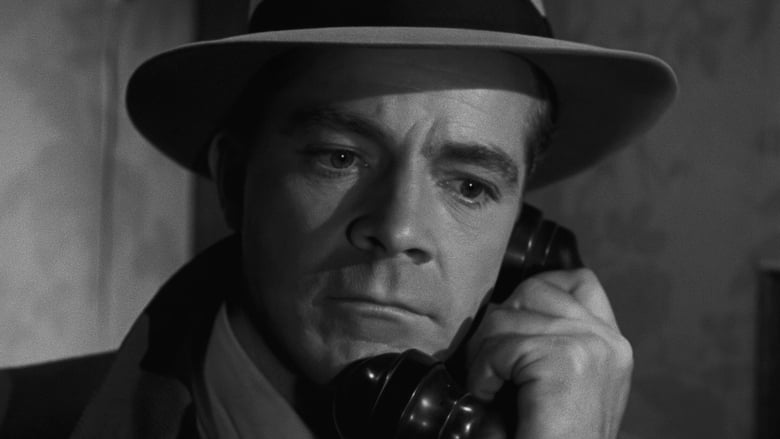
The Scene That Defines Them

Where the Sidewalk Ends
Where the Sidewalk Ends – 1950

The Beating

Act Two, approximately 45 minutes

Detective Dixon (Andrews) brutally beats a suspect in an interrogation room, crossing the line from law enforcement into raw violence. In this pivotal moment, Andrews's face registers not triumph but horror at his own capacity for cruelty, suggesting that the line between hunter and hunted has dissolved. The scene encapsulates Andrews's noir legacy: the decent man recognizing the monster within. His silent aftermath–sitting alone in the dark, hands trembling–defines the psychological weight of his finest performances.

The Noir Canon

YearFilmRoleDirector
1944LauraDetective Mark McPhersonOtto PremingerEssential
1945Fallen AngelEric StantonOtto PremingerEssential
1947Boomerang!Henry L. HarveyElia KazanRecommended
1950Where the Sidewalk EndsDetective Mark DixonOtto PremingerEssential

The Road In

1909
Born in Collins, Mississippi

Carver Dana Andrews born to minister Samuel Elbertus Andrews and Bessie Amelia Redd Andrews in rural Mississippi.

1931
Moves to Los Angeles

Andrews relocates to Los Angeles after studying drama at Sam Houston State Teachers College, beginning a career in small theatrical and film roles.

1938
Signed by 20th Century-Fox

After accumulating minor roles, Andrews signs a contract with 20th Century-Fox, beginning a long studio relationship.

1944
Stardom in Laura

Otto Preminger's Laura becomes a major critical and commercial success, with Andrews's detective performance launching him to stardom and establishing him as a leading noir actor.

1945
Reunites with Preminger

Andrews works again with Preminger on Fallen Angel, further solidifying their creative partnership in psychological noir.

1947
Kazan collaboration

Director Elia Kazan casts Andrews in the semi-documentary noir Boomerang!, based on the Brainard Rawson wrongful conviction case.

1950
Peak noir performance

Where the Sidewalk Ends, Preminger's most morally complex noir, gives Andrews the role of his career as Detective Mark Dixon, exploring institutional corruption and personal moral decay.

1952
Transitional period begins

As classic noir wanes, Andrews transitions to television and character roles, though he continues to work steadily throughout the 1950s.

1960
End of noir era

By 1960, the classical noir period has ended; Andrews shifts to supporting roles and television work, remaining active but less central to Hollywood productions.