Films People Pull a Fast One Night Beat Reading Room On TV Shop
Writer · The Architect of Suspense

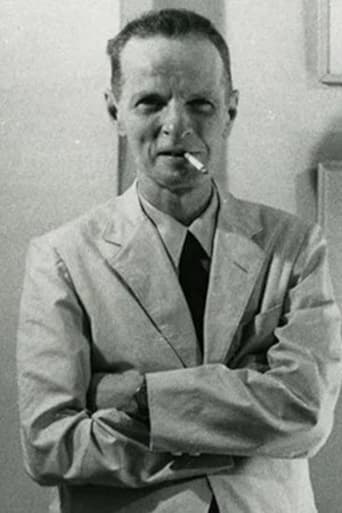
Cornell Woolrich

BornDecember 4, 1903, New York City, New York
DiedSeptember 25, 1968, New York City, New York
Noir Films14 films
Peak Years1944–1950
Photo: TMDB
Scroll

Cornell George Hopley-Woolrich (1903–1968) was born in New York City to a prosperous family, though his childhood was marked by his parents' tumultuous marriage and subsequent moves between continents. He attended Columbia University and briefly pursued a literary career in the 1920s, publishing novels of limited success. It was not until he pivoted to writing short stories and novelettes for pulp magazines–particularly Argosy and Detective Fiction Weekly–that his peculiar genius found its audience. By the mid-1930s, writing under his mother's maiden name and various pseudonyms, Woolrich had become one of the most prolific and inventive voices in American genre fiction.

Woolrich's supreme gift was the architecture of suspense through time itself. His stories and novels typically trap a protagonist in an impossible situation with a ticking clock: a man must prove his innocence before dawn, a woman has hours to locate a killer before her husband's execution, a detective races against bureaucratic machinery. This temporal obsession, married to his gift for psychological realism and urban atmosphere, made his work irresistible to Hollywood producers and directors. Between 1942 and 1950, more than a dozen of his stories and novels were adapted to film, many by directors of uncommon sophistication.

Woolrich had the gift of making you feel the walls closing in–not through violence or melodrama, but through the simple, inexorable passage of hours. – David Bordwell, film theorist

His relationship with cinema was paradoxical. Woolrich rarely visited Hollywood and had little control over adaptations of his work, yet his prose style–fractured, claustrophobic, laden with noir atmosphere–translated naturally to the visual medium. Robert Siodmak's Phantom Lady (1944) and Alfred Hitchcock's Rear Window (1954) elevated his source material into masterworks, while lesser-known adaptations like Roy William Neill's Black Angel (1946) captured his particular obsession with guilt, innocence, and the machinery of justice. His influence on the aesthetic and narrative grammar of American film noir cannot be overstated.

Woolrich's personal life was marked by isolation and suffering. Never married, estranged from most family relationships, he lived a reclusive existence in New York hotels, writing obsessively while battling depression, alcoholism, and declining health. His final decades were shadowed by illness and neglect; he died in 1968 virtually forgotten by the industry he had shaped. Yet his work endures as perhaps the purest distillation of noir psychology: the ordinary citizen undone by fate, time, and the indifference of systems larger than himself.

Noir Archetype The Pulp Virtuoso

Woolrich embodied the pulp writer elevated to serious craft, transforming lurid magazine fiction into taut psychological thrillers. His obsession with ordinary people ensnared by circumstance and time pressure became the template for postwar noir cinema, where fate operates through bureaucratic delay and mechanical chance.
The Scene That Defines Them

Phantom Lady
Phantom Lady – 1944

The Drummer's Solo

Second act; nightclub sequence

In one of cinema's great sequences of mounting obsession, a woman pursues a phantom witness through a jazz club, her desperation escalating as the drummer plays a wild solo. The scene encapsulates Woolrich's genius: ordinary desire (finding a witness) becomes psychological torment through music, close-ups, and relentless editing. Time collapses. The innocent becomes complicit in her own undoing. This is Woolrich made visible–style as suspense, rhythm as fate.

The Noir Canon

YearFilmRoleDirector
1944Phantom LadyRobert SiodmakEssential
1945Deadline at DawnHarold ClurmanRecommended
1946Black AngelRoy William NeillEssential
1947The ChaseArthur RipleyNotable
1948The GuiltyJohn ReinhardtNotable
1950No Man of Her OwnMitchell LeisenRecommended
1950The UnsuspectedMichael CurtizRecommended
1951I Was a Communist for the F.B.I.Gordon DouglasCurio

The Road In

1903
Born in New York City

Cornell George Hopley-Woolrich born to a prosperous but troubled family. His childhood marked by parental instability and transatlantic relocations.

1925
First novel published

Publishes Cover Charge, a society novel with limited success. Begins literary career in traditional novel form.

1930
Transition to pulp fiction

Begins writing short stories and novelettes for Argosy and Detective Fiction Weekly under the pseudonym William Irish. Discovers his true métier in short-form suspense.

1935
Establishes pseudonymous identity

Publishes The Bride Wore Black as William Irish. The pseudonym allows creative freedom and becomes his most successful literary persona.

1944
First noir film adaptation

Phantom Lady, adapted from his novelette, released to critical acclaim. Robert Siodmak's direction establishes the template for Woolrich adaptations.

1944
Peak period begins

Multiple Woolrich adaptations in production and release. The Leopard Man and Mark of the Whistler establish him as noir's primary source for literary material.

1954
Hitchcock's Rear Window

Alfred Hitchcock adapts Cornell Woolrich's Rear Window, creating one of cinema's masterpieces. Film secures Woolrich's canonical status in film history.

1960
Career decline and isolation

Hollywood interest in Woolrich wanes as noir gives way to new genres. Woolrich increasingly isolated in New York, plagued by illness and alcoholism.

1968
Death in obscurity

Woolrich dies in New York Hospital, largely forgotten by the entertainment industry. His critical rehabilitation begins in the 1970s through film scholarship.