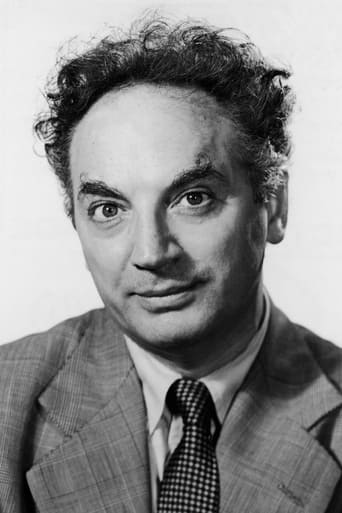
Clifford Odets emerged from Philadelphia's working-class neighborhoods and the ferment of 1930s leftist theater to become one of American drama's most vital voices. His early plays–Waiting for Lefty, Awake and Sing!–established him as a playwright of social urgency and linguistic authenticity. When Hollywood beckoned in the late 1930s, Odets initially resisted, viewing the studio system as antithetical to his artistic principles. Yet financial necessity and the allure of reaching mass audiences eventually drew him westward, beginning a fraught relationship with cinema that would define the latter half of his career.
In noir's golden age, Odets proved that screenwriting need not mean artistic capitulation. His scripts for Deadline at Dawn (1946) and The Sweet Smell of Success (1957) transcended genre conventions by embedding psychological realism and moral inquiry into crime narratives. Odets brought to noir the vernacular precision of his stage work–the overlapping dialogue, the rhythm of working-class speech, the ideological undertow beneath surface action. His characters were not merely criminals or victims but individuals trapped in systems larger than themselves, forced to negotiate between aspiration and survival.
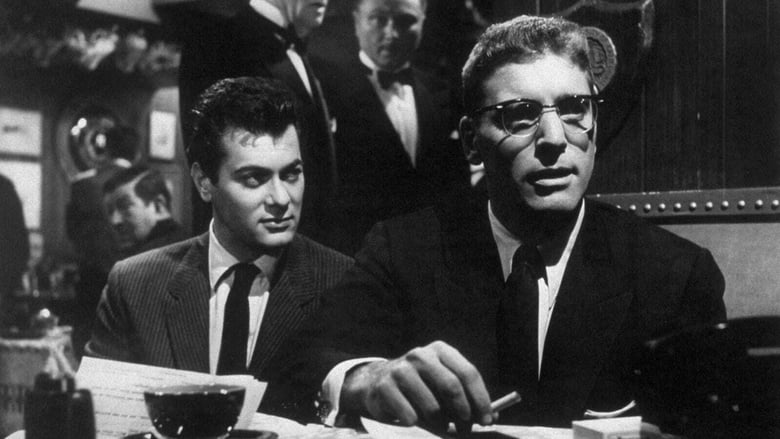
Sweet Smell of Success stands as his masterwork: a coruscating portrait of New York's newspaper world where ambition curdles into viciousness and mentorship becomes parasitism. Co-written with Ernest Lehman, the film's acidic dialogue and baroque visual style transformed what might have been a standard crime picture into a meditation on power, envy, and the corruption of talent. Odets captured the particular poison of show-business cruelty–the way proximity to influence breeds resentment, the way small humiliations accumulate into violence. The film remains his most enduring contribution to noir, a work in which his theatrical sensibility achieved perfect fusion with cinema's expressive possibilities.
Odets's late career was marked by the stigma of his 1952 HUAC testimony, in which he named names despite his leftist sympathies, a contradiction that haunted him until his death in 1963. His noir work, though limited in volume, demonstrated that serious literature could inhabit genre cinema without dilution. He proved the screenwriter could be artist, not mere functionary–that dialogue could sing, that social observation could coexist with suspense, that moral ambiguity enriched rather than compromised entertainment.
Odets embodied the conflicted intellectual who brought Broadway's social conscience to noir's darker precincts. His scripts wrestled with moral ambiguity and urban decay, transforming pulp material into studies of ethical compromise and spiritual erosion. He was the writer who made audiences uncomfortable by suggesting that corruption ran deeper than plot mechanics.