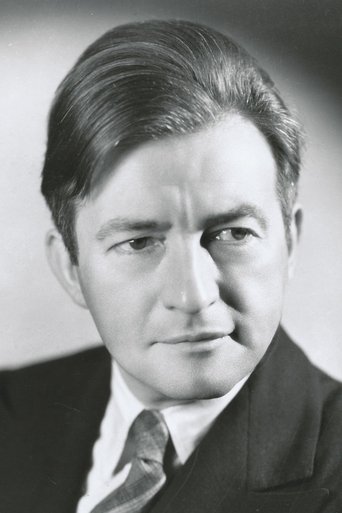
Claude Rains was born William Claude Rains in London in 1889, the son of a pharmacist and a suffragette. He trained at the Tree School of Acting and made his stage debut in 1911, becoming one of Britain's finest theatrical actors before transitioning to film in 1933 at the age of forty-four. His early talkie performances–including The Invisible Man–revealed an actor of uncommon vocal authority and nuance, capable of conveying menace through inflection alone. He emigrated to Hollywood in 1935 and soon became an indispensable character actor, lending gravitas to productions across multiple genres.
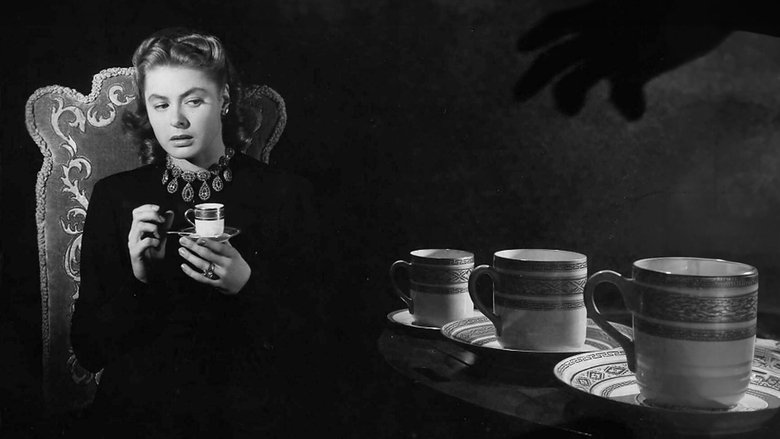
During the golden age of American film noir, Rains found his ideal milieu in the murky world of betrayal and psychological manipulation. His performance as Alexander Sebastian in Hitchcock's Notorious (1946) remains canonical–a man destroyed by love for his wife, simultaneously pathetic and pitiable. The role required him to play against type as a victim of circumstance, yet his aristocratic bearing and measured cadence ensured Sebastian remained dangerously credible. Rains brought moral ambiguity to every noir appearance, suggesting that villainy often springs from weakness rather than strength.
Beyond the noir cycle, Rains was a prolific and respected actor, appearing in over eighty films and maintaining an active stage career. He received four Academy Award nominations and won a Golden Globe, though industry recognition often lagged behind critical esteem. His voice–cultured, precise, capable of cutting irony–became instantly identifiable. Colleagues and directors praised his professionalism and collaborative spirit, his ability to elevate material through sheer force of intelligence and craft.
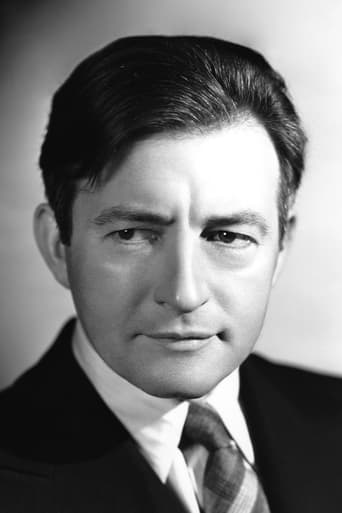
Rains spent his final decades in California, continuing to work in television and occasional films until his death in 1967. He remained married four times and fathered a son who became a writer and activist. His legacy encompasses both the theatrical tradition and cinema; he was fundamentally a man of letters who happened to work brilliantly on screen, bringing Shakespearean intensity to every role.
Rains embodied the educated, cultured antagonist–men of refinement whose charm masked moral corruption. His precise diction and aristocratic bearing made him the perfect foil to the everyman hero, suggesting that evil wears a gentleman's face.