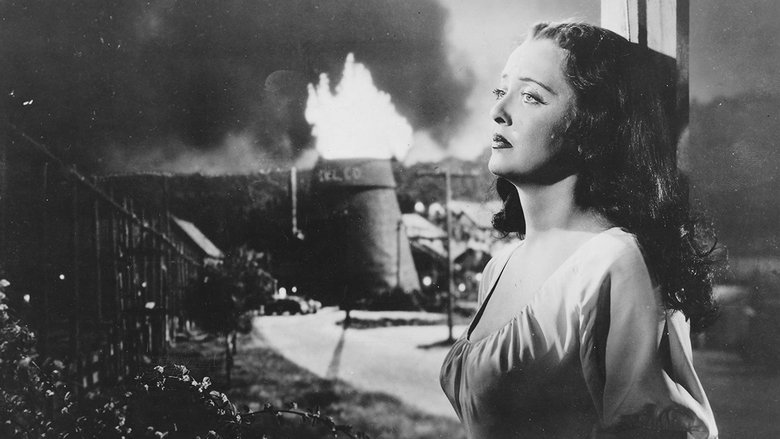
Ruth Elizabeth Davis was born in 1908 in Lowell, Massachusetts, the daughter of a patent attorney and a photographer. She pursued acting through Broadway and early Hollywood roles, but it was her volcanic intensity and refusal to play decorative heroines that distinguished her career. By the 1940s, Davis had established herself as one of cinema's most fearless actresses, willing to embrace ugliness, vanity, and psychological torment in ways her contemporaries avoided. Her commitment to complex, morally ambiguous characters made her a natural fit for noir's shadow-world of obsession and decay.
In the noir era, Davis shifted from protagonist to antagonist, playing women whose intelligence and ambition twisted into something monstrous. The Letter (1940) introduced her as a dissembling murderer, all calculated composure masking feral rage. Beyond the Forest (1949) showed her at her most unrestrained–a woman consumed by sexual hunger and social resentment, willing to destroy anyone in her path to escape small-town mediocrity. These roles demanded a kind of fearlessness: she refused to soften her characters with redemption or sentimentality.
Davis's noir work established her as an actress of genuine danger. Unlike the cool, mysterious femmes fatales of other films, her characters burned with visible desperation and barely suppressed violence. Her face–with its distinctive wide eyes and sharp cheekbones–became an instrument of psychological exposure. She could convey desire, contempt, and murderous intent in a single look, making audiences simultaneously horrified and transfixed. Her collaborations with directors like William Wyler and King Vidor produced some of cinema's most psychologically brutal portraits of female pathology.

Though Davis's peak noir period was brief, her influence on the archetype proved lasting. She demonstrated that noir's dangerous women need not be beautiful or sympathetic–they could be damaged, deluded, and driven by forces they barely understood. Her performances anticipated the psycho-thrillers of later decades and influenced generations of actresses willing to embrace unsympathetic, complex female characters. Davis proved that true power in cinema came from emotional truth, not conventional attractiveness.
Davis embodied a darker evolution of noir's dangerous woman–less seductress than feral predator, driven by jealousy, ambition, and unchecked psychological turmoil. Her performances stripped away glamour to expose raw desperation and moral decay, making her antagonists as compelling as they were terrifying.