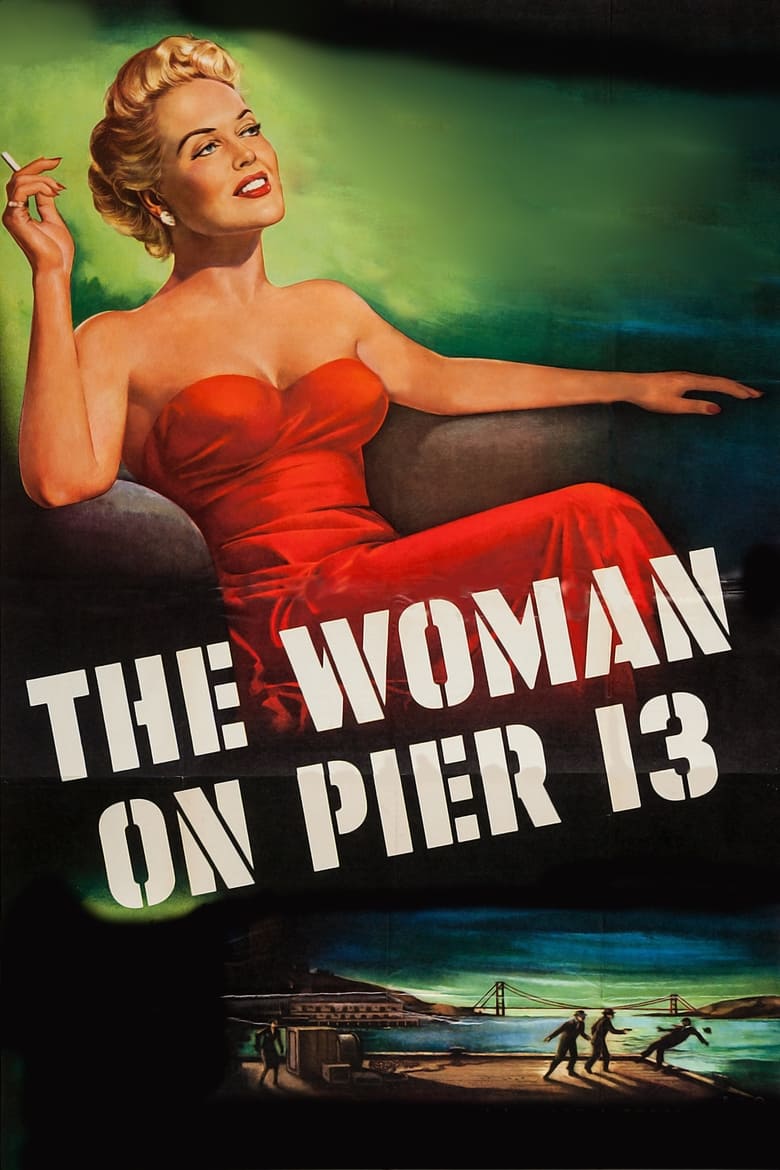
Bradley Collins (Robert Ryan) is a rising executive at a San Francisco shipping company, newly married to Nan Lowry (Laraine Day) and apparently settled into respectable life. What his wife does not know is that Collins was once Frank Johnson, a Communist Party operative whose radical past is very much alive in the memory of Vanning (Thomas Gomez), a Party enforcer who arrives to collect on old loyalties. When Collins refuses to cooperate in a scheme to infiltrate and disrupt the shipping union, Vanning makes clear that refusal carries consequences.
The pressure on Collins intensifies when Vanning turns his attention to Nan's younger brother Don (John Agar), drawing him into the orbit of Christine Norman (Janis Carter), a Party operative whose personal history with Collins gives her leverage over him. Jim Travers (Richard Rober), a federal investigator, works the edges of the conspiracy, while Bailey (William Talman), a cold-eyed younger henchman, handles the enforcement that Vanning prefers to keep at arm's length. Loyalties fracture under coercion, and Christine's own position becomes increasingly dangerous as she realizes the organization she serves has no interest in her survival.
Produced at RKO during the early years of the Cold War, Woman on Pier 13 uses the waterfront milieu and the mechanics of extortion noir to dramatize the Party as a criminal syndicate rather than a political movement. The film belongs to a cycle of anti-Communist pictures that borrowed heavily from the genre's established vocabulary of blackmail, coercion, and the inescapable past, and it carries the period's anxieties about infiltration and hidden identity in forms recognizable to noir from its earliest years.
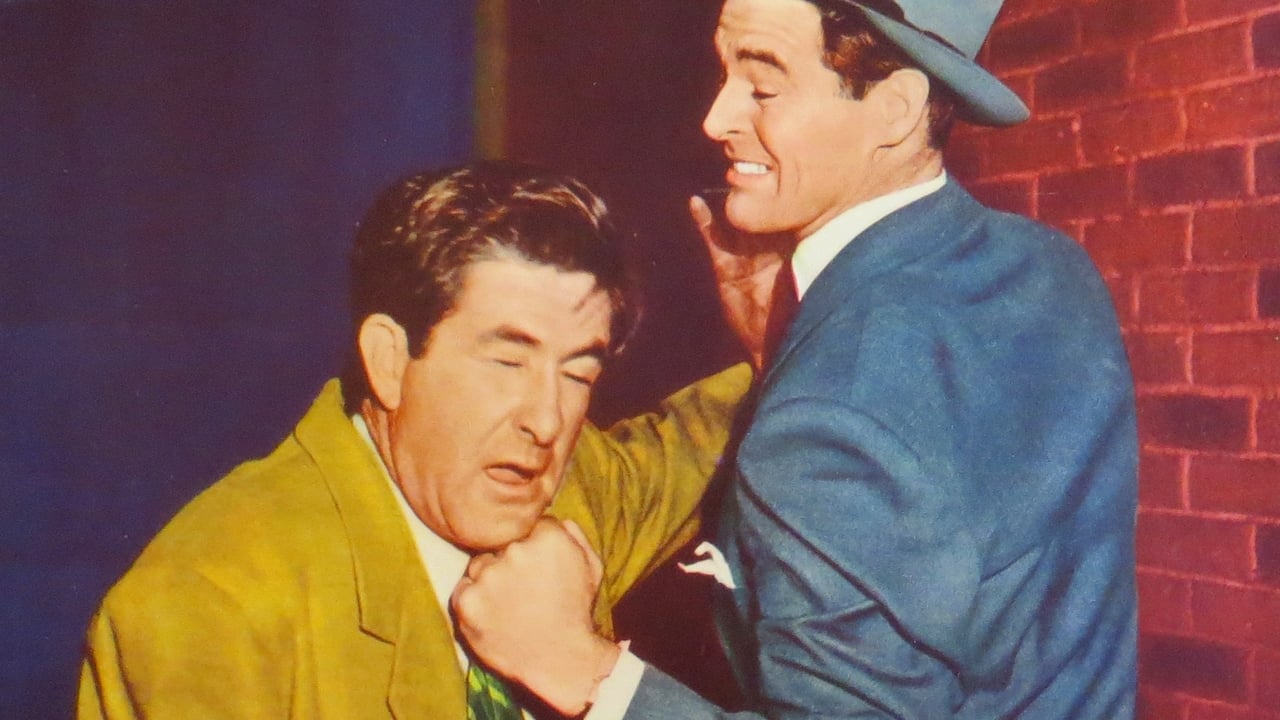
Woman on Pier 13 occupies an uneasy position in the noir canon: it is as much a period document as it is a genre film. RKO's production carried explicit anti-Communist sponsorship, and the politics are worn without apology, yet the film's underlying mechanics are pure extortion noir. Robert Ryan, rarely less than compelling in this era, brings something genuinely conflicted to Collins, a man whose buried past functions exactly as the femme fatale does in more conventional examples – a force that the present cannot absorb or survive. Nicholas Musuraca's photography gives the San Francisco waterfront an institutional bleakness that serves the film better than its polemical scaffolding deserves. Thomas Gomez's Vanning is a recognizable syndicate figure who happens to carry a Party card, and Janis Carter's Christine is the trapped insider the genre returns to repeatedly. The film's ideological freight strains its dramatic credibility in places, and the resolution is more declarative than earned, but as a record of how noir conventions were conscripted into Cold War rhetoric, it remains instructive.
– Classic Noir
Musuraca places Collins against the industrial geometry of the pier at night: pilings and hawsers recede into darkness behind him, and the light source is hard and lateral, carving deep shadow across Ryan's face so that one side is nearly lost. The camera holds at a medium distance, refusing the close-up that would allow Collins any privacy of expression, while Vanning occupies the middle ground between Collins and the camera, his bulk blocking any clear line to the open water beyond.
The composition makes the argument the script is making in spatial terms: Collins has nowhere to move that is not already claimed. The water that should represent freedom or escape is behind Vanning, behind the organization, and the dock itself – the site of Collins's legitimate career – becomes the place where his two lives are forced into the same frame. The scene establishes that the past is not behind him; it is between him and everything he has built.
Nicholas Musuraca, whose work on films such as Out of the Past set a standard for how shadow could function as moral argument, applies a leaner version of that approach to Woman on Pier 13. Shooting largely on studio approximations of San Francisco locations, he uses hard-edged key lighting with minimal fill to establish the waterfront as a place where the ordinary logic of social space has broken down. Characters positioned in doorways and against industrial surfaces are frequently caught at the boundary between light and dark rather than fully within either zone, a spatial metaphor the narrative never has to explain. Musuraca favors medium shots that preserve the environment's weight around the actors, resisting the kind of expressionist distortion that would aestheticize the material beyond its means. The result is a functional, occasionally handsome cinematography that keeps the film's Cold War anxieties grounded in the physical reality of docks, offices, and corridors – spaces where surveillance and exposure feel genuinely possible.
Tubi has carried this title as part of its rotating classic noir library and is likely the most accessible free option for most viewers.
Archive.orgFreeAs a film that has circulated in the public domain, Archive.org may host watchable transfers, though quality varies considerably by source.
TCMSubscription / BroadcastTCM periodically programs Woman on Pier 13 within Cold War noir or RKO retrospective slots; the broadcast version is typically a clean archival print.