Films People Pull a Fast One Night Beat Reading Room On TV Shop
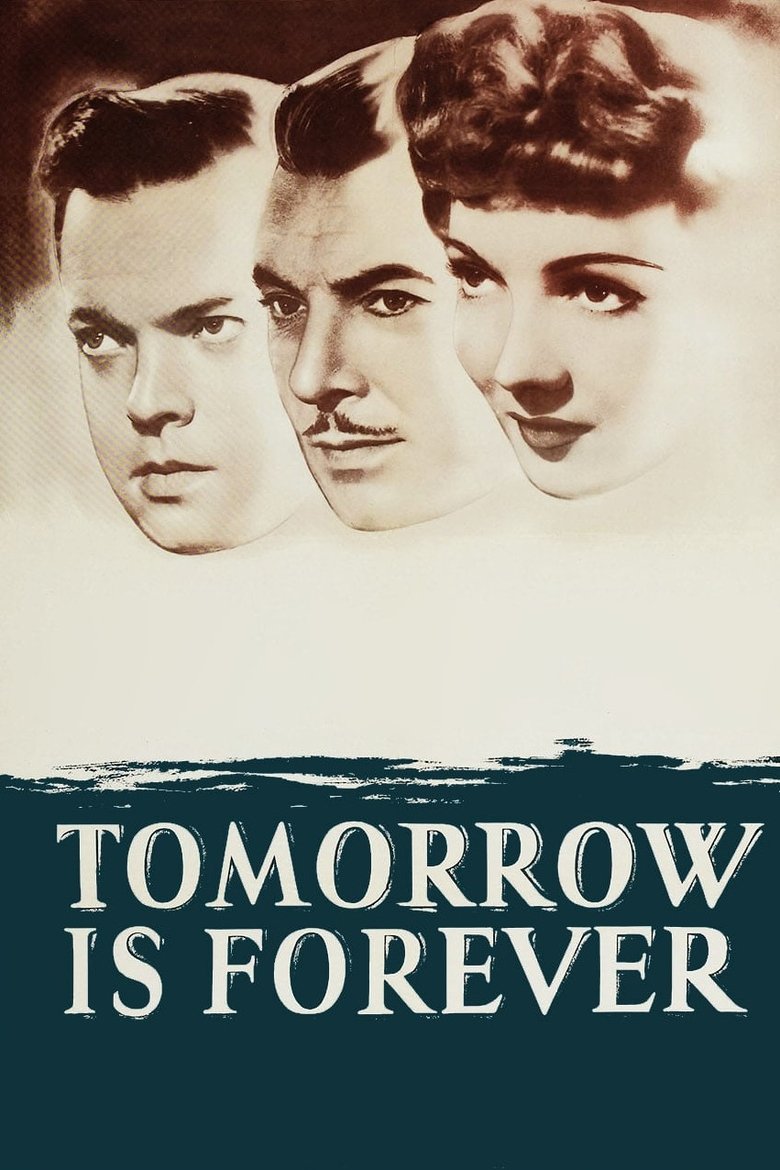
Tomorrow is Forever 1946
1946 International Pictures (I)
★★★☆☆ Notable
Film Noir · 105 minutes · Black & White

Tomorrow is Forever

Directed by Irving Pichel
Year 1946
Runtime 105 min
Studio International Pictures (I)
TMDB 6.2 / 10
"A woman's buried past resurfaces wearing a stranger's face."

Baltimore, 1917. Elizabeth MacDonald bids farewell to her husband John as he ships out to fight in the First World War. When word arrives that he has been killed in action, Elizabeth – pregnant and alone – accepts the steady comfort of Lawrence Hamilton, her employer's son, and builds a new life in his name. Twenty years pass. She is now the settled, contented wife of a prosperous businessman, mother to two children, and the war is a wound long since closed.

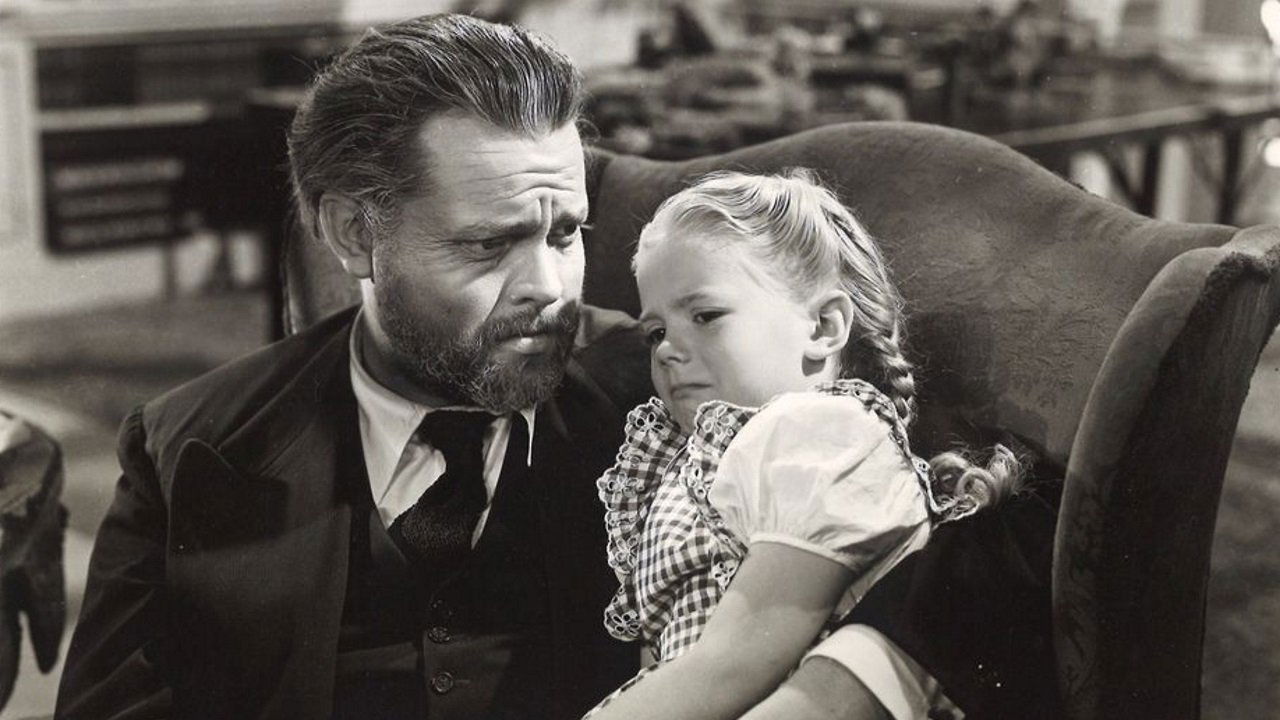
The wound reopens when Lawrence hires a European refugee chemist named John Andrew MacDonald, a bearded, crippled man who arrives with a young Austrian ward named Margaret. Elizabeth recognizes something in him that she cannot name and then cannot deny: this is her first husband, alive, transformed beyond recognition but unmistakable to her. MacDonald, for his own reasons, refuses to acknowledge their shared history, and Elizabeth is left suspended between two identities – the widow who remarried in good faith and the wife who never legally ceased to be one. The arrival of her eldest son Drew, eager to enlist in the Second World War, forces the repressed crisis into the open.

Tomorrow is Forever occupies an uneasy border between melodrama and the noir sensibility that pervades mid-1940s Hollywood. Its central premise – identity concealed, the past refusing burial, a domestic order built on a foundation of unknowing deception – belongs to the same psychological territory as the era's darker crime films. The film does not traffic in violence or criminality, but the dread it cultivates is genuine: the dread of a life that may not be what it has always appeared to be.
Classic Noir

Tomorrow is Forever arrived in 1946 as International Pictures positioned itself for the postwar prestige market, and the film reflects that ambition in its casting and its carefully managed solemnity. Irving Pichel directs with restraint, allowing the film's central irony – a reunion that cannot be spoken – to generate sustained tension in place of plot mechanics. Orson Welles, performing beneath heavy makeup and a deliberate limp, gives a performance of considered intelligence; he is present as a force of moral weight rather than dramatic spectacle. Claudette Colbert carries the film's emotional core with precision, conveying suppressed recognition and marital guilt without recourse to expressionist excess. Where the film matters to the noir conversation is in its treatment of identity as catastrophic: the same logic that drives amnesia thrillers and wrong-man pictures operates here, redirected through the lens of bourgeois domestic life. The postwar moment gives the film its particular pressure – the fear that men return from war as strangers, that the domestic order is more provisional than it appears.

– Classic Noir
3 ★★★☆☆ Notable
Credits

The Crew

DirectorIrving Pichel
ScreenplayGwen Bristow
CinematographyJoseph A. Valentine
MusicMax Steiner
EditingErnest J. Nims
CostumesJean Louis
ProducerDavid Lewis
Performances

The Cast

Close Reading

The Signature Scene

Tomorrow is Forever – scene
The Study, First Encounter Recognition Across the Room

Joseph Valentine lights the study scene with a pronounced chiaroscuro that isolates Welles in a pool of warm lamplight while Colbert stands at the room's edge, half in shadow. The camera holds on a medium two-shot long enough to make the audience feel the weight of the pause before it cuts to a tight close-up of Colbert's face – eyes moving with controlled panic across the features beneath the beard and the aging. Valentine uses a shallow depth of field here, throwing the background into soft dissolution so that nothing exists in the frame except the two faces and the silence between them.

The scene performs the film's central argument: that identity is not destroyed by time or disguise but persists, legible to those who once loved it. Colbert's stillness is the scene's dramatic engine. MacDonald's refusal to acknowledge her functions as a kind of mercy that is also a cruelty, and the frame holds both possibilities simultaneously. The film's noir logic surfaces here most clearly – the past is not past, it is present and dangerous, and the domestic space offers no shelter from it.

Visual Language

The Cinematography

🎞️
Joseph A. Valentine – Director of Photography

Joseph A. Valentine, whose work across the 1940s consistently demonstrated a command of interior mood, brings to Tomorrow is Forever a visual strategy rooted in the tension between domestic warmth and psychological threat. Working on studio-built sets that replicate upper-middle-class American interiors, Valentine uses high-contrast key lighting to embed darkness within spaces that should read as safe and settled – a lamp that illuminates one face leaves another in partial shadow, a doorway becomes a threshold between two registers of knowledge. His lens choices favor moderate focal lengths that preserve facial nuance without distortion, keeping Welles's elaborate makeup legible rather than theatrical. The film's wartime flashback sequences are handled with a cooler, more diffuse light that marks them as memory rather than present action. Throughout, Valentine's shadow work encodes the film's moral logic: the comfortable surface of the Hamilton household is genuine, and yet something moves beneath it that the light cannot fully reach.

In the Catalogue

Themes & Motifs

Availability

Where to Watch

Also in the Directory

See Also