Films People Pull a Fast One Night Beat Reading Room On TV Shop
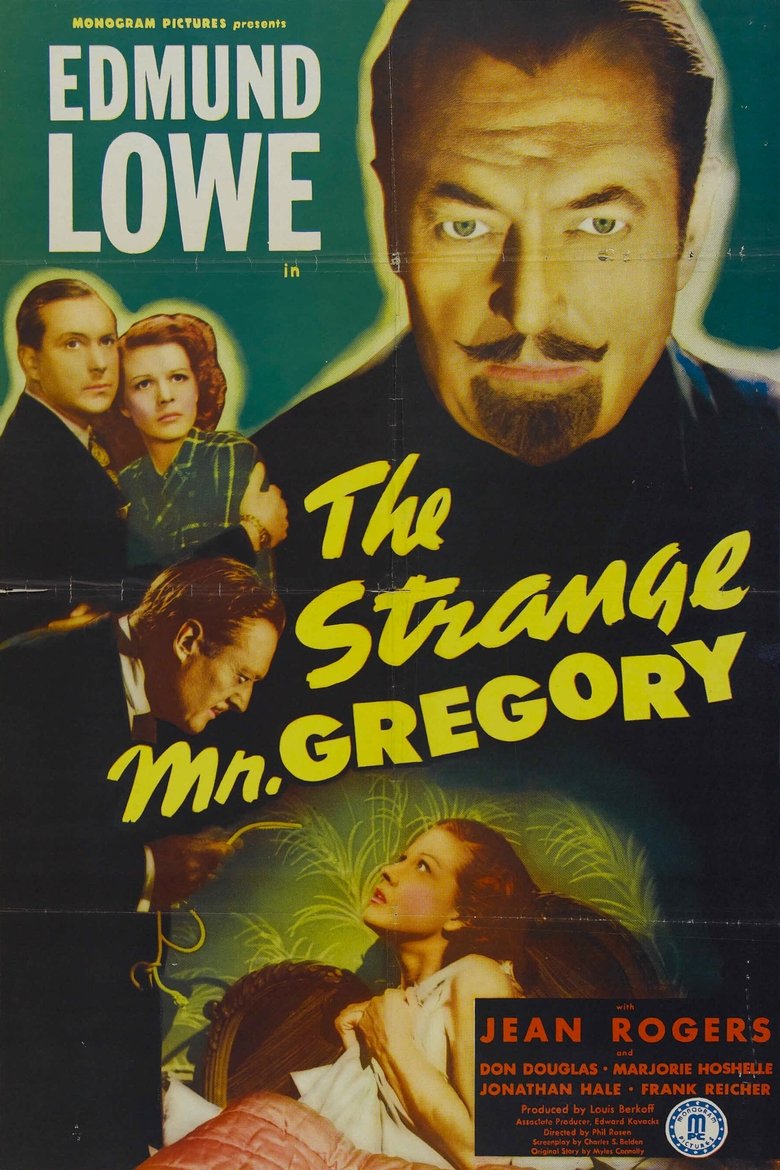
Strange Mr. Gregory 1945
1945 Monogram Pictures
★★★☆☆ Notable
Film Noir · 63 minutes · Black & White

Strange Mr. Gregory

Directed by Phil Rosen
Year 1945
Runtime 63 min
Studio Monogram Pictures
TMDB 5.5 / 10
"A man vanishes so completely that only his crimes remain."

Mr. Gregory (Edmund Lowe) is a stage mentalist with an unsettling gift for psychological manipulation. When he becomes obsessed with Ellen Randall (Jean Rogers), a married woman who rebuffs his attentions, he engineers a scheme that requires him to disappear entirely – to die, in effect, so that he may reappear as someone else. Ellen's husband John (Donald Douglas) stands between Gregory and the object of his fixation, and it is around John that the film's central danger begins to coil.

Gregory resurfaces under the identity of Lane Talbot, insinuating himself into Ellen's world with the patience of a man who has already calculated every variable. When John Randall turns up dead, suspicion moves through the household like weather, touching the butler Riker (Frank Reicher), the scheming Sheila Edwards (Marjorie Hoshelle), and eventually Ellen herself. A courtroom proceeding brings Defense Attorney Blair (Jonathan Hale) and the District Attorney (Robert Emmett Keane) into confrontation over a case built on circumstance and concealed identity.

Strange Mr. Gregory works within the Monogram B-picture tradition while drawing on the stage-illusionist figure that noir occasionally favored as a vehicle for exploring control, deception, and the performance of selfhood. The film's modest budget does not prevent it from engaging questions about obsession and the elasticity of identity that would occupy more celebrated noir productions throughout the decade.
Classic Noir

Strange Mr. Gregory occupies a precise and instructive position within the Monogram B-picture cycle of the mid-1940s. Phil Rosen, a journeyman director with a long career in low-budget production, keeps the film moving through its 63-minute runtime without pretension, and the economy enforced by Monogram's constraints occasionally produces the kind of tight, airless atmosphere that bigger studios sometimes failed to achieve with larger resources. Edmund Lowe brings a controlled menace to Gregory that the role requires – the mentalist as predator, his theatrical skill functioning as cover for genuine pathology. The film's use of identity substitution anticipates structural devices that would appear in more prominent noir works of the late 1940s. What the film reveals about its era is partly a matter of what it could not afford to leave out: in stripping the obsession narrative to its functional core, it exposes the genre's underlying logic with a directness that more polished productions sometimes obscure beneath style.

– Classic Noir
3 ★★★☆☆ Notable
Credits

The Crew

DirectorPhil Rosen
ScreenplayCharles S. Belden
Performances

The Cast

Close Reading

The Signature Scene

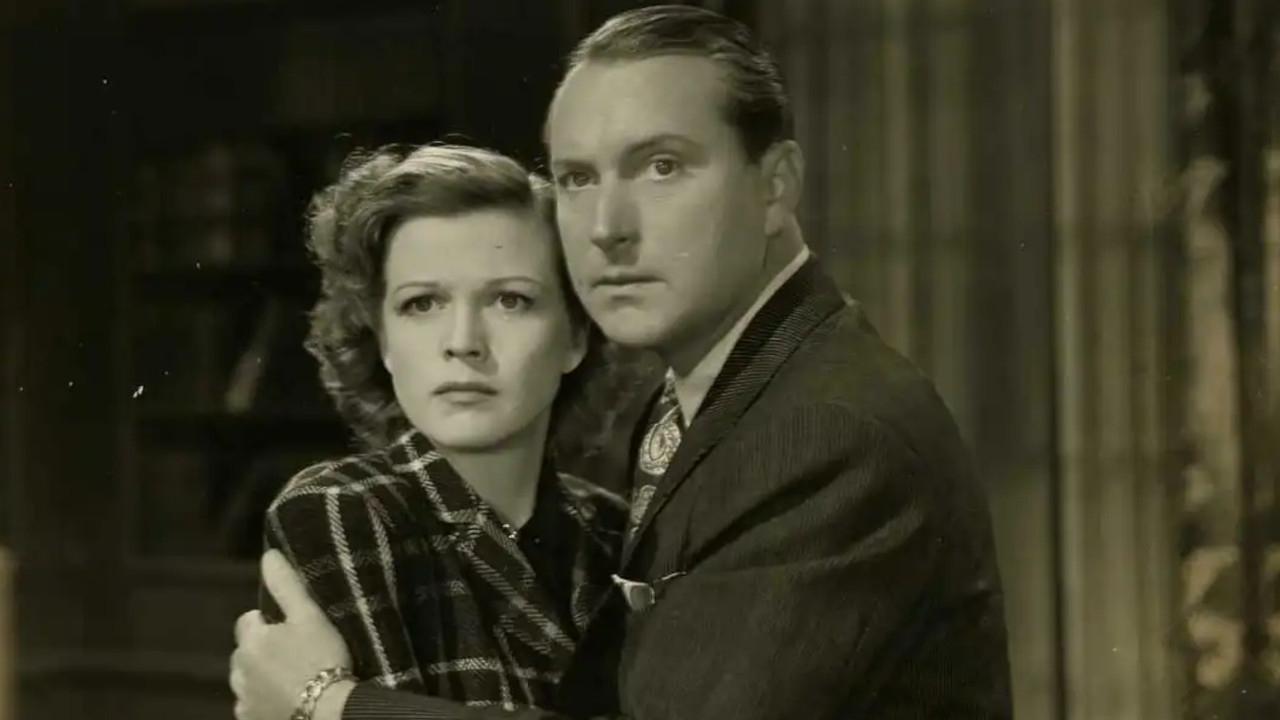
Strange Mr. Gregory – scene
The Mentalist's Demonstration Darkness Behind the Performance

Gregory stands at the front of a sparse interior, the light concentrated on his face while the middle distance recedes into shadow. The camera holds at a medium distance, neither retreating to establish shot nor pressing close enough to flatter him. What it does instead is isolate – the frame places him slightly off-center, the surrounding darkness functioning less as atmosphere than as a spatial diagram of his relationship to the people around him. The others in the room are lit with flat, functional illumination; only Gregory seems to inhabit a different quality of light, one that sets him apart as a figure who operates by different rules.

The scene does what the best Monogram setups do when they are working: it uses the constraints of the space to make an argument. Gregory's power over other people is presented not as supernatural but as a trained capacity for reading weakness and exploiting attention. The performance context gives him legitimate access to the psychological interior of his subjects, and the film uses this moment to establish that the difference between his stage act and his private obsession is a difference of degree, not of kind.

Visual Language

The Cinematography

🎞️
Director of Photography – Director of Photography

The cinematographer for Strange Mr. Gregory is not confirmed in available production records, which is itself a condition typical of Monogram releases from this period, where below-the-line credits were inconsistently preserved. What the photography reveals is a competent studio-bound approach that leans on high-contrast key lighting to compensate for limited sets. Shadows are deployed not as expressionist ornament but as a practical means of narrowing the frame's apparent space, creating interiors that feel closed and pressured. The lens work is conventional by 1945 standards – normal focal lengths, few extreme angles – but Rosen and his uncredited DP use shallow staging to keep characters in proximity even when they are meant to be emotionally estranged. The effect is a visual claustrophobia that serves the film's central concern with a man who cannot tolerate distance between himself and the woman he has decided to possess. The studio setting, far from being a limitation, reinforces the sense that every environment Gregory enters has been arranged to his specification.

In the Catalogue

Themes & Motifs

Availability

Where to Watch

Also in the Directory

See Also