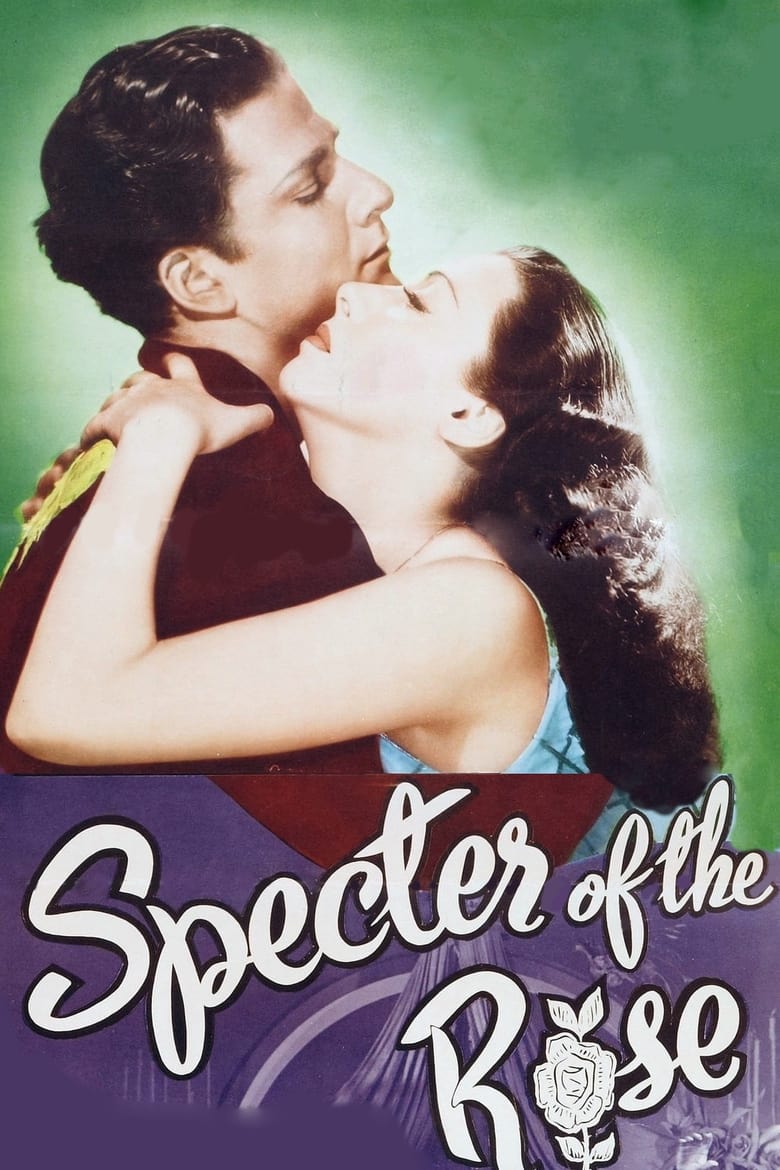
In the insular world of a struggling ballet company, impresario Max Polikoff and his formidable partner Madame La Sylph are staking their careers on a revival of the Romantic ballet 'Specter of the Rose.' Their chosen lead is Andre Sanine, a brilliant but deeply unstable dancer whose first wife died under circumstances that remain disturbingly ambiguous. When the young dancer Haidi falls for Andre and agrees to become his partner both on stage and in marriage, those closest to her recognize the danger she is choosing to ignore.
As rehearsals intensify, Andre's mental state deteriorates with them. His grip on reality loosens in ways that are both spectacular and threatening. Madame La Sylph and Max orbit the central couple with competing motives – artistic investment, genuine concern, and a shared dread they cannot quite articulate aloud. Lionel Gans, a wisecracking press agent played against type by Lionel Stander, functions as a sardonic counterweight, his street-level cynicism exposing the grandiosity surrounding him. The ballet world's rituals of discipline and transcendence become a cage for a man whose violence is drawing closer to the surface.
Ben Hecht's film operates at an unusual intersection – part psychological study, part noir, part gothic romance – grounded in the ballet milieu but driven by the genre's core preoccupation with a doomed protagonist moving toward an outcome he cannot escape. The film asks how long beauty can contain madness, and whether those who depend on that beauty bear responsibility for the answer.
Specter of the Rose is a singular object in the Republic Pictures catalogue and in American noir generally. Ben Hecht, writing and directing from his own original script, transplants noir's fatalism into the ballet world with a conviction that refuses camp. The film belongs to a small cluster of mid-1940s pictures – alongside Humoresque and Body and Soul – that locate psychological disintegration inside an artistic vocation, using the discipline of performance as a structural irony against inner collapse. Lee Garmes's cinematography and George Antheil's score give the production a density well above its budget. Michael Chekhov's performance as Max Polikoff carries the film's moral weight with an economy that never tips into sentimentality. Judith Anderson commands every scene she occupies. What Hecht achieves here is not a conventional noir but a film that absorbs the genre's vocabulary – the fatal woman, the doomed man, the inexorable drift toward violence – and redirects it through the conventions of high art, exposing the destructive vanity that underwrites both.
– Classic Noir
Garmes lights the rehearsal space as a chiaroscuro void: the stage floor catches a single overhead source that bleaches the center white while the wings recede into near-total darkness. As Andre moves through the choreography, the camera holds at a medium distance, refusing to glamorize. The footwork is precise but the eyes are absent. Shadows thrown by the proscenium architecture fall across him in diagonals, repeatedly bisecting his figure as though the frame itself is parsing something wrong in the geometry of a man.
The scene crystallizes the film's central argument: Andre's gift and his disorder are not separable. The choreography is the only vocabulary left to him, and watching him deploy it in this hollow space – no audience, no partner, just the dark and the movement – makes legible what the narrative has been circling. What looks like artistry is also a countdown.
Lee Garmes, whose work on Shanghai Express and Scarface had already established his authority with high-contrast studio lighting, brings to Specter of the Rose a rigorously theatrical visual logic that suits Hecht's material precisely. Working within Republic's constrained studio resources, Garmes constructs the ballet world as a series of enclosed, pressurized spaces – rehearsal rooms, corridors, dressing areas – where shadow accumulates against institutional walls. His use of deep focus in ensemble compositions keeps the background readable, so that the watching figures of Madame La Sylph or Max never disappear from the moral equation. Light sources are placed to isolate rather than to flatter: faces emerge from shadow carrying the weight of what the characters already know. The contrast between the performative brightness of the stage and the surrounding dark is not decorative but argumentative – beauty, Garmes and Hecht suggest together, is always surrounded by something that will extinguish it.
Specter of the Rose has entered the public domain and is available in multiple transfers on Archive.org, making it the most immediately accessible option, though print quality varies by upload.
TubiFreeTubi has carried this title on a rotating basis among its classic noir holdings; availability may vary by region.
KanopySubscriptionKanopy's library of mid-century American film sometimes includes this title through participating library systems – worth checking with a library card before purchasing elsewhere.