Films People Pull a Fast One Night Beat Reading Room On TV Shop
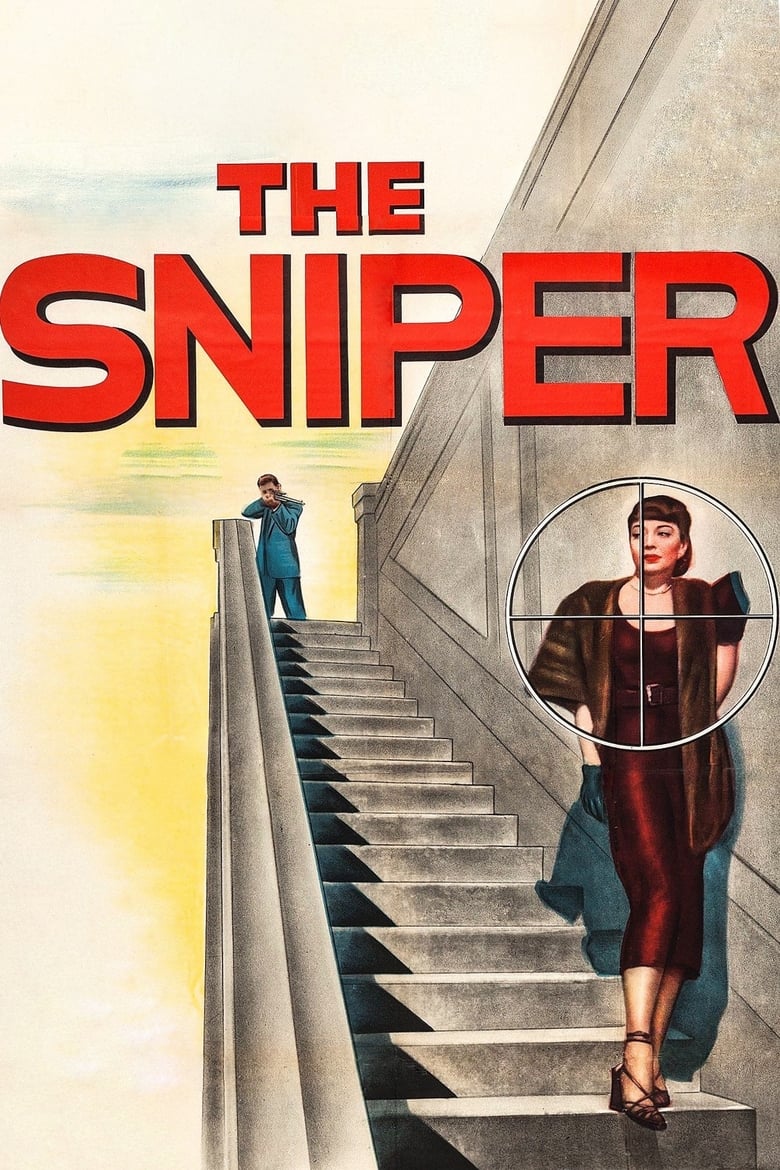
Sniper 1952
1952 Stanley Kramer Productions
★★★☆☆ Notable
Film Noir · 88 minutes · Black & White

Sniper

Directed by Edward Dmytryk
Year 1952
Runtime 88 min
Studio Stanley Kramer Productions
TMDB 6.7 / 10
"A city holds its breath while one man turns his rage on strangers."

San Francisco, 1952. Eddie Miller (Arthur Franz) is a decorated war veteran working a series of menial jobs, drifting through a city that neither recognizes nor troubles itself with him. Beneath a surface of quiet routine, Eddie carries an obsession he cannot suppress: a compulsion to kill women. When the impulse overwhelms him again, he begins a methodical series of shootings from elevated positions, selecting his victims at random and leaving the police with little to work from beyond a pattern of brass casings and grief.

The investigation falls to homicide detective Frank Kafka (Adolphe Menjou), a pragmatic officer who reads the evidence as the work of a man who wants to be stopped – someone methodical enough to evade capture yet careless enough to leave traces. Alongside him, criminal psychologist James G. Kent (Richard Kiley) argues that Eddie represents a category of offender that the legal system is structurally unprepared to handle: neither simply criminal nor simply insane, but something that requires intervention the institutions do not yet offer. Meanwhile Eddie's landlady (Mabel Paige) and bar singer Jean Darr (Marie Windsor) move through his orbit, unaware of what proximity to him costs.

Sniper occupies unusual ground within the crime noir cycle – less interested in the mechanics of detection than in the pathology of the perpetrator and the inadequacy of social response. The film functions simultaneously as procedural, psychological study, and social-problem picture, a combination that was characteristic of producer Stanley Kramer's method and that places the film closer to He Walked by Night or The Naked City than to the femme-fatale dramas that dominate popular memory of the period.
Classic Noir

Sniper arrives at the intersection of two postwar anxieties – the veteran who brought the war home inside him, and the city that cannot see the violence gestating in plain sight. Edward Dmytryk, returning to American production after his blacklist years in Britain, directs with the controlled economy he brought to Crossfire: no wasted movement, no decorative menace, just accumulating dread. Arthur Franz carries the film's heaviest burden, playing Eddie not as a monster but as a man in a war with himself that he is losing. The screenplay, credited to Harry Brown from a story by Edna and Edward Anhalt, is unusually candid about institutional failure – Kafka and Kent spend nearly as much screen time arguing over what the state cannot do as they do pursuing a suspect. That argument, delivered without the redemptive resolution Hollywood usually demanded, gives Sniper a diagnostic quality that most crime pictures of the era avoided. It is a film with a thesis, and the thesis has not aged comfortably.

– Classic Noir
3 ★★★☆☆ Notable
Credits

The Crew

DirectorEdward Dmytryk
ScreenplayHarry Brown
CinematographyBurnett Guffey
MusicGeorge Antheil
EditingAaron Stell
Art DirectionWalter Holscher
ProducerStanley Kramer
Performances

The Cast

Close Reading

The Signature Scene

Sniper – scene
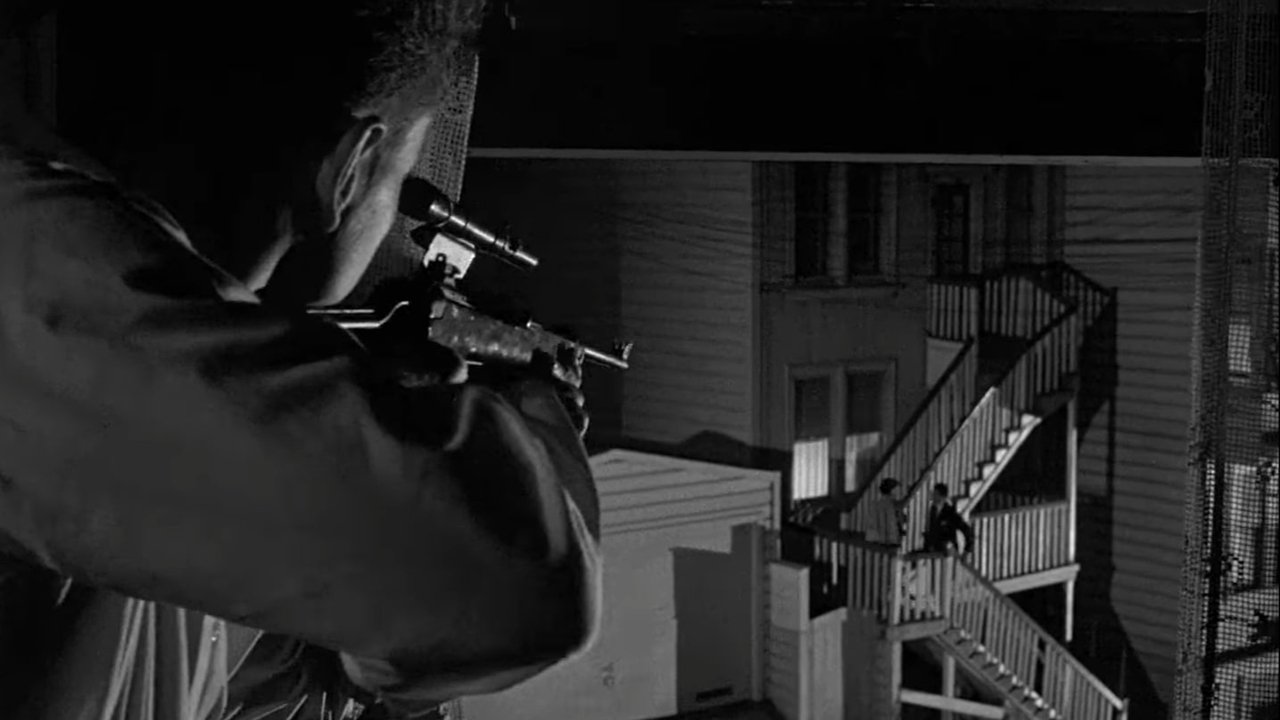
The Rooftop, Second Shooting Crosshairs Over Empty Street

Burnett Guffey frames Eddie from below and behind as he settles into position on a fire escape landing, the city spread in soft defocus beneath him. The rifle barrel enters the frame from screen-left, angled downward, cutting across the corner of the image like a diagonal argument. Guffey keeps the focal plane shallow: Eddie's eye and trigger hand are sharp, his target at street level barely resolved. The ambient light is flat, late-afternoon grey, which drains the scene of drama in a way that feels deliberate – there is nothing stylized about what Eddie is about to do.

What the scene refuses to provide is excitement. Dmytryk and Guffey conspire to make the shooting mundane, which is precisely the film's moral position: that this violence does not require extraordinary evil, only a capacity for it and a society that failed to intercede. Eddie's expression carries no satisfaction and no conflict in this moment – just the focused neutrality of a man performing a task, which implicates the military training that made him precise and the civilian world that left that precision with no legitimate object.

Visual Language

The Cinematography

🎞️
Burnett Guffey – Director of Photography

Burnett Guffey shoots Sniper on location across San Francisco with the documentary instinct he developed on The Undercover Man and would sharpen further on From Here to Eternity. The city is not romantic here – Guffey finds its institutional greys, its rooftops and service alleys and the featureless interiors of cheap rooming houses. Interior scenes favour high-contrast available-light setups that leave the upper portions of rooms in full darkness, compressing the world Eddie inhabits into narrow horizontal bands of visibility. When the film moves outdoors, Guffey uses long lenses to compress street geography, making the distance between sniper and victim feel simultaneously vast and intimate. Shadow work is reserved for Eddie's interiority – the scenes in which he struggles against his compulsion are the film's most stylised, light falling at steep angles across his face in ways that recall the expressionist vocabulary without fully committing to it. The restraint is correct: Sniper does not want its violence to feel like cinema.

In the Catalogue

Themes & Motifs

Availability

Where to Watch

Also in the Directory

See Also