Films People Pull a Fast One Night Beat Reading Room On TV Shop
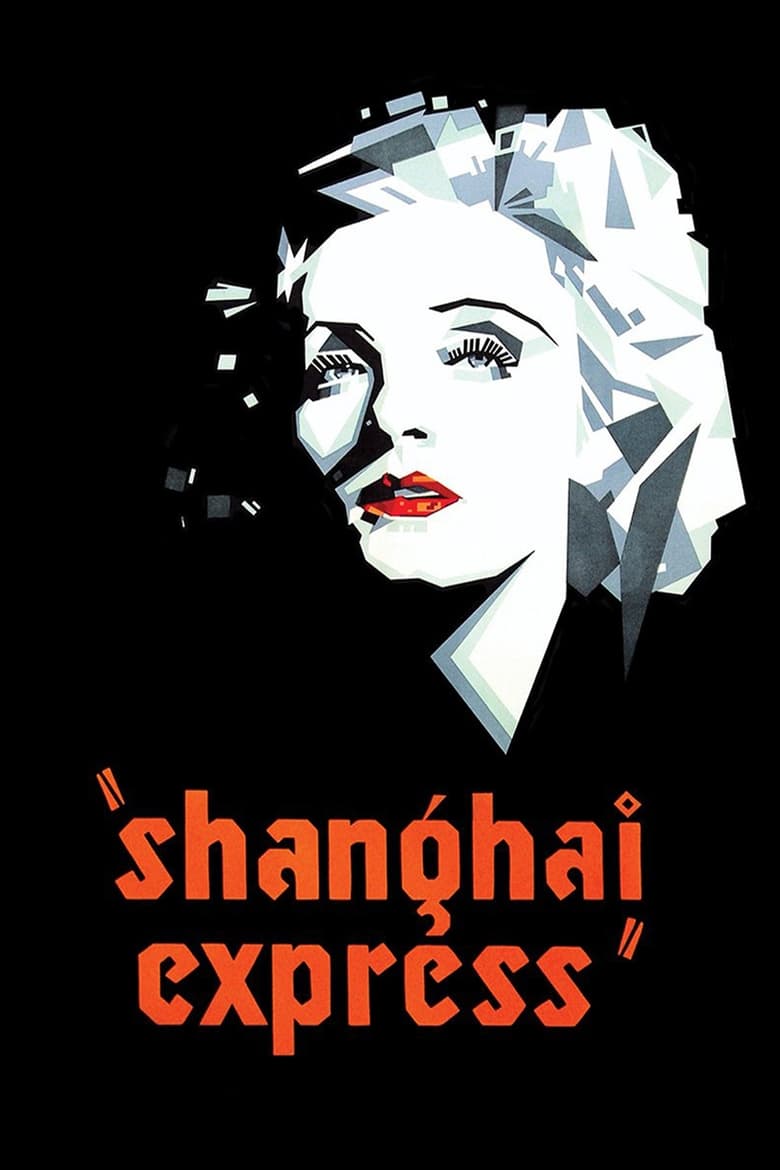
Shanghai Express 1932
1932 Paramount Pictures
★★★☆☆ Notable
Film Noir · 82 minutes · Black & White

Shanghai Express

Directed by Josef von Sternberg
Year 1932
Runtime 82 min
Studio Paramount Pictures
TMDB 7.0 / 10
"On a train crossing a fractured China, identity is a costume and loyalty a gamble."

In 1931, a Shanghai-bound express carries a cross-section of colonial China through territory held by warlord factions at civil war. Among the passengers are Captain Donald Harvey, a British military physician nursing a wound that is partly professional and partly personal, and Shanghai Lily – born Magdalen, now a woman the conductor's manifest describes as having 'wrecked a dozen men.' They share a history five years cold, and the compartment between them is charged with everything unsaid. Also aboard: Hui Fei, a Chinese courtesan of quiet self-possession; Henry Chang, a Eurasian merchant of undisclosed loyalties; and an assortment of colonial travelers whose assumptions about class and race will be tested before the line reaches its terminus.

When rebel forces stop the train and Chang reveals himself as their commander, he takes Harvey hostage to secure his own passage to Shanghai, recognizing the officer's value as leverage. The crisis forces Lily and Hui Fei – two women whose social positions are defined entirely by men's desires – into a shared predicament that neither sentimentalizes nor resolves neatly. Chang's interest in Lily sharpens into threat; Harvey's pride, hardened into a refusal to believe she could sacrifice herself for him, becomes its own kind of cruelty. Allegiances shift in the dark of halted rail cars while the landscape outside suggests a world where established order has already collapsed.

Shanghai Express operates at the border between melodrama and noir: it does not hinge on a detective's logic or a criminal's fall, but on the moral arithmetic of women navigating a world structured against them. The film's interest is not in who survives the journey but in the cost at which survival is purchased – and in who, finally, is permitted to acknowledge that cost.
Classic Noir

Shanghai Express arrived at a precise historical threshold: pre-Code Hollywood, the Sino-Japanese crisis deepening, and Marlene Dietrich at the height of her collaboration with Josef von Sternberg, a partnership that had already produced Morocco and Dishonored. What Sternberg and cinematographer Lee Garmes construct here is less a thriller than a controlled study in surface and concealment – the train car as a mobile box of social fictions. The film's racial politics are genuinely complicated for its era: Anna May Wong's Hui Fei is the film's most consequential moral agent, yet the Production Code's anti-miscegenation pressures prevent her from receiving the romantic resolution the narrative logic earns her. That displacement is not incidental; it is the film's suppressed argument. Shanghai Express is not essential noir in the procedural sense, but it anticipates the genre's core obsession: that respectability is performance, and that the women history categorizes as fallen are frequently the only honest witnesses in the room.

– Classic Noir
3 ★★★☆☆ Notable
Credits

The Crew

DirectorJosef von Sternberg
ScreenplayJules Furthman
CinematographyLee Garmes
MusicKarl Hajos
EditingFrank Sullivan
Art DirectionHans Dreier
CostumesTravis Banton
ProducerAdolph Zukor
Performances

The Cast

Close Reading

The Signature Scene

Shanghai Express – scene
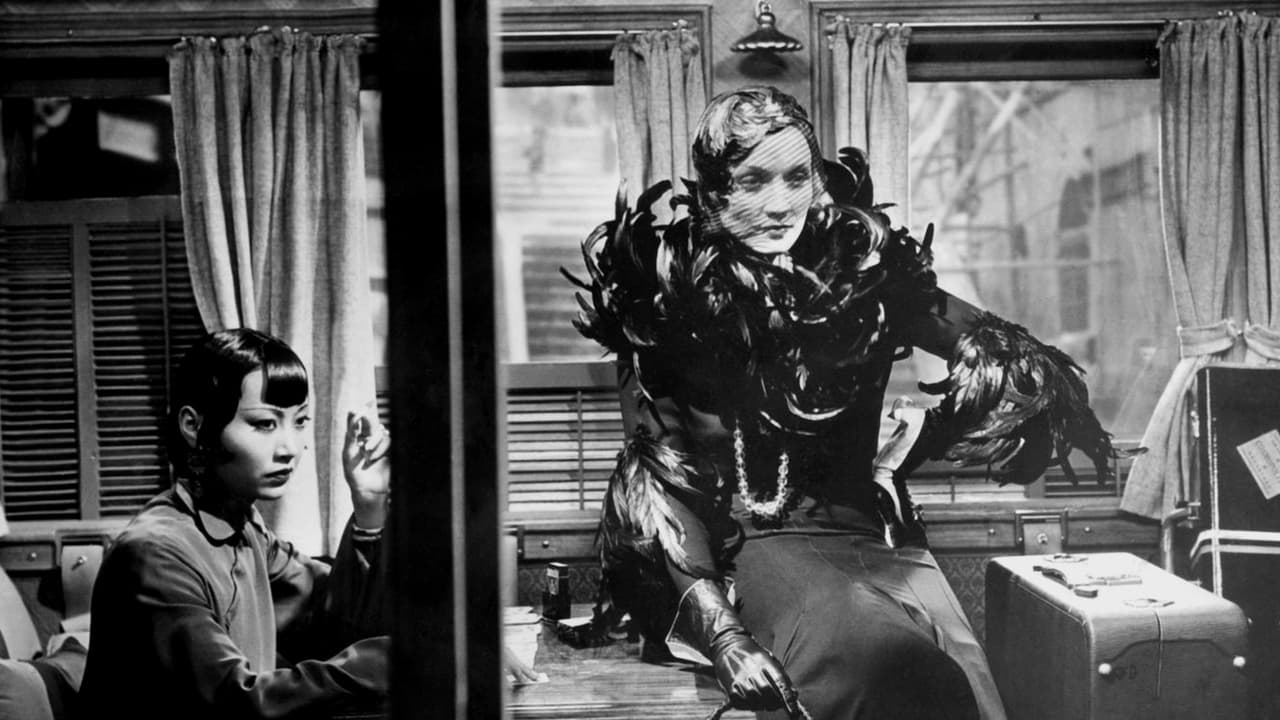
The Darkened Compartment Lily Beneath the Veil

Garmes frames Dietrich in extreme close-up, the light falling from a single source above and to the side so that half her face dissolves into shadow. A fine net veil descends across her features, fracturing the image into a lattice that softens without obscuring. The camera holds the shot longer than narrative function requires. There is no cutting away to another character for reaction; the frame rests on her face as if the film itself is deciding what it sees. The train's motion is implied only by the faint shudder of the veil's edge.

The composition literalizes what the screenplay can only gesture at: Lily is simultaneously visible and obscured, desired and disbelieved. The veil does not conceal her – it is the condition under which she is seen at all. For Harvey, for Chang, for the reverend with his ledger of fallen women, she exists only as a filtered image. Sternberg and Garmes refuse to lift the filter, which is the scene's argument: the veil is not hers, it belongs to every man watching.

Visual Language

The Cinematography

🎞️
Lee Garmes – Director of Photography

Lee Garmes, who shared Academy recognition for his work here, shoots Shanghai Express almost entirely on Paramount soundstages, transforming that constraint into a controlled atmosphere that location photography could not have delivered. His lighting favors deep chiaroscuro, with key sources positioned to skim surfaces – silk, smoke, the lacquered woodwork of the rail cars – rather than illuminate volumes. Garmes employs a soft-focus technique on Dietrich that is not simply flattering but structurally meaningful: she arrives in the frame already slightly apart from the documentary world the other passengers inhabit. The exterior train sequences use forced-perspective models and rear projection, which Garmes integrates without apology, reinforcing the film's sense that the China outside the windows is less a place than a projected anxiety. Shadow work throughout denotes moral ambiguity through position – Chang is rarely fully lit; Hui Fei's decisive moments occur in near-darkness, as if the camera acknowledges what the screenplay is not permitted to say directly.

In the Catalogue

Themes & Motifs

Availability

Where to Watch

Also in the Directory

See Also