Films People Pull a Fast One Night Beat Reading Room On TV Shop
Shadow on the Window 1957
1957 Columbia Pictures
★★★☆☆ Notable
Film Noir · 76 minutes · Black & White

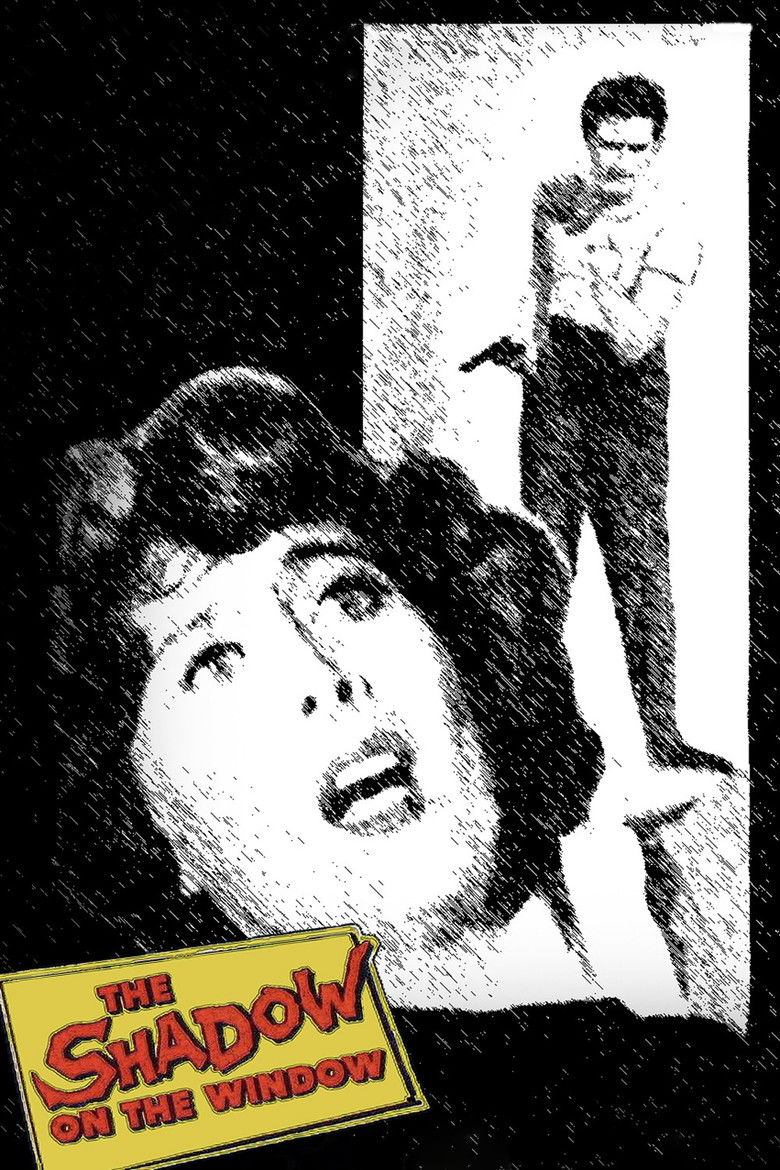
Shadow on the Window

Directed by William Asher
Year 1957
Runtime 76 min
Studio Columbia Pictures
TMDB 5.9 / 10
"A boy who cannot speak, a mother who cannot escape, and a detective caught between duty and ruin."

Linda Atlas arrives at a remote farmhouse to handle a real-estate matter, only to witness a brutal murder committed by three young drifters led by the volatile Jess Reber. Taken hostage along with the farm's owner, she is held captive while her captors debate their next move. Her son Petey, who has accompanied her, retreats into traumatic silence – a mute witness the killers cannot afford to ignore.

Back in the city, Linda's estranged husband Tony Atlas, a police sergeant, works the missing-persons case without knowing his own wife and child are the victims. The investigation tightens around Jess and his followers – the impulsive Gil Ramsey and the younger, more reluctant Joey Gomez – each of whom exerts a different pull on the group's fragile cohesion. As the hours accumulate, the question shifts from whether Linda will survive to whether Petey's silence will hold long enough to matter.

Shadow on the Window belongs to the cycle of late-1950s procedural noirs in which domestic rupture and criminal violence occupy the same moral space. The film draws its tension from the collision between institutional police work and private grief, and frames juvenile delinquency not as spectacle but as the blunt residue of a society that has stopped paying attention.
Classic Noir

Shadow on the Window arrives in 1957 at a moment when classical noir was cannibalizing its own conventions, and William Asher – better known for lighter material – handles the genre's demands with more discipline than his reputation might suggest. The film is structurally twinned: a hostage thriller on one axis, a procedural on the other, and the tension between them is never fully resolved, which is part of the point. Philip Carey's detective carries guilt and bureaucratic fatigue in equal measure, and Betty Garrett is given more to do than the genre usually permits its imperiled women. Jerry Mathers, cast against the wholesome image he would solidify the following year, brings an unsettling blankness to Petey's traumatic mutism. George Duning's score resists melodrama, and the film's 76-minute runtime enforces an economy that serves its argument: in postwar America, the institutions built to protect the family are perpetually one step behind the damage already done.

– Classic Noir
3 ★★★☆☆ Notable
Credits

The Crew

DirectorWilliam Asher
ScreenplayJohn Hawkins
CinematographyFrank G. Carson
MusicGeorge Duning
EditingWilliam A. Lyon
Art DirectionRobert Peterson
ProducerJonie Taps
Performances

The Cast

Close Reading

The Signature Scene

Shadow on the Window – scene
The Farmhouse Interior The Boy Who Does Not Speak

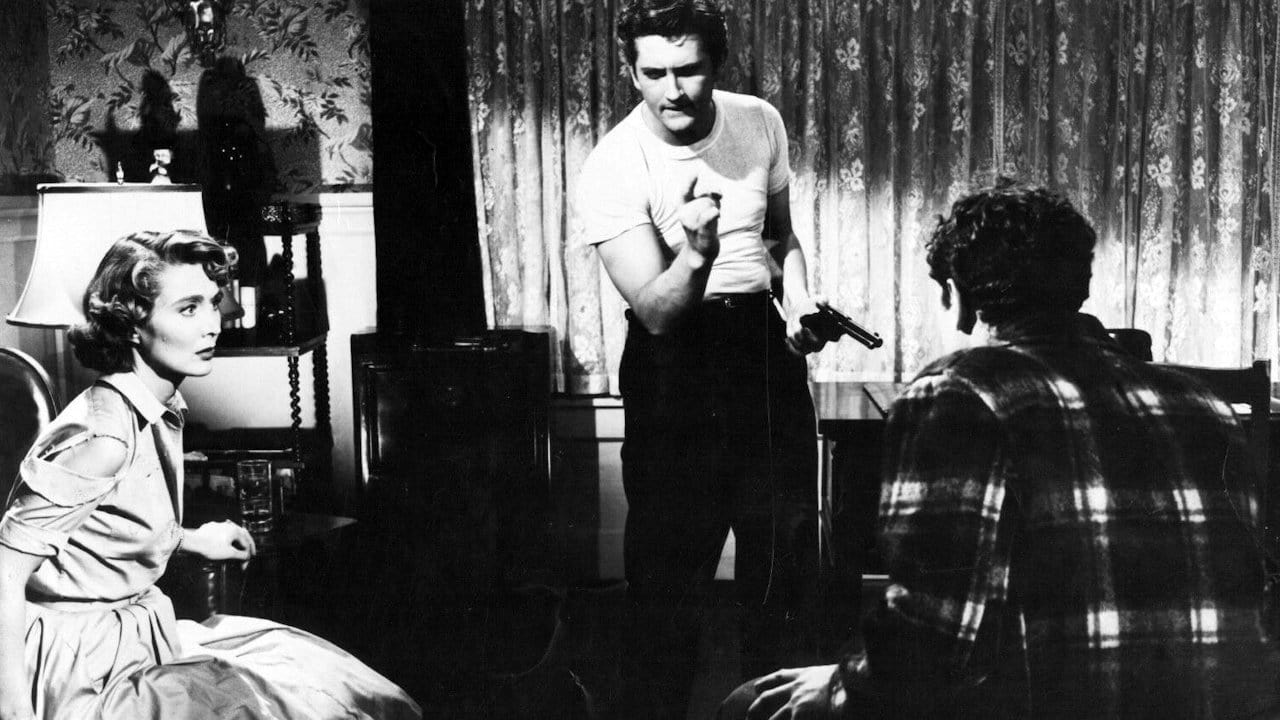
Frank G. Carson holds the camera at low angle, the ceiling pressing down into the frame, the farmhouse walls offering no visual exit. A single practical lamp throws a hard cone of light across the table where Petey sits, his face caught half in shadow, the surrounding darkness implying walls that are closer than they are. The kidnappers move in and out of focus behind him, their bodies fragmenting the background into shapes rather than persons.

The scene crystallizes the film's central argument about witnessing and powerlessness. Petey's silence is not innocence – it is the mind's refusal to process what the eye has already recorded. The composition places him at the center of the frame yet utterly isolated within it, a formal statement about a child the adult world has failed to reach in time. His stillness, surrounded by the restless menace of the three young men, makes the danger legible without a line of dialogue.

Visual Language

The Cinematography

🎞️
Frank G. Carson – Director of Photography

Cinematographer Frank G. Carson works within the constraints of a modest Columbia B-unit budget to produce imagery that earns its noir credentials without excess. Carson favors tight focal lengths in interior sequences, compressing depth so that background threats register as immediate rather than distant. The farmhouse scenes rely on hard-source practical lighting – a single lamp, a window bleed from outside – rather than the sculpted studio chiaroscuro of the previous decade, a choice that reads as realist in texture but remains expressionist in logic: characters are illuminated only when the narrative requires their exposure. Location work sharpens the procedural sequences, where flat institutional light ironizes the detective's methodical search for a family that is already in danger he cannot yet map. Shadow on the Watch uses the contrast between these two visual registers – the compressed, shadow-heavy captivity scenes and the flatter, colder police environments – to argue that domestic space and civic order operate in separate moral universes, each equally insufficient.

In the Catalogue

Themes & Motifs

Availability

Where to Watch

Also in the Directory

See Also