Films People Pull a Fast One Night Beat Reading Room On TV Shop
Scoundrel 1935
1935 Hecht-MacArthur Productions
★★★☆☆ Notable
Film Noir · 76 minutes · Black & White

Scoundrel

Directed by Ben Hecht
Year 1935
Runtime 76 min
Studio Hecht-MacArthur Productions
TMDB 6.3 / 10
"A man without conscience discovers, too late, that the world keeps its own ledger."

Anthony Mallare is a New York literary publisher of considerable charm and no discernible moral architecture. He exploits writers, seduces women, and discards both with equal indifference, moving through Manhattan's cultural elite as though immunity were his birthright. Into his orbit comes Cora Moore, a young poet whose manuscript he agrees to publish – and whose devotion he accepts as simply another due.

When Mallare's careless manipulation costs Cora everything and drives her toward ruin, the consequences begin accumulating around him. His associates – the sardonic critic Vanderveer Veyden, the loyal Jimmy Clay, the various women he has used and left – form a kind of involuntary chorus to his destruction. Paul Decker, a writer Mallare has wronged, watches the machinery tighten. The film's social world, glittering and brittle, starts to register the weight of what Mallare has taken from it.

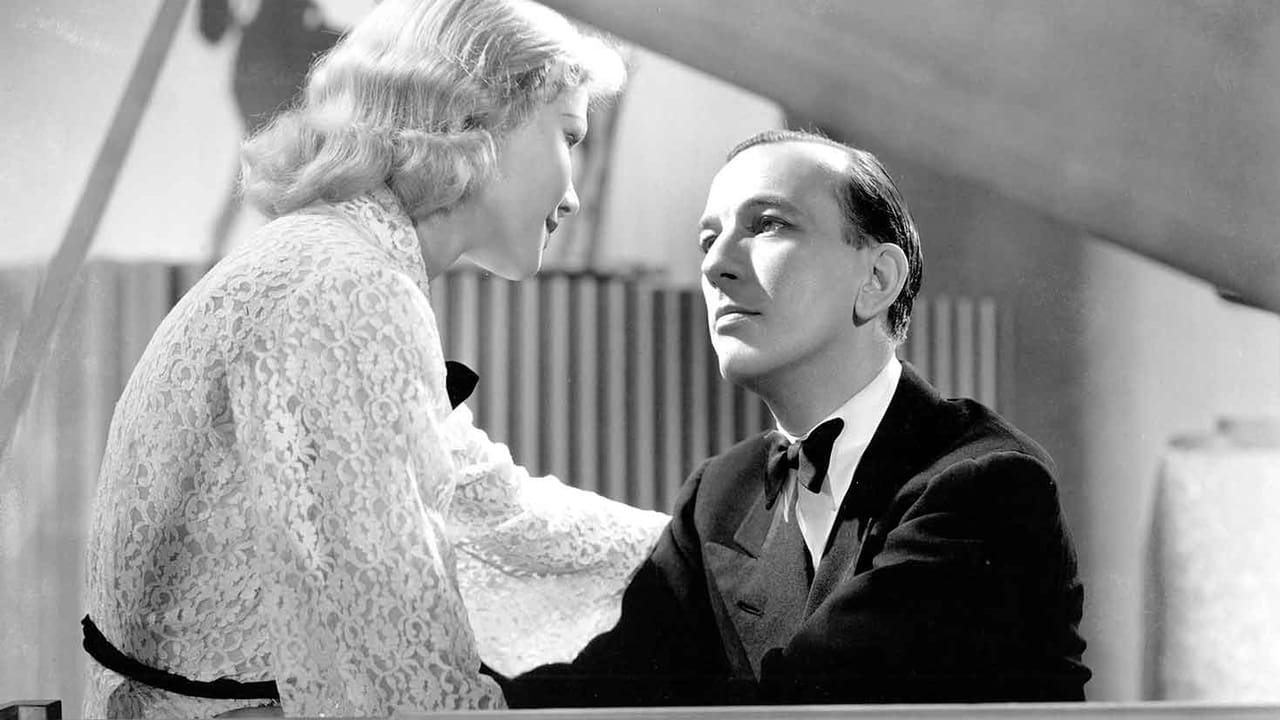
Scoundrel occupies an unusual position in pre-noir cinema: it uses the apparatus of a sophisticated comedy of manners to deliver something closer to a moral fable, with Noël Coward's reptilian charm doing the work that shadows and rain-slicked streets would do in later noir. The film is less interested in crime than in culpability, and it pursues that interest with a coldness that anticipates the genre's harder postwar iterations.
Classic Noir

Scoundrel is a film that resists easy classification, which is part of what makes it worth serious attention. Ben Hecht – working here as co-director alongside Charles MacArthur, whose contribution the credits obscure – constructs a portrait of a predatory aesthete that is more caustic than anything the Hays Code would comfortably permit a few years later. Noël Coward, in his only significant Hollywood performance, brings a quality of genuine menace beneath the wit: Mallare is not a lovable rogue but a vacuum that consumes others. The supernatural turn in the third act has divided critics for decades, but it functions less as fantasy than as a structural acknowledgment that the social world alone cannot adequately punish a man of Mallare's type. Lee Garmes's photography gives the Manhattan milieu a coolness that keeps sentiment at bay. The film belongs to a transitional moment – after the hard-boiled Pre-Code cycle, before the expressionist noir consolidation – and its hybrid of drawing-room cruelty and fatalist comeuppance makes it a genuine precursor to the moral architecture that would define the genre.

– Classic Noir
3 ★★★☆☆ Notable
Credits

The Crew

DirectorBen Hecht
ScreenplayBen Hecht
CinematographyLee Garmes
EditingArthur Ellis
Art DirectionWalter E. Keller
ProducerBen Hecht
Performances

The Cast

Close Reading

The Signature Scene

Scoundrel – scene
Mallare's Office, Late Evening The Manuscript Returned Unopened

Garmes frames Mallare behind his broad desk, light falling in a narrow band across his hands and the unopened envelope before him, leaving his face in partial shadow – a compositional choice that locates power and evasion in the same figure. The room's depth is established by a window behind him showing the smear of city lights, but the glass functions as a barrier rather than a view, reinforcing his isolation within his own domain. Cora stands nearer the camera, slightly below the eyeline, so that the geometry of the frame itself encodes the transaction.

The scene is the film's clearest statement of what Mallare costs those who believe in him. His refusal to engage with her work – the casualness of it, the absence of cruelty in any theatrical sense – is more damning than open contempt would be. It establishes that his damage is structural, not passionate, and it sets the film's moral logic on its course: the accounting that follows is not revenge but consequence, a distinction Hecht takes care to maintain.

Visual Language

The Cinematography

🎞️
Lee Garmes – Director of Photography

Lee Garmes, who had already demonstrated in Shanghai Express (1932) his ability to sculpt faces out of darkness, brings a similar economy to Scoundrel, though the register here is interior Manhattan rather than exotic transit. Working largely on studio sets that stand in for New York literary society, Garmes resists the impulse to glamorize: his lighting is cool and directional, favoring single-source setups that leave significant portions of the frame unresolved. Coward's face is photographed with particular calculation – the handsomeness is always present but the light rarely flatters it warmly, and there is a recurrent tendency to catch him in three-quarter angles that suggest concealment. The depth of field is used conservatively, keeping backgrounds soft enough to prevent the social world from acquiring too much solidity. What Garmes achieves is a visual correlative for the film's moral argument: surfaces that appear polished reveal, under closer examination, that the light source is always slightly wrong.

In the Catalogue

Themes & Motifs

Availability

Where to Watch

Also in the Directory

See Also